



When you first step into a commercial gym or begin researching equipment for your home fitness space, the sheer variety of lifting bars can feel overwhelming. You will immediately recognise the classic straight barbell, stretching over two metres long across bench press stations and squat racks. However, tucked away near the free weights section, you will almost certainly spot a shorter, uniquely angled bar that looks like a series of gentle waves or a subtle zigzag.
This specialised piece of weightlifting equipment is known as an EZ curl bar, or simply an EZ bar. If you want to build bigger arms, protect your joints from injury, and elevate your upper body workouts, you have likely found yourself asking: what are EZ bars?
In this comprehensive, search-optimised guide, we will break down exactly what an EZ bar is, the fascinating biomechanical reasons behind its undulating shape, how it directly compares to a standard straight barbell, and how to use it safely to transform your arm training.
What Are EZ Bars?
To answer the fundamental question—what are EZ bars?—it helps to look directly at the name itself. The letters "EZ" are a playful phonetic spelling of the word "easy". The bar was explicitly engineered to make heavy arm exercises significantly easier and more comfortable on the fragile joints of the human upper body.
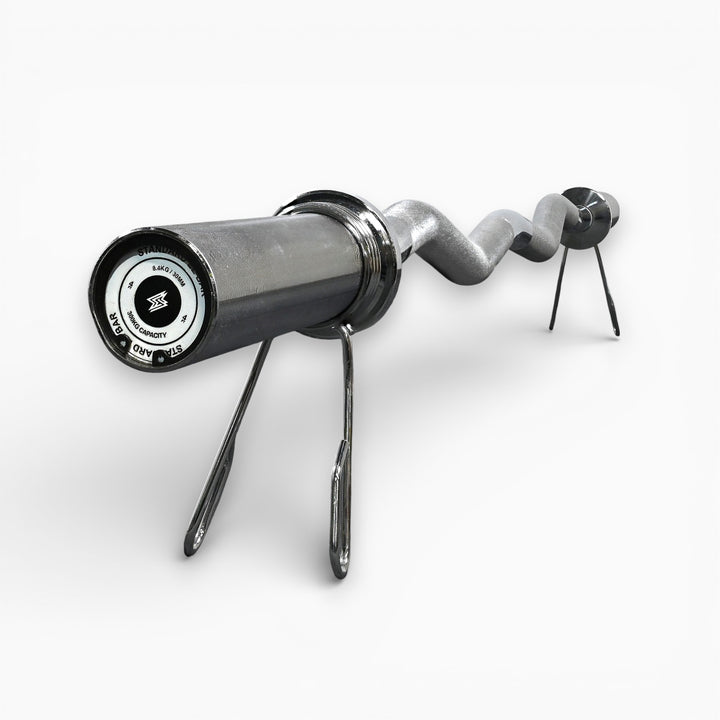
Invented in the middle of the twentieth century by a passionate lifter named Lewis Dymeck, the EZ bar features a series of angled bends in the middle shaft. These precisely manufactured bends create a series of distinct hand placement zones. Instead of forcing your hands to lie perfectly flat and horizontal during a lift, these slopes allow your wrists to rest in a natural, semi-supinated angle. Supination refers to turning your palms to face upwards, while pronation means turning them downwards; semi-supination sits perfectly in the comfortable middle ground between the two.
Typically measuring between 1.2 metres and 1.5 metres in length, the EZ bar is noticeably shorter, lighter, and more agile than a standard Olympic barbell. It is primarily designed to target the smaller, isolated muscle groups of the upper body, specifically the biceps, triceps, and brachialis, though it can also be effectively mobilised for forearm and shoulder development.
The Biomechanics Behind the Zigzag Shape
To fully understand why the EZ bar is such a revolutionary piece of gym engineering, we need to take a quick look at human anatomy. The human forearm is a complex structure consisting of two parallel bones: the radius and the ulna.
When you stand completely relaxed with your arms hanging by your sides, your palms naturally turn inward to face your thighs. This is your body's neutral, low-stress anatomical position. When you lift an object up toward your chest, your wrists naturally prefer to maintain a slight inward tilt.
If you grab a perfectly straight barbell and perform a standard bicep curl, you force your hands into a completely flat, fully supinated position. For many individuals, their natural skeletal structure does not easily allow for this degree of rotation under heavy tension. Forcing the forearms into full supination while lifting heavy weights places immense structural strain on several key areas:
-
The Wrist Joint: The tendons running through your wrist canal are twisted out of alignment, which can lead to repetitive strain injuries or carpal tunnel irritation.
-
The Elbow Joint: The tendons attaching your biceps to your lower arm are subjected to lateral twisting forces, frequently causing a painful condition known as medial epicondylitis, which is commonly referred to as golfer's elbow or climber's elbow.
-
The Carrying Angle: Every human body has a unique carrying angle, which is the natural outward tilt of the forearm relative to the upper arm. A straight bar completely ignores this natural variation, whereas the angled slopes of an EZ bar comfortably accommodate it.
By using an EZ bar, your hands rest at a gentle angle of roughly thirty to forty-five degrees. This minor adjustment completely unloads the stress from your wrists and elbows, allowing the target muscles to bear the brunt of the work rather than your delicate connective tissues.
EZ Bar vs Straight Barbell: The Key Differences
When designing a highly efficient home gym layout or deciding which bar to grab during a busy commercial gym session, it is helpful to contrast these two popular tools across several core attributes.
1. Muscle Activation and Isolation
Because a straight barbell forces your hands into complete supination, it maximally recruits the long head of the biceps brachii, which is the muscle responsible for creating that desirable bicep peak. However, if joint pain prevents you from lifting heavy weights on a straight bar, your overall muscle activation drops significantly. The EZ bar shifts a small portion of the mechanical load onto the brachialis and brachioradialis muscles, which run down the side of the arm and forearm. This creates a thicker, more complete look throughout the entire arm complex.
2. Maximum Load Potential
Straight bars are built for pure, unadulterated strength. They are thicker, much heavier, and can support hundreds of kilograms of Olympic plates without bending. An EZ bar is built for focused isolation. While you cannot safely load an EZ bar up with enough weight to perform heavy deadlifts or back squats, it allows you to lift heavier on arm-specific movements because your joints are not screaming in protest midway through a challenging set.
3. Stability and Balance
The wider your grip on a bar, the easier it is to balance. Because a straight bar is long, it requires significant core activation and stabilizer muscle engagement to keep the bar level. The short, compact nature of the EZ bar keeps the weight plates positioned much closer to your body's true center of gravity. This makes the bar incredibly stable, allowing you to focus one hundred per cent of your mental energy on contracting the target muscle rather than fighting to keep the bar steady.
Exploring the Main Varieties of EZ Bars
If you are looking to purchase an EZ bar for your personal gym setup, you will generally find two main categories available on the digital market today.
Olympic EZ Bars
This is the premium standard found in high-end lifting clubs and modern fitness facilities. An Olympic EZ bar features two-inch (fifty millimetre) rotating sleeves on either end.
-
The rotating sleeves utilize internal ball bearings or brass bushings, allowing the weight plates to spin smoothly as you lift. This prevents the rotational inertia of the plates from twisting your wrists during a fast movement.
-
They are constructed from high-tensile steel and typically weigh between eight and ten kilograms without any plates attached.
-
They are designed to be paired with standard Olympic bumper plates or cast-iron plates.
Standard EZ Bars
Standard models are an excellent, budget-friendly alternative designed primarily for casual home gym environments.
-
They feature one-inch (twenty-five millimetre) non-rotating sleeves and are significantly lighter, usually weighing around five to six kilograms.
-
They utilize threaded spinlock collars or simple spring clips to keep the plates secure.
-
They are perfect for small spaces but lack the smooth, bearing-driven spin of their Olympic counterparts.
Top Exercises You Can Perform with an EZ Bar
The true magic of the EZ bar lies in its incredible versatility. While it is heavily celebrated for bicep training, it is an absolute powerhouse for a wide variety of upper body movements.
1. The Classic EZ Bar Bicep Curl
This is the foundational movement for arm development. Standing with your feet shoulder-width apart, grip the outer, downward-sloping angles of the bar with an underhand grip. Keeping your elbows pinned tightly to your ribcage, curl the bar up toward your chest in a smooth arc. The angled grip allows you to squeeze the biceps hard at the peak of the movement without feeling any sharp twinges in your wrists.
2. Preacher Curls
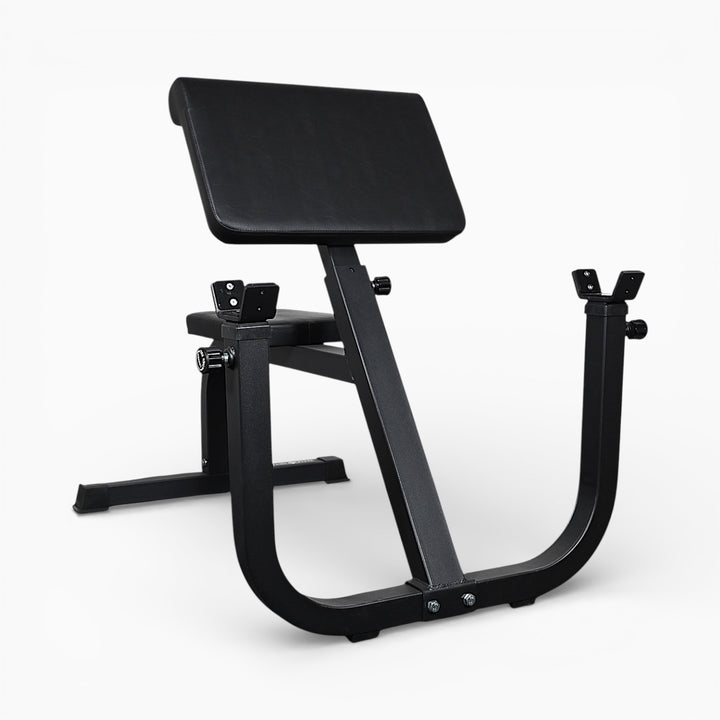
Performed on an angled bench, the preacher curl completely isolates the lower portion of the biceps by preventing your shoulders from swinging the weight up. Rest your upper arms flat against the padded support, grip the inner angles of the EZ bar, and lower the weight down until your arms are nearly straight before contracting back up. The EZ bar is the undisputed king of this exercise, as a straight bar can make the bottom portion of a preacher curl feel incredibly dangerous for the elbow tendons.
3. Skull Crushers (Lying Tricep Extensions)
To build balanced arms, you must train the triceps, which make up roughly two-thirds of your overall upper arm mass. Lie flat on a weight bench, hold the EZ bar directly above your chest with an overhand grip on the inner angles, and gently hinge at the elbows to lower the bar down toward your forehead or just behind your head. The angled grip reduces the extreme stress that this exercise typically places on the elbow joint, allowing for a deep, productive stretch.
4. Overhead Tricep Extensions
Whether seated or standing, pressing an EZ bar vertically over your head and lowering it behind your neck targets the long head of the triceps. The unique zigzag shape allows you to maintain a tight, tucked-elbow position throughout the movement, which is essential for safely targeting the tricep complex without flaring your arms out to the sides.
5. Upright Rows
To target the medial deltoids and upper trapezius muscles of the shoulders, you can pull the EZ bar vertically up the front of your torso toward your chin. Performing this movement with a traditional straight bar can pinch the shoulder joints, a medical issue known as shoulder impingement. The angled contours of the EZ bar allow your wrists to flex naturally at the top of the movement, making it a much safer alternative for shoulder health.
Key Considerations Before Buying an EZ Bar
If you want to ensure your online purchase serves you well for a lifetime of fitness progression, take a quick moment to run through these vital purchasing criteria.
Knurling Quality
The knurling is the cross-hatched, textured pattern etched directly into the steel handle of the bar. It is designed to create friction against your skin, ensuring the bar will not slip out of your hands when you are sweating heavily. Look for a model that features a medium-grade, volcanic knurling pattern. Avoid completely smooth bars, as they require you to grip unnecessarily hard, which causes your forearms to fatigue long before your biceps get a great workout.
Sleeve Length and Weight Capacity
If you are planning to get significantly stronger over time, check the physical length of the loading sleeves on either end of the bar. Some ultra-compact home gym bars have incredibly short sleeves, meaning you can only fit a couple of thick plates on each side. A longer sleeve allows you to stack multiple thin iron plates, ensuring the bar can grow alongside your physical strength.
Rackable vs Non-Rackable Bars
A standard EZ bar is short, meaning it cannot rest safely on the wide upright supports of a standard power rack or bench press station. You have to lift it up directly off the floor to begin your set. However, some manufacturers produce specialized "rackable" EZ bars. These models feature a significantly longer central shaft between the angled zones, allowing you to rest the bar securely on standard gym hooks between sets, which is incredibly useful for heavy skull crushers.
Essential Safety Protocols for Weight Training
To get the absolute most out of your new training tool while keeping your home gym completely safe, adopt these basic lifestyle practices:
-
Always Use Weight Collars: Never perform a set without securing the plates with heavy-duty spring clips or lock-jaw collars. Because the EZ bar tilts dynamically during single-arm focus movements, unsecured plates can easily slide off one side, causing the bar to violently flip over.
-
Control the Eccentric Phase: Do not let gravity drop the bar quickly down against your thighs or forehead. Lower the weight over a slow, controlled two-second count to maximize muscle micro-tears and keep your joints perfectly protected.
-
Keep Your Spine Neutral: When performing heavy standing bicep curls, avoid the common mistake of rocking your torso back and forth to swing the weight up. If you need to swing your body to complete a repetition, the weight is too heavy; drop the load slightly and let the angles of the bar do the work cleanly.
Final Thoughts: The Ultimate Home Gym Asset
Ultimately, successful fitness training is entirely about consistency and sustainability. The best equipment is the gear that allows you to train intensely week after week without forcing you to take unwanted breaks to recover from painful joint inflammation or tendon issues.
The EZ bar is a masterful marriage of human anatomical study and heavy-duty steel manufacturing. By meeting your body at its natural, preferred lifting angles, it eliminates structural friction, keeps your joints completely pain-free, and allows you to unleash maximum intensity on your upper body training. Whether you are a casual lifter looking to tone up at home or an elite athlete chasing structural arm development, adding an EZ bar to your fitness collection is an incredibly smart, high-yield decision.


