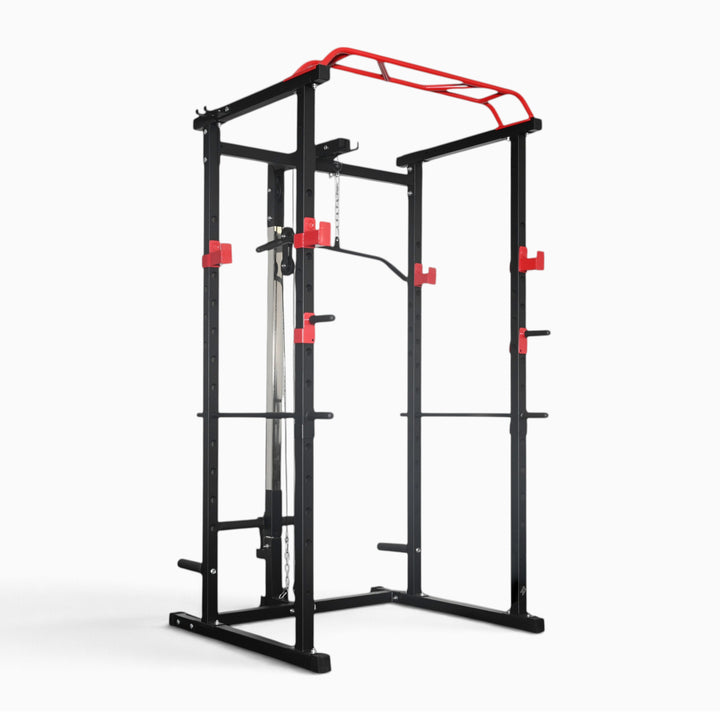
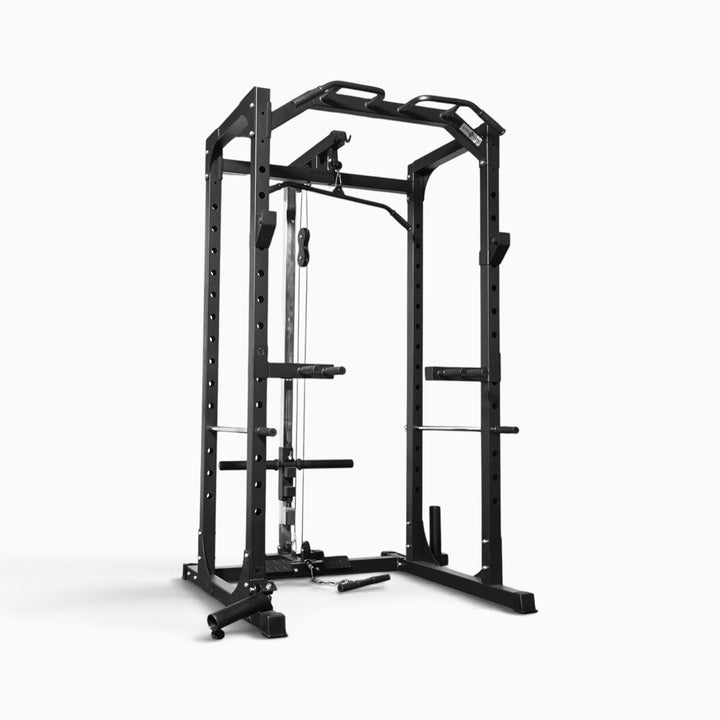
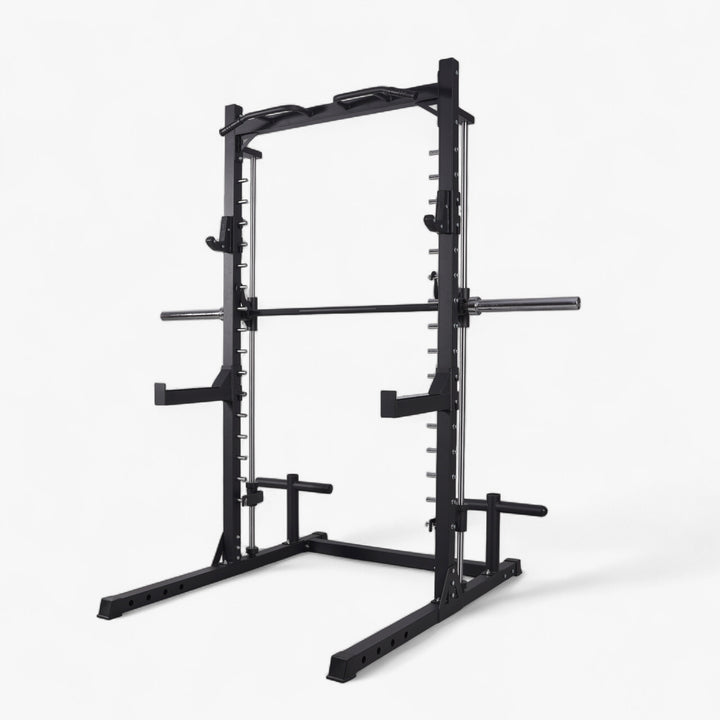
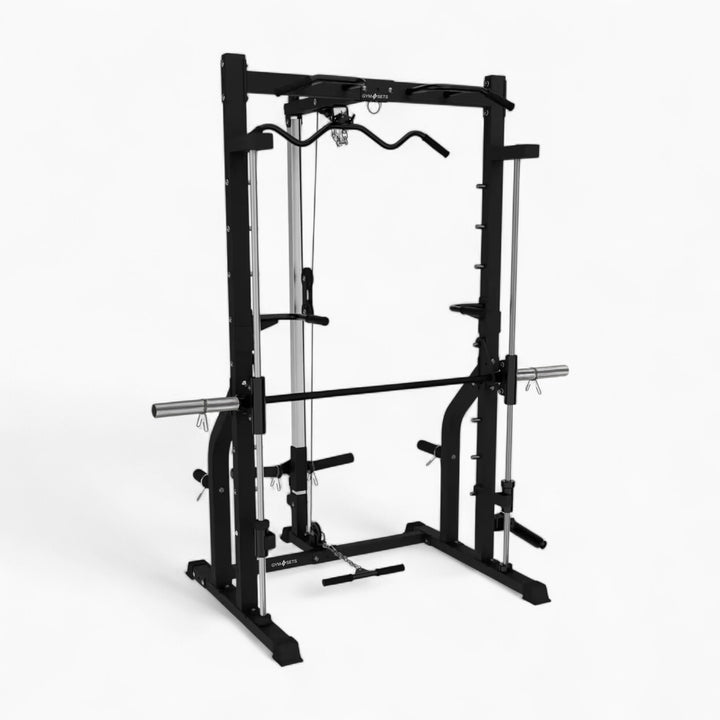




A cable machine is one of the most versatile pieces of gym equipment you can use. Whether you are training at home or in a commercial gym, it gives you a huge range of movement options for building strength, improving muscle control, and adding variety to your workouts.
So, how many different exercises can be performed on a cable machine? The honest answer is: well over 100 exercises, depending on the type of cable machine, attachments available, and how creative you want to be.
From chest flyes and lat pulldowns to glute kickbacks, face pulls, wood chops, and single-arm rows, a cable machine can train almost every major muscle group. In this guide, we will break down the main exercise options, the best attachments to use, and how to get the most from cable training.
What makes a cable machine so versatile?
A cable machine works by using adjustable pulleys, weight stacks, cables, and attachments. Unlike fixed machines, which usually guide you through one movement pattern, cables allow you to move in many different directions.
This means you can train muscles from different angles and positions. You can pull high to low, low to high, across the body, away from the body, or straight back towards you.
Cable machines are especially useful because they keep tension on the muscles throughout the movement. This makes exercises feel smooth and controlled.
You can also train one side of the body at a time, which helps improve balance and correct strength differences. That is one of the main reasons cable machines are popular for strength training, bodybuilding, rehab-style work, and general fitness.
The quick answer: how many exercises can you do?
Most people can perform 100+ different cable machine exercises when using a dual adjustable pulley system with a good range of attachments.
A basic single-pulley cable machine may offer fewer options, while a functional trainer with two adjustable pulleys gives far more variety.
Here is a simple breakdown:
| Cable machine type | Approximate number of exercises |
|---|---|
| Single high pulley | 15–30 exercises |
| Single low pulley | 20–40 exercises |
| High and low pulley machine | 40–70 exercises |
| Dual adjustable pulley machine | 80–120+ exercises |
| Functional trainer with attachments | 100–150+ exercises |
So, how many different exercises can be performed on a cable machine? For most well-equipped cable machines, the answer is easily over 100.
Can a cable machine train the whole body?
Yes, a cable machine can train the whole body. It is not just for arms or back exercises. With the right setup, you can use it for chest, shoulders, back, arms, legs, glutes, abs, and rotational core work.
A cable machine is particularly effective because you can change the pulley height. This lets you adjust the angle of resistance to match the exercise.
For example:
- High pulley: tricep pushdowns, lat pulldowns, face pulls
- Mid pulley: rows, chest press, reverse flyes
- Low pulley: bicep curls, lateral raises, glute kickbacks
- Dual pulleys: cable flyes, crossovers, presses
This makes cable machines useful for full-body workouts, isolation work, strength circuits, and accessory training. You can train with light weights for control or heavier loads for strength.
Chest exercises on a cable machine
Cable machines are excellent for chest training because they keep constant tension through the full range of motion. Unlike dumbbells, where tension can reduce at certain points, cables continue to challenge the chest from start to finish.
Popular cable chest exercises include:
- Cable chest fly
- High-to-low cable fly
- Low-to-high cable fly
- Standing cable chest press
- Single-arm cable press
- Incline cable press
- Decline cable press
- Cable crossover
- Kneeling cable press
- Cable squeeze press
| Chest goal | Best cable exercise |
|---|---|
| Upper chest | Low-to-high cable fly |
| Lower chest | High-to-low cable fly |
| Overall chest | Cable chest press |
| Inner chest focus | Cable crossover |
| Unilateral control | Single-arm cable press |
Cable chest exercises are useful for muscle growth, control, and adding variety after bench press movements.
Back exercises on a cable machine
Back training is one of the strongest uses for a cable machine. Many classic back exercises are cable-based because the movement feels natural and controlled.
You can train the lats, traps, rhomboids, rear delts, and spinal stabilisers using different grips and angles.
Common cable back exercises include:
- Lat pulldown
- Seated cable row
- Single-arm cable row
- Straight-arm pulldown
- Face pull
- High cable row
- Low cable row
- Cable pullover
- Kneeling lat pulldown
- Wide-grip pulldown
- Close-grip pulldown
- Reverse-grip pulldown
Changing the attachment changes the feel of the exercise. A wide bar can emphasise the upper back, while a rope or single handle can improve range of motion.
For most people, cable back exercises are a great way to build strength and posture.
Shoulder exercises on a cable machine
Cable machines are brilliant for shoulder training because they allow small, controlled movements. This is useful for targeting the delts without needing to swing heavy dumbbells around.
The shoulders respond well to different angles, and cables make those angles easy to adjust.
Great cable shoulder exercises include:
- Cable lateral raise
- Single-arm lateral raise
- Cable front raise
- Cable rear delt fly
- Face pull
- Cable upright row
- Cable shoulder press
- Leaning cable lateral raise
- Cable Y-raise
- External rotation
| Shoulder area | Best cable exercises |
|---|---|
| Side delts | Cable lateral raise |
| Front delts | Cable front raise |
| Rear delts | Rear delt fly, face pull |
| Rotator cuff | External rotation |
| Overall shoulders | Cable shoulder press |
Cable shoulder exercises are especially helpful when you want tension without using very heavy weights.
Arm exercises on a cable machine
Cable machines are a favourite for arm training because they make it easy to isolate the biceps and triceps. The constant tension helps create a strong contraction and smooth movement.
For biceps, you can use straight bars, EZ-style bars, ropes, or single handles. For triceps, the rope and straight bar are especially popular.
Cable biceps exercises include:
- Cable bicep curl
- Rope hammer curl
- Single-arm cable curl
- High cable curl
- Bayesian cable curl
- Reverse cable curl
- Preacher-style cable curl
Cable triceps exercises include:
- Tricep pushdown
- Rope pushdown
- Overhead tricep extension
- Single-arm tricep extension
- Reverse-grip pushdown
- Cable kickback
- Cross-body tricep extension
With just one cable station, you can easily build a complete arm workout.
Leg exercises on a cable machine
Although many people think of cable machines as upper-body equipment, they can also be used for leg training. You may need an ankle strap for some exercises, but once you have one, the options open up quickly.
Cable leg exercises are especially useful for controlled, single-leg movements. They can help target areas that are harder to isolate with traditional barbell or dumbbell training.
Examples include:
- Cable squat
- Cable Romanian deadlift
- Cable pull-through
- Cable lunge
- Cable split squat
- Cable step-back lunge
- Cable leg curl
- Cable leg extension variation
- Cable calf raise
- Cable hip abduction
| Leg muscle | Useful cable exercises |
|---|---|
| Quads | Cable squat, cable lunge |
| Hamstrings | Cable Romanian deadlift, leg curl |
| Glutes | Pull-through, kickback |
| Calves | Cable calf raise |
| Inner thighs | Cable hip adduction |
Cable leg training works best as part of a balanced lower-body routine.
Glute exercises on a cable machine
Cable machines are excellent for glute training because they allow the hips to move freely against resistance. This is useful for targeting the glutes from different directions.
An ankle strap is usually the most important attachment for glute-focused cable exercises.
Popular cable glute exercises include:
- Cable glute kickback
- Cable pull-through
- Cable hip abduction
- Cable hip adduction
- Cable standing hip extension
- Cable diagonal kickback
- Cable squat
- Cable reverse lunge
- Cable side lunge
- Cable curtsy lunge
These exercises can help target the glute max, glute medius, and hip stabilisers.
Cable glute work is often used alongside squats, hip thrusts, and Romanian deadlifts. It is especially good for adding focused volume without needing to load the spine heavily.
Core exercises on a cable machine
A cable machine is one of the best tools for training the core because it allows rotational, anti-rotational, and flexion-based movements. That means you can train your abs in more ways than just crunches.
Cable core exercises include:
- Cable crunch
- Standing cable crunch
- Cable wood chop
- Reverse cable wood chop
- Pallof press
- Cable Russian twist
- Cable side bend
- Kneeling cable crunch
- Cable dead bug variation
- Anti-rotation hold
| Core goal | Best cable exercise |
|---|---|
| Abs | Cable crunch |
| Obliques | Wood chop |
| Anti-rotation | Pallof press |
| Side core | Cable side bend |
| Athletic power | Rotational cable twist |
Cable core training is great for building strength that carries over into lifting, sport, and everyday movement.
Best cable machine attachments for more exercises
The number of exercises you can perform depends heavily on the attachments you have. A cable machine with only one handle is useful, but a machine with several attachments gives you far more options.
Useful cable attachments include:
- Straight bar
- Rope attachment
- Single D-handle
- Lat pulldown bar
- Close-grip row handle
- Ankle strap
- EZ-style curl bar
- Tricep V-bar
- Stirrup handles
- Long straight bar
| Attachment | Best used for |
|---|---|
| Rope | Pushdowns, face pulls, hammer curls |
| D-handle | Single-arm rows, flyes, raises |
| Lat bar | Pulldowns, wide rows |
| Ankle strap | Glutes, legs, hip work |
| Straight bar | Curls, pushdowns, rows |
More attachments usually mean more exercise variety.
Single pulley vs dual pulley: does it change the number of exercises?
Yes, the type of cable machine makes a big difference. A single-pulley system can still be very useful, but a dual-pulley system gives you more freedom.
With a single pulley, you can do exercises such as rows, curls, pushdowns, pulldowns, crunches, and kickbacks. This is enough for many home gym users.
A dual adjustable pulley system gives you more options for exercises where both arms move independently. This includes cable flyes, cable crossovers, dual-arm presses, and many functional movements.
| Feature | Single pulley | Dual pulley |
|---|---|---|
| Space needed | Usually less | Usually more |
| Exercise variety | Good | Excellent |
| Chest flyes | Limited | Better |
| Unilateral work | Yes | Yes |
| Full-body training | Possible | Easier |
If variety is your priority, dual pulleys are hard to beat.
Can beginners use a cable machine?
Yes, cable machines are beginner-friendly when used correctly. They can feel less intimidating than free weights because the path of resistance is smooth and easy to control.
Beginners can start with simple movements such as cable rows, tricep pushdowns, bicep curls, chest presses, and face pulls. These exercises are easy to learn and help build confidence.
Cable machines also make it simple to adjust the weight. You can increase or decrease the resistance in small steps, which is helpful when learning technique.
Good beginner cable exercises include:
- Seated cable row
- Lat pulldown
- Cable chest press
- Rope tricep pushdown
- Cable bicep curl
- Face pull
- Cable squat
- Cable crunch
The key is to use controlled movement, avoid rushing, and focus on form before increasing the weight.
Advanced cable machine exercises
Advanced lifters can also get a lot from cable machines. Cables are not just for beginners or light accessory work. They can be used for challenging movements, unilateral training, and high-volume muscle-building sessions.
Advanced cable exercises include:
- Single-arm cable chest press
- Cable Bulgarian split squat
- Cable Romanian deadlift
- Cable lateral lunge
- High-to-low wood chop
- Kneeling single-arm lat pulldown
- Cable Y-raise
- Dual cable crossover
- Cable squat to row
- Cable rotational press
Advanced users can also combine exercises into supersets or circuits. For example, a cable chest fly followed by a cable press can create a strong chest pump without needing multiple pieces of equipment.
The cable machine works well for building strength, improving stability, and adding variety to established training plans.
Example full-body cable machine workout
A cable machine can be used for an entire workout if you choose exercises carefully. The goal is to include a push, pull, squat or hinge, core movement, and isolation work.
Here is a simple full-body cable workout:
| Exercise | Sets | Reps |
|---|---|---|
| Cable squat | 3 | 10–12 |
| Lat pulldown | 3 | 8–12 |
| Cable chest press | 3 | 8–12 |
| Cable Romanian deadlift | 3 | 10–12 |
| Face pull | 3 | 12–15 |
| Rope tricep pushdown | 2 | 12–15 |
| Cable bicep curl | 2 | 12–15 |
| Cable crunch | 3 | 12–20 |
This style of workout is useful when you want a complete session using minimal equipment. Adjust the weight so each set feels challenging but controlled.
How to create more cable machine exercise variations
The easiest way to create more cable exercises is to change the angle, stance, attachment, or number of working limbs. One movement can become several variations with small adjustments.
For example, a cable row can become:
- Seated cable row
- Standing cable row
- Single-arm cable row
- High cable row
- Low cable row
- Wide-grip cable row
- Close-grip cable row
A cable fly can become:
- Mid-height cable fly
- High-to-low fly
- Low-to-high fly
- Single-arm fly
- Kneeling fly
- Incline bench cable fly
This is why the total number of cable machine exercises is so high. You are not limited to one fixed path. You can adapt the movement to your body, goal, and training level.
Are cable machine exercises better than free weights?
Cable machines are not automatically better than free weights, but they offer different benefits. The best choice depends on your goal.
Free weights are excellent for building overall strength, coordination, and heavy compound movement patterns. Cable machines are excellent for constant tension, controlled isolation, and training from varied angles.
| Training goal | Cable machine | Free weights |
|---|---|---|
| Constant tension | Excellent | Moderate |
| Heavy strength | Good | Excellent |
| Isolation work | Excellent | Good |
| Beginner control | Good | Moderate |
| Movement freedom | Excellent | Excellent |
| Stability demand | Moderate | High |
For most people, the best approach is to use both. Free weights can form the foundation, while cables add variety, control, and targeted muscle work.
Common mistakes when using a cable machine
Cable machines are easy to use, but there are still mistakes that can reduce results or increase injury risk. Most issues come from using too much weight or rushing the movement.
Common cable machine mistakes include:
- Using momentum instead of control
- Setting the pulley at the wrong height
- Standing too close or too far away
- Letting the weight stack slam down
- Pulling with the wrong muscles
- Ignoring posture and core position
- Choosing the wrong attachment
- Moving too quickly through each rep
- Loading too heavily too soon
A good rule is to slow down and feel the target muscle working. If you cannot control the weight, it is probably too heavy.
Good cable training should feel smooth, stable, and deliberate.
How many cable exercises should you include in a workout?
You do not need to do dozens of cable exercises in one session. Even though a cable machine can support over 100 movements, a good workout usually only needs 5–8 well-chosen exercises.
For muscle growth, aim for enough weekly volume across each muscle group. For general fitness, choose exercises that cover the main movement patterns.
A balanced cable workout might include:
- 1 chest movement
- 1 back movement
- 1 shoulder movement
- 1 leg or glute movement
- 1 core movement
- 1–2 arm exercises
More exercises are not always better. The best results usually come from consistent training, good technique, and progressive overload.
Use the cable machine as a tool, not as a checklist of every possible exercise.
Final answer: how many different exercises can be performed on a cable machine?
So, how many different exercises can be performed on a cable machine? With a good cable machine and a range of attachments, you can perform well over 100 different exercises.
A simple single-pulley machine may support around 20–40 exercises, while a dual adjustable cable machine or functional trainer can offer 100–150+ exercise variations. That includes chest, back, shoulder, arm, leg, glute, and core movements.
The real strength of a cable machine is its flexibility. You can adjust the pulley height, change the attachment, alter your stance, train one side at a time, and target muscles from different angles.
For anyone building a versatile training setup, a cable machine is one of the best all-round pieces of gym equipment available.