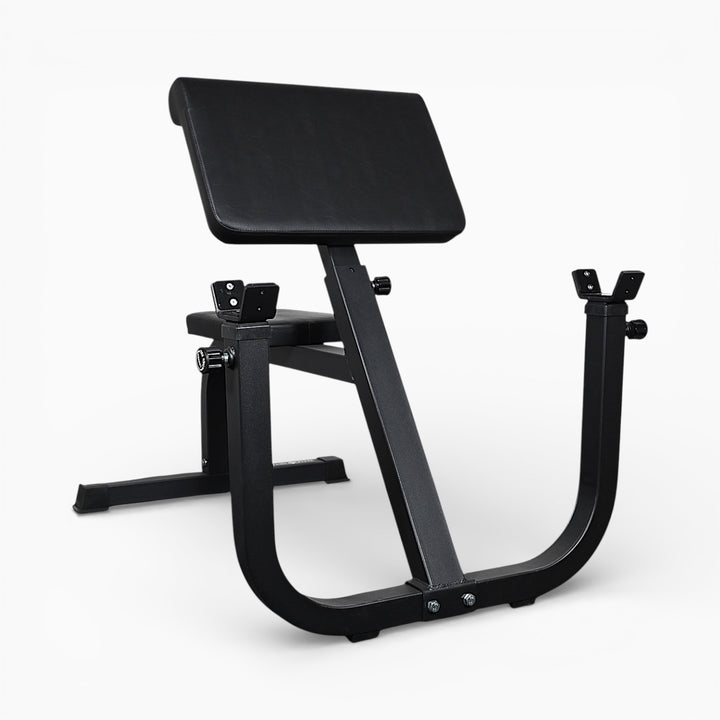
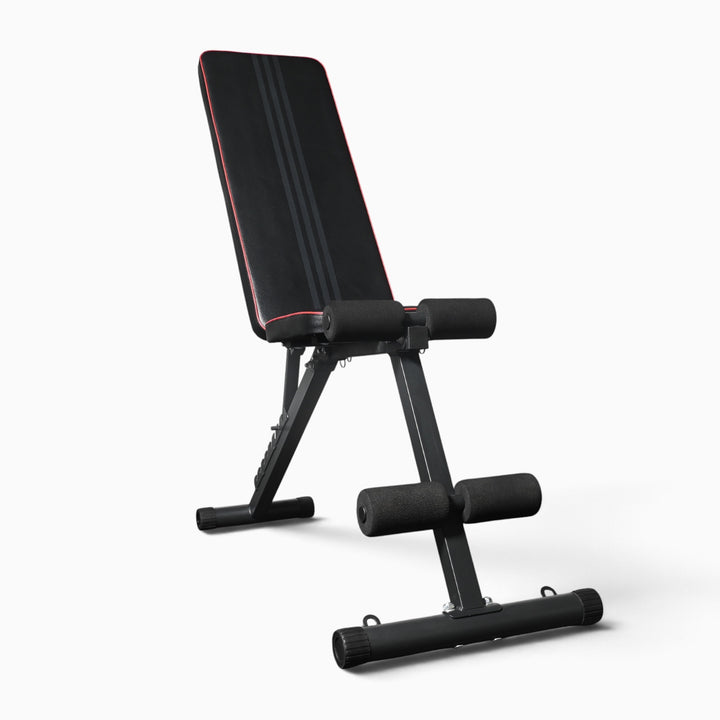
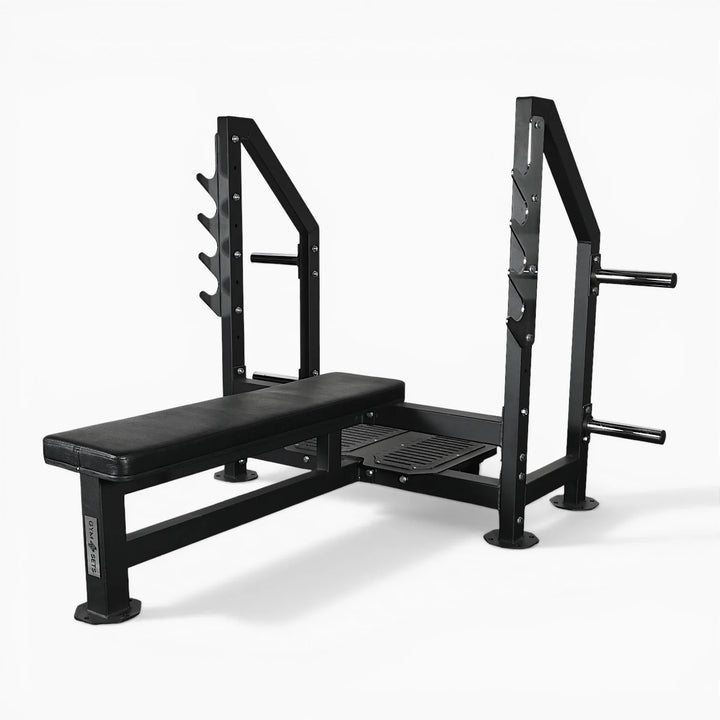
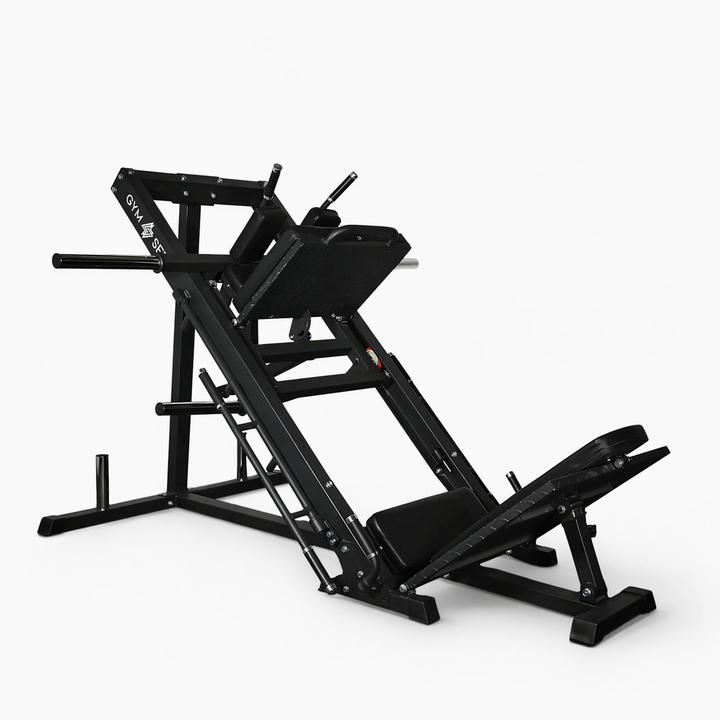




Discover the most effective machines for training legs, including the hack squat, leg press, leg extensions, lying leg curls, and standing calf raises. These top-tier tools maximize lower-body muscle growth, isolate specific muscle groups, and offer superior joint stability for ultimate gym results.
Skipping leg day is no longer an option if you want a balanced, powerful physique. While free weights like barbells get a lot of love, gym machines offer unique benefits that free weights simply cannot match.
This guide breaks down exactly why leg machines deserve a permanent spot in your weekly workout routine. We will explore how they keep constant tension on your muscles and allow you to train safely to absolute failure.
Whether you are looking to build massive quads, thick hamstrings, or powerful calves, we have mapped out the ultimate machines to help you reach your goals. Let's dive straight into the best kit for the job.
What are the most effective machines for training legs?
When it comes to building serious lower-body strength and size, certain gym machines stand head and shoulders above the rest. The most effective options are those that allow you to load the target muscle heavily while keeping your joints safe and stable.
Our top picks for the absolute best leg training machines are:
-
The Hack Squat Machine (Best for building massive quadriceps)
-
The 45-Degree Leg Press (Best for overall lower-body mass and foot placement versatility)
-
The Leg Extension Machine (Best for isolating the quads in their fully shortened position)
-
The Seated or Lying Leg Curl (Best for targeted hamstring development)
-
The Standing Calf Raise Machine (Best for building thick, powerful calves)
1. The Hack Squat Machine
If your main goal is to build massive, sweeping quadriceps, the hack squat machine is arguably the single greatest tool at your disposal. Because the machine supports your back on a fixed, angled track, you do not have to worry about balancing a heavy barbell on your spine.
This external stability is a massive game-changer for leg development. It allows you to focus 100% of your mental and physical effort on pushing your legs to their absolute limit.
Why it is so effective
When you perform a standard barbell squat, your lower back or core strength is often the bottleneck that causes you to end the set. With the hack squat, your spine is fully supported, meaning your quads will always be the muscle group that fails first.
Furthermore, you can easily adjust your foot position on the platform to shift the focus of the exercise. Placing your feet lower on the platform increases knee flexion, which places an immense, growth-stimulating stretch on your quads.
How to use it for maximum quad growth
To get the absolute most out of this machine, you want to focus on deep, controlled repetitions. Lower yourself slowly over a three-second count until your thighs are at least parallel to the footplate, then drive back up forcefully.
Avoid locking your knees out at the very top of the movement. Keeping a very slight bend in your knees at the top keeps the tension firmly on your quadriceps rather than transferring the weight onto your knee joints.
2. The 45-Degree Leg Press
The leg press is a staple in almost every gym across the UK, and for very good reason. It is an absolute powerhouse for packing raw mass onto your thighs and glutes without overloading your lower back.
Because you are seated with your back supported, you can safely move incredibly heavy weight. This makes it an exceptional tool for both high-repetition hypertrophy (muscle building) work and heavier strength sets.
Target multiple muscle groups with foot placement
One of the best things about the leg press is how easily you can customise the exercise simply by moving your feet. By changing your foot placement on the sled, you can completely alter which muscles do the majority of the heavy lifting.
To help you get the most out of your leg press sessions, we have outlined the key foot placements below:
-
Low and narrow placement: This stance shifts the vast majority of the load onto your quadriceps, particularly the outer sweep.
-
High and wide placement: This position recruits more of your glutes and hamstrings, making it a brilliant posterior chain builder.
-
Standard shoulder-width placement: This provides a fantastic, balanced distribution across your entire lower body.
Safety tips for heavy pressing
While the leg press is highly effective, it is incredibly easy to make ego-driven mistakes that can lead to injury. The most common error is lowering the sled so far down that your lower back rounds and lifts off the seat pad.
This puts a dangerous amount of shear force on your lumbar spine. To stay safe, only lower the weight as far as you can without your hips tilting forward or your tailbone lifting off the pad.
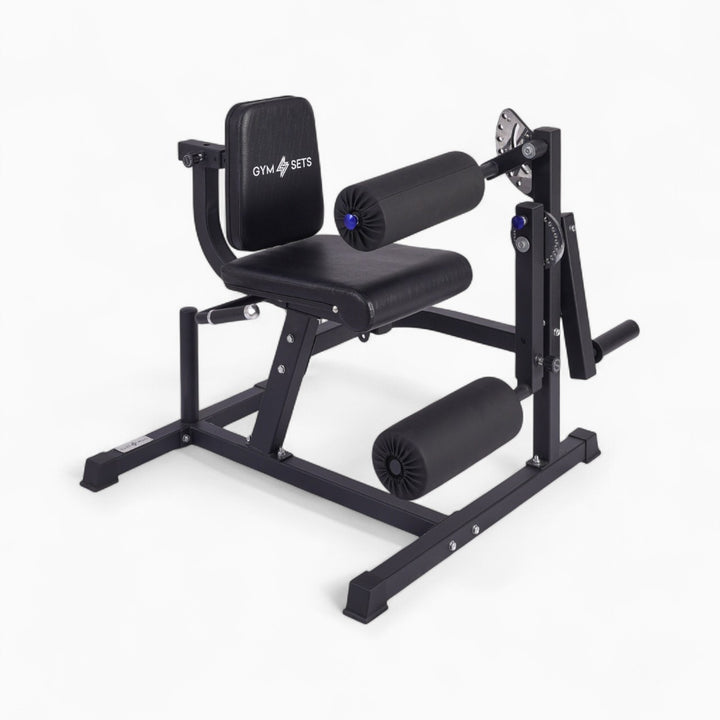
3. The Leg Extension Machine
Unlike compound exercises like squats and leg presses, the leg extension is an isolation movement. This means it works just one joint (the knee) to target a single muscle group: the quadriceps.
While it shouldn't replace your heavy compound presses, it is an invaluable tool for finishing off your quads. It target the muscles in a way that squats simply cannot replicate.
The power of isolation
Your quadriceps are made up of four distinct muscles, and one of them—the rectus femoris—crosses both your hip and knee joints. Because of this unique anatomy, the rectus femoris is not fully worked during compound movements like squats.
The leg extension machine solves this issue beautifully. By keeping your hips seated and extending your knees, it forces the rectus femoris to contract in its fully shortened position, giving you that coveted "quad sweep."
Training to failure safely
Because there is no risk of getting pinned under a heavy barbell, the leg extension is the perfect machine for intensity techniques. It is highly suited for drop sets, partial repetitions, and high-intensity rest-pause sets.
Try adding a drop set at the very end of your leg workout. Perform 12 reps to failure, instantly drop the weight by 30%, and squeeze out another 8 to 10 burning reps to push fresh, nutrient-rich blood into the muscles.
4. The Seated or Lying Leg Curl
An effective leg workout must balance the front of your thighs with the back of your thighs. The hamstrings are highly prone to injury if they are neglected, making a dedicated leg curl machine an absolute necessity.
While deadlifts are brilliant for the hamstrings, they work them through hip extension. To fully develop the hamstrings, you must also train them through knee flexion (bending the knee), which is exactly what the leg curl machine does.
Seated vs. lying leg curls: Which is better?
Most commercial and home gyms will feature either a seated leg curl or a lying leg curl machine. While both are fantastic, science tells us that the seated version has a very slight edge for muscle growth.
When you sit upright, your hips are flexed, which places the hamstring muscles under a greater stretch at the hip joint. Training a muscle while it is in this stretched position has been shown to trigger significantly more hypertrophy.
Perfecting your leg curl form
To stop other muscles from taking over, you must keep your body firmly locked into the machine. Sit tall, pull the thigh pad down tightly against your legs, and hold the handles firmly to anchor your hips to the seat.
When you pull the pad down, focus on squeezing your hamstrings hard at the bottom of the movement for a full second. Control the weight on the way back up, resisting the temptation to let the stack slam back down.
5. The Standing Calf Raise Machine
No leg workout is complete without spending some time on the lower legs. The calves are notoriously difficult to grow, largely because people tend to bounce the weight using the elastic strength of their Achilles tendon.
A dedicated standing calf raise machine is the absolute best way to isolate the large gastrocnemius muscle. This is the diamond-shaped muscle that makes up the bulk of your upper calf.
Defeating the Achilles tendon bounce
The Achilles tendon is incredibly thick and springy, designed to store and release energy when you walk, run, or jump. When you do quick, bouncy calf raises, the tendon does almost all of the work, leaving your actual calf muscles under-stimulated.
To force your calves to grow, you must take the spring out of the movement. Lower the weight slowly, pause for two seconds in the fully stretched position at the bottom, and then drive up onto your tiptoes, squeezing hard at the top.
The standing vs. seated calf raise difference
It is worth noting that your calf is made up of two primary muscles: the gastrocnemius and the soleus. Because the gastrocnemius crosses the knee joint, it can only be fully worked when your legs are completely straight.
If you perform seated calf raises with bent knees, the gastrocnemius is placed in a slack position, and the smaller soleus muscle takes over. For maximum overall calf size and that classic athletic look, prioritize standing calf raises.
Designing the Ultimate Leg Machine Workout
Now that you know which machines are the most effective, it is time to look at how to structure them into an incredibly effective leg day routine. Below is a highly structured, scientifically backed workout plan designed to build balanced legs.
| Exercise | Target Muscle Group | Sets | Repetitions | Rest Period |
| Hack Squats | Quadriceps (with a heavy focus on the deep stretch) | 3 | 8 - 10 | 3 Minutes |
| 45-Degree Leg Press | Overall Thighs, Glutes, and Hamstrings | 3 | 10 - 12 | 2.5 Minutes |
| Seated Leg Curls | Hamstrings (fully isolated) | 3 | 10 - 12 | 2 Minutes |
| Leg Extensions | Quadriceps (focusing on the peak squeeze) | 2 | 12 - 15 | 1.5 Minutes |
| Standing Calf Raises | Lower Legs (Gastrocnemius focus) | 4 | 12 - 15 | 1.5 Minutes |
Key Benefits of Using Machines for Leg Training
While free weights like barbell squats and lunges are fantastic, incorporating machines into your routine offers several distinct advantages. Understanding these benefits will help you use them more effectively in your training.
1. Unmatched mechanical tension and stability
When you are balancing a heavy barbell on your back, a massive portion of your energy is spent keeping your body upright and balanced. This recruit's your core, lower back, and stabilizer muscles, which is great for overall fitness.
However, if your goal is purely to build larger, stronger legs, this instability actually limits how hard you can push. Machines remove the stability bottleneck, allowing you to safely push your leg muscles to complete, growth-inducing fatigue.
2. Safer training to absolute failure
To trigger muscle growth, you need to train relatively close to physical failure—the point where you cannot physically complete another clean rep. Doing this on a barbell squat without a spotter can be incredibly dangerous.
On a leg machine, you can train to absolute failure with complete peace of mind. Almost all leg press, hack squat, and extension machines feature built-in safety catches that you can engage instantly if you get stuck.
3. Highly customizable foot placements
Free weight exercises generally require you to keep your feet flat on the floor in a relatively natural stance to maintain your balance. This limits your ability to target specific areas of your legs.
Leg machines feature large, adjustable footplates that allow you to shift your feet high, low, wide, or narrow. This flexibility allows you to easily target weak points in your leg development, such as your outer quad sweep or your inner thighs.
Common Leg Machine Mistakes to Avoid
To ensure you get the absolute best results from your machine workouts while keeping your joints healthy, make sure you avoid these three incredibly common training mistakes.
Avoid partial range of motion (Ego lifting)
Because machines are incredibly stable, it is very easy to load on far too much weight and perform tiny, shallow repetitions. This is commonly seen on the leg press, where lifters move thousands of pounds just a few inches.
Partial reps do very little for muscle growth and place a massive amount of stress on your tendons. Always prioritize a full range of motion, lowering the weight smoothly until you feel a deep stretch in the target muscle.
Do not let your lower back round
When using the leg press or hack squat, it is vital that you keep your lower back flat against the padded support at all times. Allowing your hips to curl forward at the bottom of the movement places immense stress on your lower back.
If you find your lower back lifting, you have gone past your active range of motion. Shorten the depth of your rep slightly, or work on your hip and ankle mobility to allow for a deeper, safer squat.
Control the negative phase of the rep
It is incredibly common to see gym-goers let gravity drop the weight on the way down, only focusing their effort on the pushing phase of the exercise. This is a massive missed opportunity for muscle growth.
The eccentric phase (lowering the weight) is actually where the majority of muscle damage and subsequent growth occurs. Always control the weight on the way down, taking a full two to three seconds to lower it before driving back up.
Frequently Asked Questions
Can I build big legs using only machines?
Yes, you absolutely can build massive, powerful, and highly athletic legs using only gym machines. Machines allow you to apply a tremendous amount of mechanical tension to your muscles in a highly stable environment, which is the primary driver of muscle growth.
Is the leg press safer than the barbell squat?
Generally speaking, yes, the leg press is safer because it fully supports your spine and features mechanical safety catches to prevent you from getting pinned. However, both exercises can be done safely with proper form, and both can cause injury if performed with bad technique or excessive weight.
How often should I train my legs?
For the absolute best results, you should aim to train your legs two times per week. Splitting your weekly leg volume across two separate sessions allows you to keep your training intensity incredibly high, leading to much better long-term muscle growth.
Summary: Building Your Dream Legs
Building a powerful, balanced lower body requires consistent effort, smart exercise selection, and plenty of intensity. By incorporating the most effective machines for training legs into your routine, you can safely push your limits and maximize your gains.
Focus on mastering your form, controlling the lowering phase of every single repetition, and gradually increasing the weight over time. Combine this smart training with a high-quality home gym setup, and you will be well on your way to building the legs you have always wanted.
If you are looking to take your strength training to the next level at home, check out our incredible range of premium, durable home gym equipment at GymSets UK. From versatile weights to heavy-duty accessories, we have everything you need to build the perfect workout space without the premium price tag.


