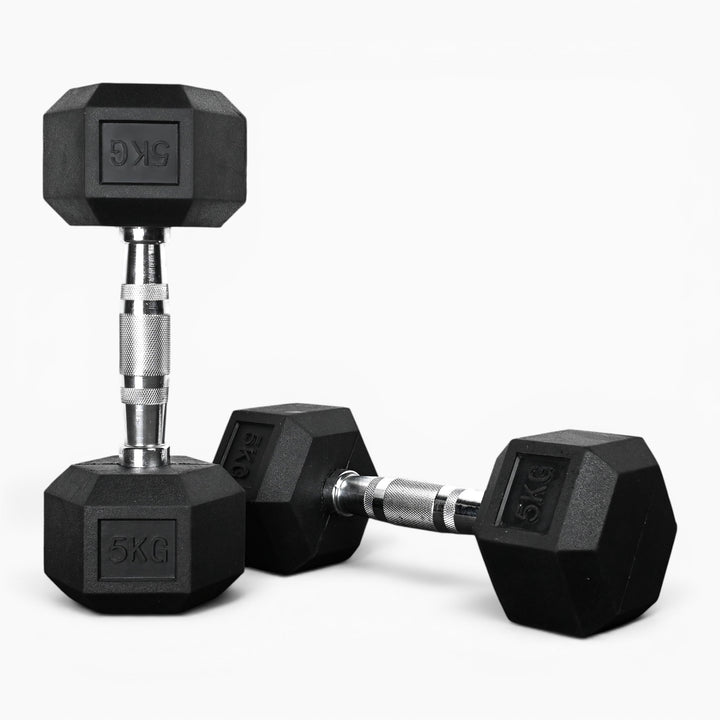
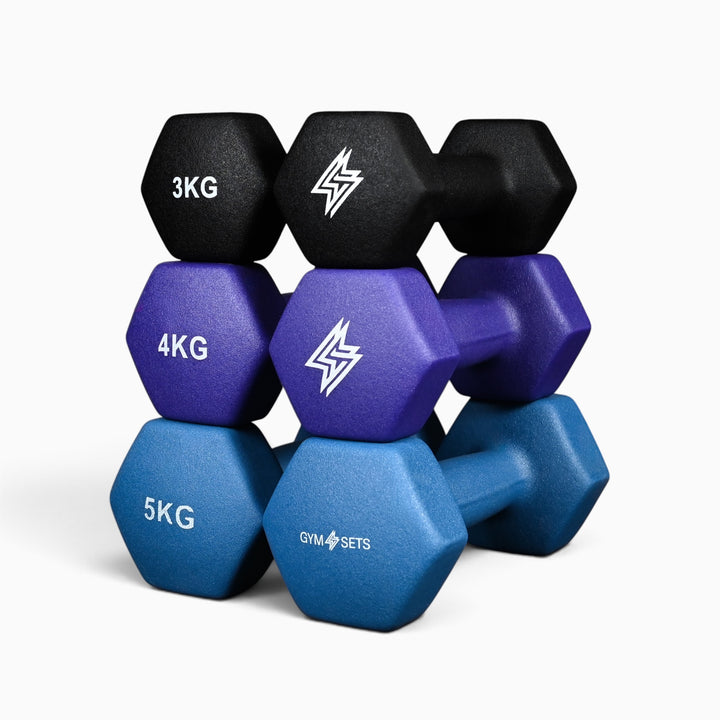
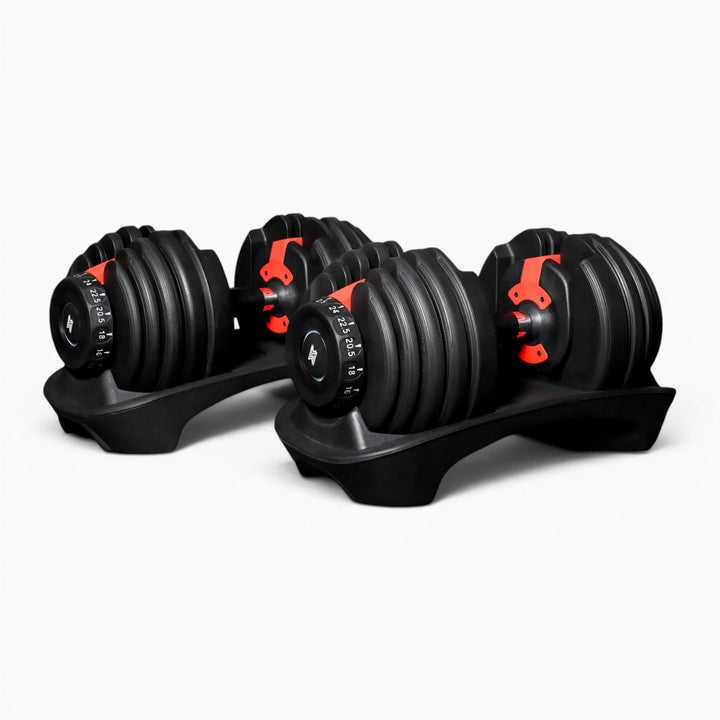
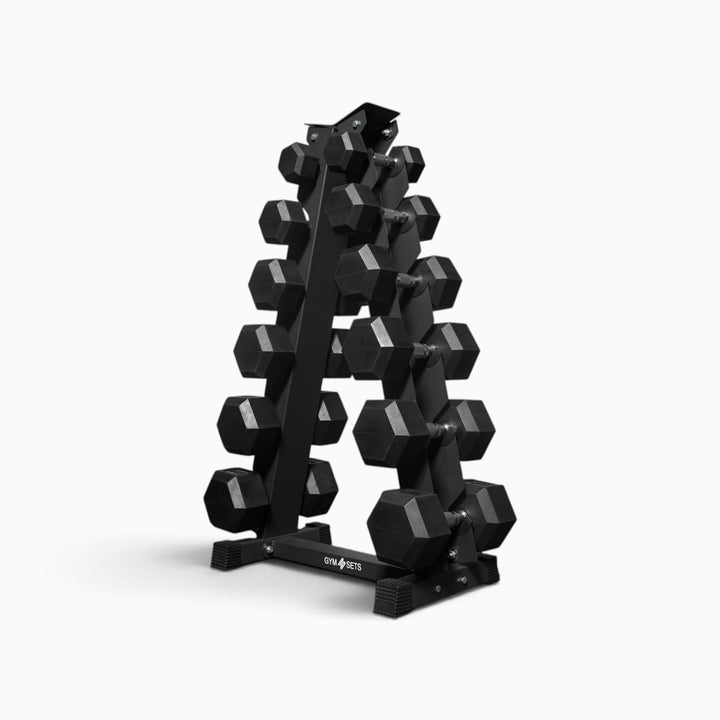





The most effective workouts using hex dumbbells combine compound movements like goblet squats, devil presses, and renegade rows to build full-body strength, power, and muscle. These structured routines maximise training efficiency through targeted total-body splits, upper-body muscle builders, lower-body power blocks, and intense fat-burning metabolic circuits.
Why Hex Dumbbells Are Your Ultimate Home Gym Asset
When you are setting up a home fitness space, choosing the right kit can feel a bit overwhelming. You want something versatile, durable, and safe enough that it won't roll away across your spare room floor midway through a heavy set.
That is exactly why hexagonal weights have become the absolute gold standard for garage gyms and commercial fitness spaces alike. The flat edges provide a stable base that unlocks an entirely new catalogue of floor-based exercises you simply cannot perform safely with traditional round weights.
Beyond the safety aspect, these rubber-coated powerhouses are exceptionally kind to your floors, dampening noise and reducing wear and tear. Because they do not roll, you can seamlessly transition from a heavy standing press right into a floor-based push-up without shifting your grip or losing your momentum.
The Core Advantages of Hex-Based Training
Before diving into the routines, it helps to understand why the physical shape of your weights changes the way your body builds muscle. Traditional round weights are great for basic lifting, but they limit your stability when you try to integrate your core with floor work.
The flat sides of a hex weight allow you to place your entire body weight directly over the handle whilst it sits firmly on the floor. This structural stability means you can combine heavy resistance training with high-intensity functional fitness movements in a single, fluid session.
You are no longer just lifting a weight up and down in a single plane of motion. Instead, you are challenging your core stability, your grip strength, and your rotational power all at the same time, which burns far more calories.
Routine 1: The Full-Body Strength Builder
This routine focuses on building raw strength across your entire body by targeting multiple large muscle groups at the same time. You will want to use a moderately heavy pair of weights that challenges you by the final few repetitions of each working set.
Perform this workout as a traditional set routine, taking a full sixty seconds of rest between each set to ensure your muscles recover properly for the next round.
-
Goblet Squats: 4 sets of 10 repetitions. Hold a single weight vertically against your chest, keeping your elbows tucked in tightly and your feet slightly wider than shoulder-width apart. Sit your hips back deeply as if dropping into a chair, driving hard through your heels to stand back up.
-
Renegade Rows: 4 sets of 8 repetitions per arm. Start in a strong push-up position with your hands gripping the handles of both weights directly beneath your shoulders. Keeping your hips perfectly level, row one weight up towards your hip before lowering it and repeating on the other side.
-
Romanian Deadlifts: 3 sets of 12 repetitions. Stand tall holding a weight in each hand right in front of your thighs. Hinge forward at your hips, pushing your glutes backward and sliding the weights down your shins until you feel a deep stretch in your hamstrings.
-
Floor Press: 3 sets of 10 repetitions. Lie flat on your back on the floor with your knees bent and feet flat on the ground. Hold the weights at your chest, then press them straight up towards the ceiling until your arms are fully extended.
Routine 2: The Upper-Body Hypertrophy Sculptor
If your main goal is to build muscle size and definition in your arms, chest, shoulders, and back, this targeted session is your perfect match. We will use a mixture of compound lifts and isolation movements to thoroughly exhaust the upper body muscle fibres.
Keep your rest periods a bit shorter during this session, aiming for around forty-five seconds between sets to keep the blood flowing directly to the working muscles.
-
Overhead Dumbbell Press: 4 sets of 10 repetitions. Stand with your feet hip-width apart and bring the weights up to your shoulders. Keep your core locked down firmly as you press the weights directly overhead until your elbows lock out, then lower them slowly.
-
Bent-Over Rows: 4 sets of 12 repetitions. Hinge forward at a forty-five-degree angle, letting the weights hang naturally down towards the floor. Drive your elbows up past your torso, squeezing your shoulder blades together tightly at the top of the movement.
-
Hammer Curls: 3 sets of 12 repetitions. Stand tall with your palms facing inward towards each other. Keep your elbows pinned down to your sides as you curl the weights up to your shoulders, focusing on controlling the descent.
-
Tricep Kickbacks: 3 sets of 15 repetitions. Lean forward slightly, bring your elbows up high by your ribs, and extend your arms straight back behind you until they are parallel to the floor.
Routine 3: The Lower-Body Power Pack
Never skip leg day, especially when you have a versatile pair of hexagonal weights ready to torch your quadriceps, hamstrings, and glutes. This workout uses unilateral training, which means working one leg at a time, to fix strength imbalances and improve your overall balance.
Because unilateral movements require a massive amount of core stabilisation, you will feel your abs working just as hard as your legs throughout this session.
-
Deficit Reverse Lunges: 3 sets of 10 repetitions per leg. Stand with a weight in each hand, then take a large step backward with your right leg, lowering your back knee until it almost touches the floor. Drive through your front heel to snap back to the start.
-
Bulgarian Split Squats: 3 sets of 8 repetitions per leg. Place your back foot on a sturdy chair or sofa behind you, holding your weights down by your sides. Lower your hips down smoothly until your back knee is just above the floor, then push back up.
-
Sumo Squats: 4 sets of 12 repetitions. Take a very wide stance with your toes pointed outward at a forty-five-degree angle. Hold one heavy weight by the end handle, letting it hang down between your legs as you drop into a deep, wide squat.
-
Calf Raises: 3 sets of 20 repetitions. Stand flat on the floor holding both weights, then explode up onto the balls of your feet, squeezing your calves at the peak for a full second.
Routine 4: The High-Intensity Metabolic Engine
When you want to burn maximum calories and boost your cardiovascular fitness in a short amount of time, a metabolic circuit is the answer. This routine relies heavily on the flat, non-slip design of your weights to keep transitions fast and completely seamless.
Set a timer and perform each movement for forty seconds, followed by twenty seconds of rest, moving immediately to the next exercise until you finish the loop.
-
Devil Presses: Complete as many repetitions as possible in forty seconds. Start in a plank position over your weights, drop your chest to the floor for a push-up, jump your feet inward, and swing the weights overhead in one explosive movement.
-
Dumbbell Thrusters: Complete as many repetitions as possible in forty seconds. Hold the weights at your shoulders, drop down into a deep front squat, and use the upward momentum of your legs to press the weights overhead as you stand.
-
Plank Pull-Throughs: Complete as many repetitions as possible in forty seconds. Get into a high plank position with a single weight sitting just behind your left wrist. Reach under your body with your right hand, grab the weight, and pull it across to the right side.
-
Farmer’s Carries: March back and forth across your room for forty seconds holding the heaviest pair of weights you own, keeping your posture perfectly straight.
Mastering the Floor-Based Movements Safely
One of the biggest mistakes lifters make when using hexagonal weights on the floor is letting their wrists collapse under their body weight. Even though the flat surfaces provide an incredibly stable platform, your wrists still need to remain completely straight and rigid.
When you are performing movements like push-ups or renegade rows, think about squeezing the handles as tightly as you can. This activates the muscles in your forearms and locks your wrist joints into a safe, neutral alignment that protects you from strain.
Take a moment to check your training surface before you start any intense floor work. While these weights will not roll away on you, working on a non-slip fitness mat or a rubberised floor will provide the absolute best grip and stability.
How to Progress and Keep Seeing Continuous Results
To keep building muscle and burning fat over time, you must apply the principle of progressive overload to your training weeks. This simply means you need to make your workouts slightly more challenging as your body adapts to the current workload.
If you only have one set of weights at home, you do not need to buy new kit every single month to keep making progress. You can easily increase the difficulty by slowing down your repetitions, taking three full seconds to lower the weight on every single lift.
Alternatively, you can increase the total number of repetitions you perform per set, or shorten your rest periods from sixty seconds down to thirty seconds. These small adjustments force your muscle fibres to work harder without requiring you to immediately lift a heavier mass.
Simple Nutritional Habits to Fuel Your Dumbbell Training
Training hard with your weights is only half of the fitness equation if you want to see noticeable changes in your physique. Your muscles need the proper fuel to recover from these intense compound movements and grow back stronger for your next session.
Prioritise consuming a high-quality source of lean protein like chicken, fish, eggs, or tofu within a couple of hours after finishing your workout. This provides your body with the essential building blocks it needs to repair the micro-tears created during your lifting sessions.
Do not be afraid of eating healthy carbohydrates like sweet potatoes, oats, and brown rice, as they replenish your muscle glycogen stores. These clean energy sources ensure you can attack your next high-intensity circuit with maximum power and focus.
Designing Your Weekly Training Schedule
To get the absolute most out of these routines without burning yourself out, you need a balanced weekly schedule that allows for proper recovery. Muscles do not grow whilst you are lifting; they grow whilst you are resting and sleeping soundly at night.
A fantastic weekly setup for a dedicated home trainee is a three-day or four-day split that alternates between different training styles. You could run the full-body strength routine on Monday, take Tuesday off, run the upper-body session on Wednesday, and hit the leg pack on Friday.
Save the high-intensity metabolic engine for a quick Saturday morning blast to kickstart your weekend metabolism. Always listen to your body, and if your muscles feel exceptionally sore, give yourself an extra day of rest to bounce back stronger.
Making Your Home Workouts a Long-Term Habit
The true secret to fitness success is not a hidden training routine or an extreme diet plan, but simple consistency over a long period. Finding a style of training that fits neatly into your daily routine makes it much easier to stick with over the coming months.
Hexagonal weights are brilliant for this because they eliminate almost all the friction of getting ready to go to a commercial gym space. There is no commuting time, no waiting around for someone else to finish using the kit, and no self-consciousness about training around crowds.
Set up a dedicated corner of your home, lay out your mat, pick up your weights, and commit to just twenty minutes of focused effort a day. Over time, those short, consistent sessions will compound into incredible changes in your health, energy levels, and physical strength.
Choosing the Ideal Weight Range for Long-Term Success
If you are looking to invest in your first proper pair of hexagonal weights, choosing the correct starting mass is essential for avoiding injury. Ideally, men starting their fitness journey tend to do incredibly well with a pair of twelve to fifteen-kilogram weights for compound lifts.
Women often find that a pair of six to eight-kilogram weights offers the perfect balance of resistance for overhead presses and lower-body movements alike. If your budget allows, choosing a light pair for upper-body work and a significantly heavier pair for legs is the ultimate setup.
Investing in a quality pair of hexagonal weights is an investment in your long-term health that will pay massive dividends for years to come. With just a single pair of these versatile tools, you have absolutely everything you need to build a strong, lean, and athletic body right from the comfort of your own living room.


