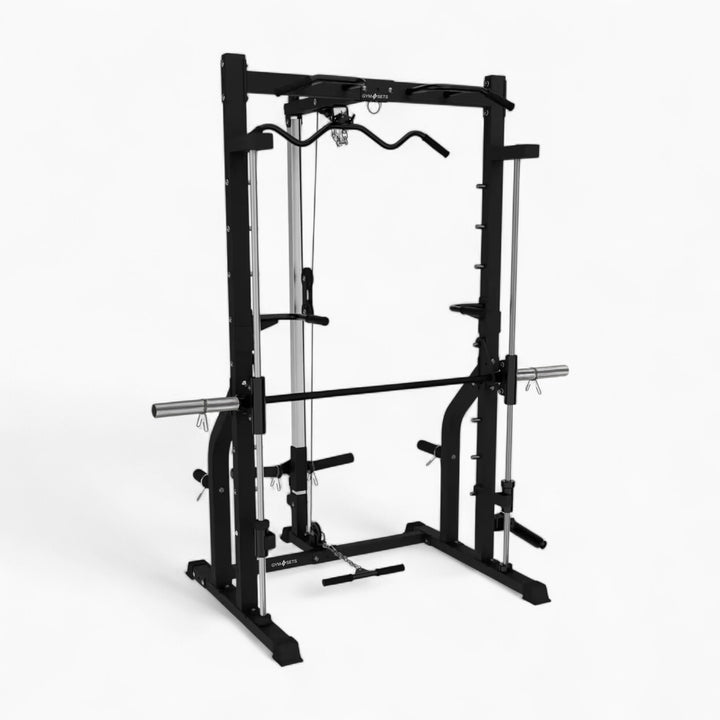







If you walk into any commercial gym or modern home fitness studio, you will usually find a queue forming around one specific piece of kit. It isn’t the bench press station, and it isn't the squat rack. It is the functional trainer, commonly known as the cable machine.
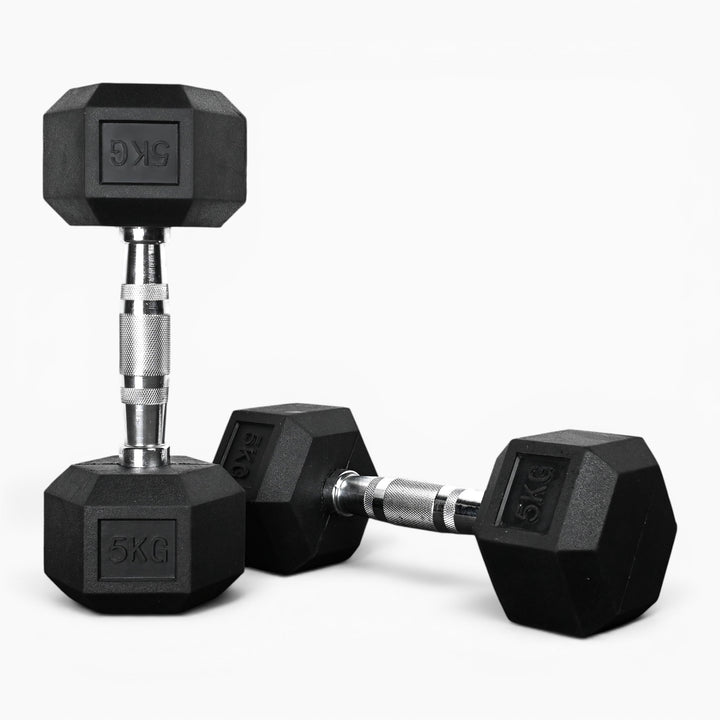
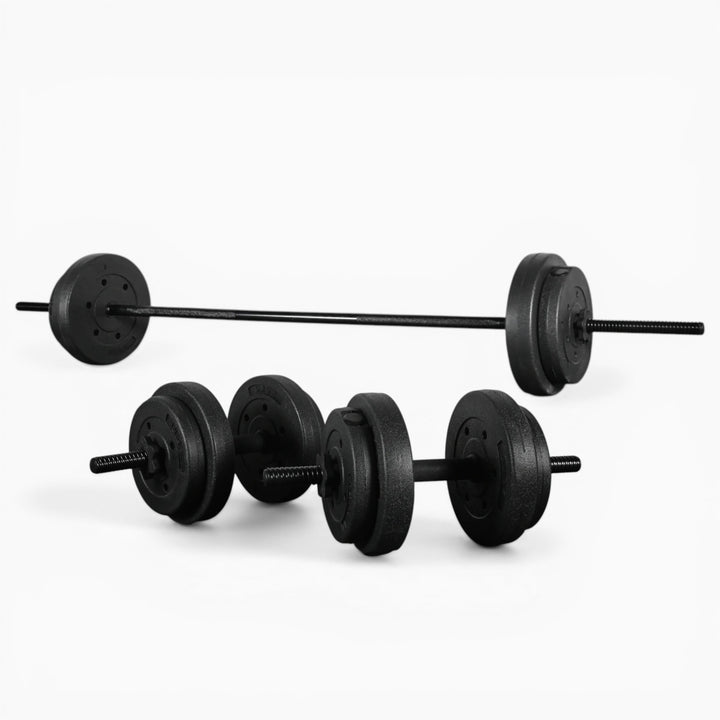
For decades, free weights were crowned the undisputed kings of the resistance training world. Barbells and dumbbells were viewed as the only tools capable of building serious muscle and functional strength. But times have changed. Sports science has evolved, and the fitness world has re-evaluated the sheer mechanics of muscle growth.
So, what are the best cable machine exercises to build a balanced, resilient physique?
Whether you are looking to pack on lean muscle tissue, recover from an old injury, or simply break out of a boring training rut, understanding how to harness the power of cables is a total game-changer. In this comprehensive guide, we will break down exactly why cables are so incredibly effective, outline the absolute best movements for every major muscle group, and provide you with actionable routines you can take straight to the gym floor today.
Why the Cable Machine is an Absolute SEO Goldmine for Your Muscles
To truly appreciate the exercises below, we first need to look at the physics of lifting. When you lift a traditional dumbbell, you are working entirely against gravity. This means the resistance path is strictly vertical.
Think about a standard bicep curl. At the very bottom of the movement, there is almost no tension on the muscle. At the top of the curl, the weight is stacked directly over your elbow joint, meaning gravity is doing the heavy lifting, not your arms. The muscle only experiences peak tension for a brief window in the middle of the movement.
Cable machines completely rewrite this rulebook. Because the cable runs through a system of pulleys connected to a weight stack, the direction of the resistance is determined by the angle of the cable, not the pull of gravity. This delivers three distinct biomechanical advantages:
-
Continuous Tension Throughout the Range of Motion: Your muscles are forced to work hard from the absolute beginning of the repetition to the very end. There are zero dead zones where the muscle can rest or switch off.
-
Freedom of Movement to Match Your Anatomy: Unlike fixed-track machine presses or standard leg extension units, cables allow your joints to move along their natural, individual paths. This significantly reduces stress on vulnerable joints like the shoulders, wrists, and knees.
-
Customisable Resistance Angles: By simply moving the adjustable pulley collar up or down on the vertical tower, you can instantly alter which specific part of a muscle group bears the brunt of the load.
What Are the Best Cable Machine Exercises for the Upper Body?
Let us dive directly into the specific movements that yield the greatest return on investment for your upper torso. These variations target the chest, back, shoulders, and arms with a level of precision that free weights simply cannot replicate.
1. The Cable Standing Chest Press
While the traditional barbell bench press is fantastic for overall power, it can often leave lifters dealing with nagging shoulder discomfort. The cable standing chest press offers a brilliant alternative. By setting the pulleys to chest height and pressing forward, you create an incredibly natural movement pattern.
The hidden magic of this movement lies in your core stability. Because you are standing up without a bench to brace your back against, your abdominals, glutes, and obliques have to fire aggressively just to keep you from being pulled backward by the weight stack. It transforms an isolated chest exercise into a highly functional, full-body stability challenge.
2. The High-to-Low Cable Flye
If your primary goal is to develop the lower and inner portions of the pectoral muscles, standard dumbbells fall short because the tension drops to zero at the top of the movement. The high-to-low cable flye completely solves this issue.
Set the pulleys above head height. Grab the handles, step forward into a staggered stance, and bring your hands down and together in a sweeping arc, imagining you are hugging a massive tree trunk. At the peak contraction point, when your hands meet in front of your waist, the cables are still pulling your arms outward. This delivers an intense contraction that sparks incredible muscle hypertrophy (the scientific term for muscle growth).
3. The Single-Arm Cable Row
Most lifters have a strength imbalance between their left and right sides. Standard barbell rows allow your dominant side to quietly take over the bulk of the work. The single-arm cable row isolates each side perfectly, forcing your latissimus dorsi (the large muscles of your back) to pull entirely its own weight.
Set the pulley to a mid-chest height. Step back so the weight stack rises slightly, creating initial tension. Stand with a strong, athletic stance, and pull the handle toward your lower ribs. Because you are using a cable, you can actively rotate your wrist throughout the rep, starting with a neutral grip and ending with your palm facing upwards. This subtle rotation allows for a much deeper muscular contraction in the lower lats.
4. The Cable Face Pull
If you spend your working week slouched over a laptop keyboard or staring down at a smartphone screen, your posture is likely suffering. The cable face pull is arguably the single most important exercise for reversing this modern slouched posture and building bulletproof shoulders.
Attach a double-rope handle to the upper pulley. Hold the ropes with your thumbs pointing backward. Step away from the tower, and pull the centre of the rope directly toward your nose. As you pull back, actively flare your hands apart, focusing on squeezing your shoulder blades together. This targets the rear deltoids, rhomboids, and external rotators of the rotator cuff, creating a broad, upright posture.
What Are the Best Cable Machine Exercises for the Lower Body?
It is a common misconception that cable systems are strictly meant for upper body training or arm isolation work. With the addition of a heavy-duty ankle strap or a sturdy rope attachment, you can construct a highly effective, joint-friendly lower body routine.
5. The Cable Pull-Through
The cable pull-through is one of the most underrated movements in the entire fitness industry for developing the posterior chain, which includes your hamstrings and glutes. It teaches the fundamental hip-hinge mechanics required for a perfect deadlift, but without placing a heavy, compressed load onto your spine.
Set the pulley to the lowest possible setting and attach the rope. Face away from the machine, stride over the rope so it sits between your legs, and take a few steps forward. Keeping a flat back and a very slight bend in your knees, hinge forward at your hips, allowing your hands to travel back through your legs toward the machine. Drive your hips forward aggressively to return to a standing position, squeezing your glutes tightly at the top.
6. The Cable Glute Kickback
For isolated glute development, it is incredibly difficult to beat the precision of a cable kickback. Unlike floor-based bodyweight donkey kicks, the cable provides an adjustable, scalable resistance profile that forces the gluteus maximus to work through its entire shortened range.
Secure an ankle strap around your lower leg and click it into the bottom pulley. Lean forward slightly, holding onto the machine tower for stability. Keeping your core locked down to prevent your lower back from arching excessively, drive your heel backward and slightly outward at a forty-five-degree angle. This specific angle aligns perfectly with the natural direction of your glute muscle fibres.
The Ultimate Cable Isolation Movements for Arms and Abs
No guide would be complete without highlighting how cables can meticulously sculpt the smaller muscle groups. Because these muscles are smaller, they respond incredibly well to the steady, unyielding tension that a pulley stack provides.
7. The Behind-the-Back Cable Bicep Curl
When you do a standard dumbbell curl standing straight up, the bicep experiences almost no stretch at the bottom of the movement. By shifting the cable machine behind your body, you alter the entire tension curve.
Attach a single D-handle to the lowest setting. Turn your back to the machine, grab the handle, and take a large step forward. Your arm will now be drawn back slightly behind your torso, putting the long head of the bicep into a position of deep, passive stretch. Curl the weight forward while keeping your elbow firmly locked in place. Training a muscle at long muscle lengths is proven to accelerate muscle building.
8. The Overhead Cable Tricep Extension
The triceps make up roughly two-thirds of your upper arm mass, meaning they deserve serious attention if arm definition is your goal. The overhead cable extension targets the long head of the triceps, which can only be fully stimulated when your arms are positioned up alongside your ears.
Attach the rope to the lower or mid-height pulley. Face away from the machine, pull the rope over your head, and lean forward into a stable, split stance. Keeping your elbows tucked in pointing forward, extend your arms straight out, flaring the ends of the rope apart at the top of the contraction.
9. The Cable Kneeling Crunch (The Rope Crunch)
Standard floor crunches often rely heavily on momentum and fail to provide enough resistance to truly stimulate the abdominal wall. The kneeling cable crunch allows you to progressively overload your core safely.
Attach the rope to the top pulley. Kneel down facing the machine, holding the rope attachments tightly against your collarbones or the sides of your head. Instead of just bending forward at the hips, focus on curling your spine inward, attempting to bring your elbows down toward your knees. Exhale fully at the bottom of each rep to maximize the contraction of the rectus abdominis.
How to Structure Your Complete Cable-Only Gym Routine
To make this guide practical, we have organised these world-class exercises into a balanced, highly effective full-body workout routine. You can run this routine two to three times per week, leaving a rest day between sessions to allow your muscles time to repair and grow.
The Full-Body Cable Transformation Routine
-
Exercise One: The Cable Pull-Through (Lower Body Posterior Chain) — Perform 3 sets of 12 repetitions, focusing entirely on a powerful glute contraction at the top of the movement.
-
Exercise Two: The Cable Standing Chest Press (Upper Body Push) — Perform 3 sets of 10 repetitions, ensuring your core remains completely braced throughout.
-
Exercise Three: The Single-Arm Cable Row (Upper Body Pull) — Perform 3 sets of 10 repetitions per side, pausing for a split second when the handle reaches your ribs.
-
Exercise Four: The Cable Glute Kickback (Lower Body Isolation) — Perform 2 sets of 15 repetitions per leg, keeping the movement controlled without swinging your torso.
-
Exercise Five: The Cable Face Pull (Postural and Shoulder Health) — Perform 3 sets of 15 repetitions, focusing on a high-volume, pristine execution.
-
Exercise Six: The Kneeling Cable Crunch (Core Development) — Perform 3 sets of 12 slow, deliberate repetitions, squeezing your midsection at the bottom.
Crucial Tips to Maximise Your Cable Machine Workouts
To extract every ounce of value from your time spent on the cables, keep these fundamental principles in mind during your next workout session:
-
Control the Eccentric Phase: The eccentric phase is the lowering or returning part of the lift. Because cables provide smooth resistance, it can be easy to let the weight stack slam back down quickly. Resist the pull of the machine, taking a full three seconds to return the weights to their starting point.
-
Do Not Worry About Egocentric Lifting: Cable stacks use various pulley ratios (such as two-to-one or four-to-one systems). This means a fifty-kilogram setting on one machine might feel vastly different from fifty kilograms on a machine made by a different manufacturer. Focus on the internal sensation of muscle fatigue rather than chasing an arbitrary number on the weight stack.
-
Invest in Quality Attachments: The standard metal handles found in public gyms are often worn out or uncomfortable. Investing in your own set of ergonomic grips, longer tricep ropes, or padded ankle straps can drastically improve your lifting comfort and execution accuracy.
Summary: Elevate Your Fitness Strategy with Cable Movements
When looking at what are the best cable machine exercises, the answer fundamentally comes down to variety, structural safety, and unyielding mechanical tension. While barbells and dumbbells will always hold an incredibly important place in the wider fitness landscape, the cable tower offers a level of versatility and joint preservation that simply cannot be matched.
By integrating these nine exceptional movements into your regular weekly routine, you will effectively eliminate the common sticking points associated with traditional free weights. The result is a highly efficient, safer path toward building a stronger, leaner, and far more symmetrical physique. Next time you head onto the gym floor, bypass the crowded dumbbell racks, step up to the functional cable trainer, and experience the incredible difference of true constant tension for yourself.


