



Walk into any commercial fitness facility, and you are immediately confronted by a labyrinth of steel, cables, and weight stacks. For decades, a certain subset of the fitness community has looked down on these structures. The purists will tell you that if you are not balancing a rusty barbell on your back or swinging heavy kettlebells, you are somehow cheating your potential.
But let us look at the reality. Free weights are fantastic, but they require immense stability, years of technical practice to master under heavy loads, and they carry an inherent risk of injury if your form falters for even a microsecond.
Gym machines are not the enemy. In fact, if your goals involve hypertrophy (building muscle size), targeted strength development, or working around a nagging injury, machines are often vastly superior to free weights. They provide fixed paths of motion, isolate specific muscle groups with surgical precision, and allow you to train to absolute mechanical failure without needing a training partner to pull a heavy bar off your throat.
So, if you want to maximise your time on the gym floor, what are the best gym machine exercises you should be doing? Let us strip away the fitness industry myths and look at the ultimate selectors of machinery that deserve a permanent spot in your weekly workout routine.
Why Machine Exercises Deserve Your Respect
Before diving into the specific movements, we need to understand why these tools are so incredibly effective. When you perform a barbell squat, your brain is working overtime to manage dozens of tiny stabilizer muscles. Your core, your lower back, and your ankles are all fighting to keep you upright.
While that is great for overall athletic coordination, it actually limits the amount of raw tension you can place on your target muscles. If your lower back gives out before your quadriceps do during a heavy squat, your legs never truly got the full stimulus they needed to grow.
Gym machines eliminate the stabilization bottleneck. By strapping yourself into a fixed seat or pressing against a rigid track, you isolate the primary moving muscles completely. You can load up significant weight, focus entirely on the mind-muscle connection, and safely exhaust the target tissue.
Let us break down the absolute elite machine movements across every major muscle group.
The Best Upper Body Push Machine Exercises
A powerful, well-developed upper body requires a balance of horizontal and vertical pushing movements. These three machines outclass almost all others when it comes to safely developing the chest, shoulders, and triceps.
1. The Converging Chest Press Machine
The classic flat barbell bench press is often called the king of upper body lifts, but it has a major structural flaw. The path of a barbell is entirely straight. Your pectoral muscles, however, do not run in a perfectly straight line across your chest; they originate at the sternum and clavicle and insert into the upper arm. To fully contract your chest, your hands need to travel inwards as you press.
A quality converging chest press machine features handles that start wide apart and move closer together as you push the weight away.
How to get the most out of it:
-
Adjust the seat height so that the handles sit directly in line with your mid-to-lower chest when you are seated.
-
Pin your shoulder blades back into the pad and keep your feet firmly planted on the floor to create a stable base.
-
Drive your elbows inward toward each other at the top of the movement rather than just thinking about pushing your hands away.
2. The Seated Shoulder Press Machine
Training the shoulders with heavy dumbbells is a fantastic exercise, but getting heavy weights into the starting position can be an absolute nightmare for your rotator cuffs. The seated machine overhead press solves this completely by allowing you to unrack the weight from a comfortable, stable starting height.
Furthermore, a good machine keeps your torso locked in an upright or slightly angled position, stopping you from excessively arching your lower back—a common mistake when people try to ego-lift with free weights overhead.
How to get the most out of it:
-
Ensure the handles align with your ears or jawline at the bottom of the rep to protect your shoulder joints from excessive deep rotation.
-
Keep your elbows tucked slightly forward at roughly a forty-five-degree angle rather than flaring them directly out to the sides.
-
Press upward smoothly, avoiding the temptation to violently lock out your elbows at the absolute peak of the movement.
3. The Triceps Dip Machine
The bodyweight dip is a phenomenal upper body builder, but it can be incredibly brutal on the anterior shoulder capsule if you drop too low. It also requires you to lift your entire body weight, which might be too heavy for beginners or too light for advanced lifters looking for high-volume isolation.
The seated triceps dip machine flips this equation. You sit upright, choose your exact weight on the selectorized stack, and push down against fixed handles.
How to get the most out of it:
-
Adjust the thigh pad snugly so you do not lift out of the seat as you select heavier loads.
-
Keep your chest up and shoulders pulled downward to ensure your triceps do the majority of the work rather than your front shoulders.
-
Focus on a controlled, two-second negative phase as the handles return upward to maximize muscular tension.
The Best Upper Body Pull Machine Exercises
Your back is composed of an intricate network of muscles including the latissimus dorsi, rhomboids, trapezius, and rear deltoids. Building a wide, thick back requires both vertical pulling and horizontal rowing.
1. The Cable Lat Pulldown
When asking experienced lifters what are the best gym machine exercises for building back width, the lat pulldown is invariably at the top of the list. While pull-ups are highly respected, many gym-goers simply lack the strength to perform them with flawless technique for multiple high-rep sets.
The lat pulldown allows you to perfectly scale the resistance to match your current strength level, ensuring you can target the lats without relying on momentum.
How to get the most out of it:
-
Set the knee pad tightly so your lower body is completely anchored to the bench.
-
Take a grip just wider than shoulder-width and lean back a mere five to ten degrees to allow the bar to clear your face safely.
-
Drive down with your elbows, pulling the bar toward your upper chest while imagining you are trying to slide your shoulder blades into your back pockets.
2. The Chest-Supported T-Bar Row
The standard bent-over barbell row is an elite muscle builder, but it places a massive amount of shear stress on your lumbar spine. As your lower back fatigues from holding a bent position, your rowing form falls apart.
The chest-supported row machine eliminates lower back fatigue entirely. By resting your sternum firmly against a padded inclined platform, your spine is completely protected, leaving your upper back muscles to handle one hundred percent of the workload.
How to get the most out of it:
-
Position yourself so the top of the pad rests comfortably against your upper sternum, allowing your lungs to expand fully.
-
Use a neutral grip (palms facing each other) to emphasize mid-back thickness, or a wide grip to target the upper back and rear shoulders.
-
Let your arms fully extend at the bottom to experience a deep stretch across your shoulder blades before pulling back forcefully.
3. The Seated Cable Row
The beauty of cable machines lies in their ability to provide constant, uninterrupted tension throughout the entire range of motion. Unlike free weights, where the resistance changes depending on gravity and leverage, a cable pulls against you with the exact same force from start to finish.
The seated cable row is highly versatile, allowing you to swap out different handle attachments to target different sectors of your back.
How to get the most out of it:
-
Keep a slight bend in your knees and maintain a perfectly straight, neutral spine throughout the entire set.
-
Avoid swinging your torso forward and backward to gain momentum; your upper body should remain completely stationary.
-
Squeeze your shoulder blades together tightly at the peak of the contraction for a full one-second pause.
The Best Lower Body Machine Exercises
Leg day is notorious for being physically taxing and mentally draining. While heavy compound movements like the barbell back squat are excellent, these leg machines allow you to push your lower body to absolute physical limits with maximum safety.
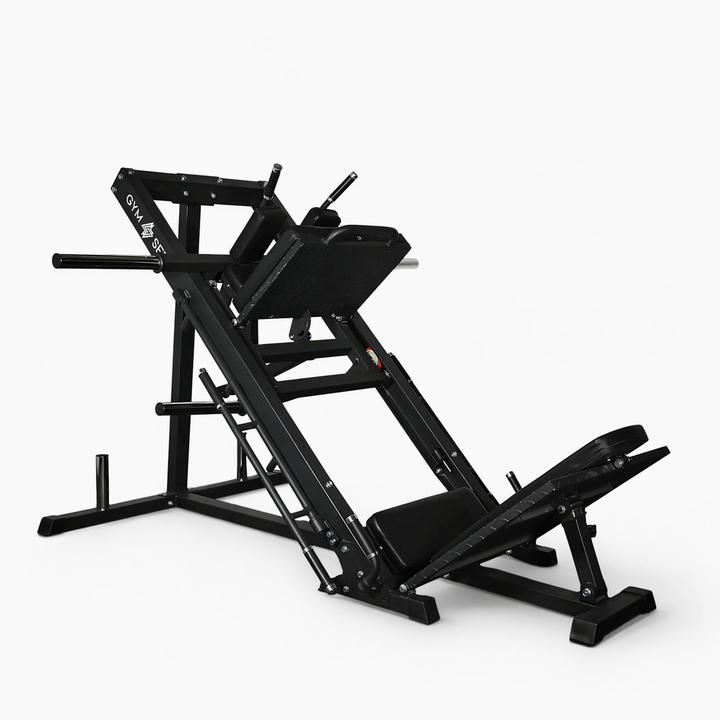
1. The Forty-Five Degree Leg Press
The leg press is an absolute powerhouse for quad development. Because your back is supported by a large pad, your spinal column is under zero axial loading (downward structural pressure). This means you can overload your quadriceps, glutes, and hamstrings with massive amounts of weight without risking a slipped disc or lower back strain.
How to get the most out of it:
-
Place your feet hip-width apart in the middle of the sled platform for balanced leg development.
-
Lower the weight slowly until your knees are bent at roughly ninety degrees, ensuring your lower back does not lift off the pad.
-
Press through your mid-foot and heels rather than your toes, and stop just short of locking your knees out at the top.
2. The Seated Leg Curl Machine
Your hamstrings are responsible for two main functions: extending your hips and flexing your knees. While movements like the Romanian deadlift handle hip extension, the leg curl machine is unmatched for isolating knee flexion.
The seated variant is generally superior to the lying leg curl because sitting upright pre-stretches the hamstrings at the hip joint, leading to a much more powerful muscle contraction.
How to get the most out of it:
-
Align your knee joint perfectly with the glowing pivot axis point on the side of the machine frame.
-
Pull the thigh restraint pad down as firmly as possible to prevent your hips from lifting or shifting as you curl.
-
Pull your toes upward toward your shins and flex your knees smoothly, bringing the roller pad right under your seat.
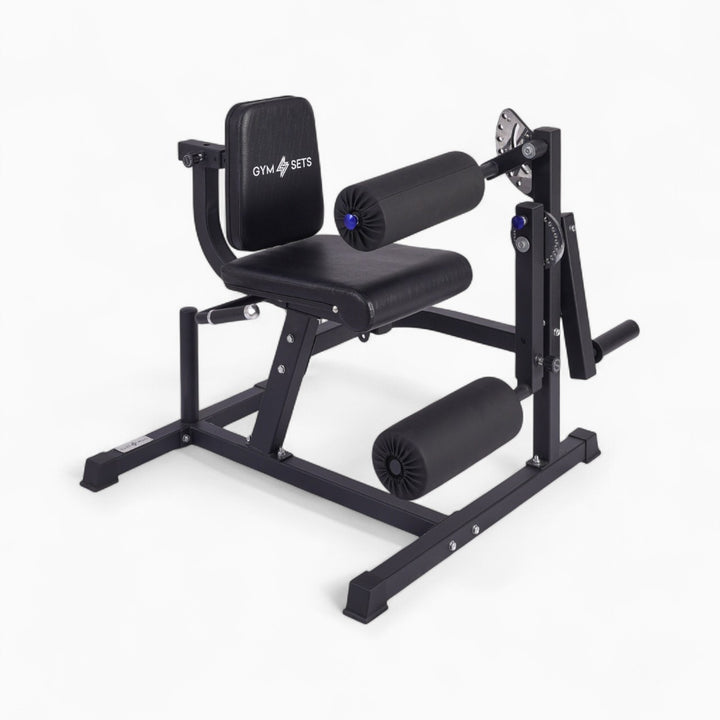
3. The Leg Extension Machine
There is not a single free-weight exercise in existence that can isolate the quadriceps quite like the leg extension. It is the only movement that places maximum tension on the quads at the point of full knee extension (when your legs are perfectly straight). It is an invaluable tool for finishing off a leg workout or warming up the knee joints.
How to get the most out of it:
-
Adjust the back pad so that the crook of your knee sits comfortably against the front edge of the seat cushion.
-
Position the lower ankle pad so it rests just above the laces of your trainers.
-
Hold the handles on the side of the machine tightly to anchor your hips down, and extend your legs until they are fully straight.
4. The Smith Machine Squat
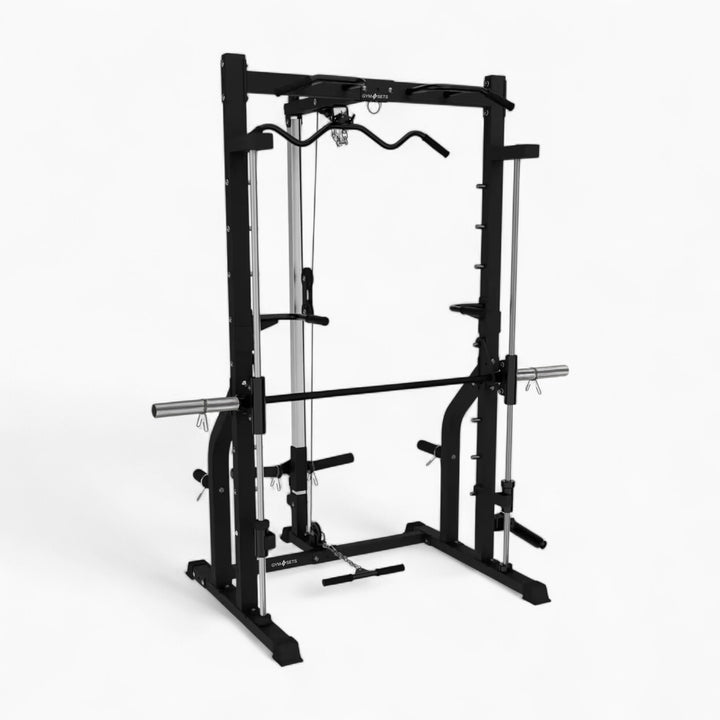
Purists often decry the Smith machine because the bar moves on a rigidly fixed vertical track. However, this exact feature is what makes it a phenomenal tool for building specific lower-body aesthetics.
Because you do not need to balance the bar, you can place your feet significantly forward on the floor. This shifts the structural leverage away from your lower back and places it directly onto your quadriceps and glutes, mimicking the biomechanics of a perfect hack squat.
How to get the most out of it:
-
Position your feet roughly six to twelve inches in front of the bar path, keeping them hip-width apart.
-
Lower yourself slowly into a deep squat, keeping your torso incredibly upright throughout the movement.
-
Drive straight up through your heels, utilizing the fixed track to maintain flawless balance.
How to Structure Your Machine-Based Workout Routine
To transform this knowledge into real results, you need a smart, structured approach to your weekly programming. You cannot simply wander aimlessly from machine to machine.
Here is a highly effective, four-day training split that blends these elite machine movements into a logical structure designed for maximum muscle growth and recovery.
Day 1: Upper Body Push Focus
-
Converging Chest Press Machine: Three sets of eight to twelve repetitions.
-
Seated Shoulder Press Machine: Three sets of ten to twelve repetitions.
-
Triceps Dip Machine: Three sets of twelve to fifteen repetitions.
-
Cable Lateral Raises: Three sets of fifteen repetitions.
Day 2: Lower Body Quad Focus
-
Forty-Five Degree Leg Press: Four sets of eight to ten repetitions.
-
Smith Machine Squat: Three sets of ten to twelve repetitions.
-
Leg Extension Machine: Three sets of fifteen repetitions.
-
Seated Calf Raise Machine: Four sets of twelve to fifteen repetitions.
Day 3: Upper Body Pull Focus
-
Cable Lat Pulldown: Three sets of eight to twelve repetitions.
-
Chest-Supported T-Bar Row: Three sets of ten to twelve repetitions.
-
Seated Cable Row: Three sets of twelve repetitions.
-
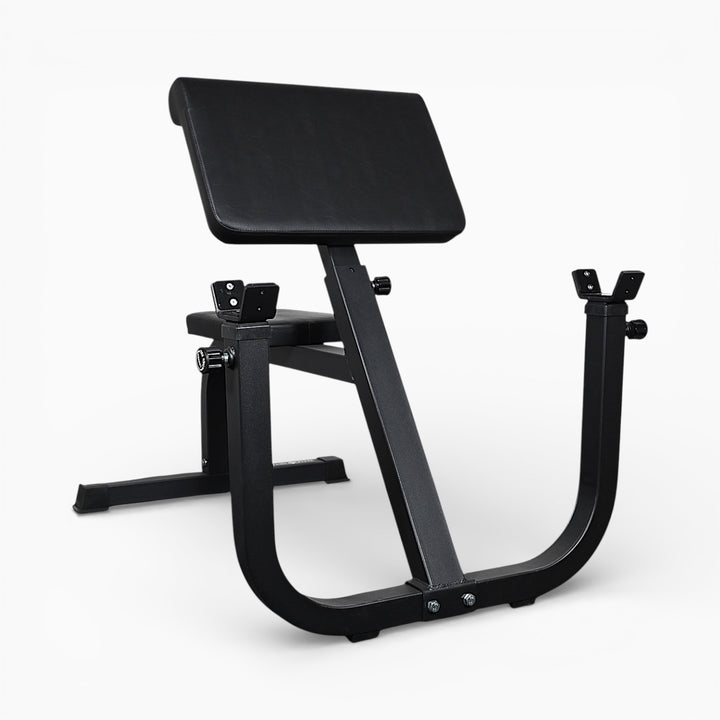
Machine Bicep Preacher Curl: Three sets of twelve to fifteen repetitions.
Day 4: Lower Body Posterior Focus
-
Romanian Deadlifts (Dumbbell or Barbell): Three sets of eight to ten repetitions.
-
Seated Leg Curl Machine: Four sets of ten to twelve repetitions.
-
Standing Calf Raise Machine: Four sets of ten repetitions with a two-second pause at the peak stretch.
The Golden Rules for Maximising Machine Training Success
To ensure your machine training yields the absolute best returns for your physical health and strength, you must adhere to a few foundational principles.
Rule 1: Prioritise Machine Setup Over Everything Else
A barbell naturally adjusts to your unique body proportions because it moves freely in space. A machine does not. It has a predetermined mechanical pathway. If you do not adjust the seat height, back pads, and limb rollers to align perfectly with your personal skeletal structure, you will place unnecessary, unnatural friction on your joints. Spend thirty seconds before every set tweaking the settings until the movement feels entirely smooth.
Rule 2: Embrace Progressive Overload
Just because you are using a machine does not mean you can slack off on your effort levels. To make a muscle grow or get stronger, you must force it to do more work over time. Keep a detailed training log. If you managed to lift fifty kilograms on the chest press for ten repetitions this week, your mission next week is to aim for eleven repetitions, or increase the weight pin to fifty-two kilograms.
Rule 3: Eliminate Momentum Completely
The easiest way to ruin the effectiveness of a machine exercise is to use your body weight to jerk the weight stack. When you use momentum, you take the tension off the target muscle and place it directly onto the machine pulleys and your tendons. Control the weight on the way up, pause briefly at the peak of the contraction, and spend two to three seconds lowering the weight stack back to the starting point.
Final Thoughts: Finding Your Perfect Balance
When it comes down to answering the core question—what are the best gym machine exercises?—the true answer relies on selecting the movements that allow you to train safely, consistently, and with maximum intensity.
Gym machines are not a lazy alternative to free weights. They are highly engineered, sophisticated instruments of muscle development that allow you to push your body to structural limits without risking long-term joint health.
Whether you are a complete beginner stepping into a health club for the very first time, or an advanced athlete looking to pack serious size onto your frame, integrating these core machine exercises into your weekly training schedule will yield incredible dividends. Find the machines that fit your unique mechanics, track your lifts meticulously, focus heavily on the quality of every single repetition, and watch your strength transform.


