




To build your chest optimally, the ideal number of sets per workout is 6 to 8 hard sets. When split across two weekly training sessions, this approach yields an ideal weekly volume of 12 to 16 total sets for maximum muscle hypertrophy.
What We Will Cover in This Guide
In this comprehensive training guide, we are going to break down the exact science of chest volume so you can stop wasting your efforts in the gym. We will examine why the traditional "bro-split" of doing twenty sets in a single workout is actually slowing down your progress.
We will also explore the critical difference between compound and isolation movements, how to structure your training week, and how to scale your volume as you get stronger. By the end of this article, you will have a clear, customisable blueprint to design the ultimate chest-building programme.
Understanding the Hypertrophy Equation
To understand why a specific number of sets works best, we first need to look at how muscles actually grow. Muscle hypertrophy is primarily driven by mechanical tension, which is the physical stretch and strain your muscle fibres experience when lifting heavy weights.
When you perform a challenging set, you create microscopic tears in the muscle fibres of your pectoralis major. Your body repairs these micro-tears during rest periods, making the muscle fibres slightly thicker and stronger than they were before.
However, this rebuilding process requires a very precise amount of physical stress to trigger the adaptation. If you do too little work, your body will not see any reason to grow new muscle tissue. Conversely, if you perform far too many sets, you will create more damage than your body can realistically repair before your next workout.
What Actually Counts as a "Hard Set"?
Before counting your sets, we must establish a clear definition of what a high-quality working set actually looks like. Many gym-goers claim to do twenty sets of chest per workout, but half of those are warm-ups or low-effort sets.
For a set to stimulate muscle growth, it must be a "hard set" taken close to muscular failure. In professional training circles, this is measured using the Reps in Reserve scale, which tracks how many more repetitions you could have performed.
An effective hypertrophic set should leave you with zero to three reps in reserve at the end. If you finish a set of bench presses feeling like you could have easily completed five more reps, that set does not count toward your daily volume.
The Danger of "Junk Volume"
Many lifters believe that if four sets are good, then eight sets must be twice as good, and sixteen sets must be legendary. Unfortunately, muscle physiology does not work in a straight, linear fashion.
In strength training, we regularly encounter the law of diminishing returns, where adding more work yields progressively smaller benefits. Past a certain threshold in a single workout, any extra sets you perform turn into what experts call "junk volume".
Junk volume is training that causes immense systemic fatigue and muscle damage without triggering any additional muscle growth. It leaves you feeling incredibly sore for days, but it actually hinders your long-term recovery and growth.
The Daily Limit: Why 6 to 8 Sets Is the Sweet Spot
Scientific studies on protein synthesis show that our muscles have a limited capacity to respond to training in a single session. After you perform about six to eight high-effort sets for a specific muscle group, the anabolic signaling pathways peak.
Adding a ninth or tenth set does not increase muscle protein synthesis any further. Instead, it simply drains your energy reserves, damages your joints, and extends the amount of time you need to recover.
By keeping your daily chest training to six to eight hard sets, you ensure every single rep is highly productive. You can attack each set with maximum energy, perfect form, and heavy loads, which is the ultimate recipe for chest growth.
Weekly Volume: The Real Secret to Growth
While your daily set count should remain modest, your total weekly volume is the primary driver of physical change. Research suggests that trained lifters need between ten and twenty hard sets per week to maximise their chest growth.
If we know that doing more than eight sets in a single workout is inefficient, the solution is beautifully simple. We must split our weekly chest volume across multiple training sessions throughout the week.
Instead of doing twelve sets of chest on Monday, you will get significantly better results by doing six sets on Monday and six sets on Thursday. This split keeps your muscles in a highly anabolic state for a much larger portion of the week.
The Benefits of Higher Training Frequency
When you train your chest twice a week instead of once, you drastically improve the quality of your workouts. In a single, high-volume session, your chest muscles become incredibly fatigued by the time you reach your third exercise.
Your strength drops, your technique slips, and you are forced to use much lighter weights. By splitting the work, you arrive at your second session completely fresh and ready to lift heavy again.
Furthermore, muscle protein synthesis remains elevated for roughly forty-eight hours after a workout. By training your chest twice a week, you trigger this growth window twice, resulting in double the opportunities for your chest to expand.
Structuring Your Chest Workouts
Now that you know the numbers, we need to look at how to actually structure those six to eight sets in the gym. A well-designed chest workout should feature a smart balance of compound lifts and isolation movements.
Compound lifts, like the barbell bench press or dumbbell incline press, should form the heavy foundation of your routine. These movements recruit multiple muscle joints and allow you to load the chest with the heaviest possible weights.
Isolation movements, like cable flyes or the pec deck, should be used to finish the workout. These exercises isolate the chest without involving your shoulders or triceps, allowing you to accumulate metabolic stress safely.
Balancing Your Chest Angles
Your chest is not just one flat muscle; it is divided into distinct regions that require different angles of attack. To build a fully developed, three-dimensional chest, you must distribute your sets across different variations.
The pectoralis major has a clavicular head, commonly known as the upper chest, and a sternal head, known as the mid-to-lower chest. If you only perform flat pressing movements, your upper chest will quickly lag behind, leaving your torso looking flat.
An ideal weekly routine should divide your six to eight daily sets to cover all your bases. You can easily achieve this by using the following simple breakdown over your two weekly workouts.
Workout A: Sternal and Mid-Chest Focus
For your first workout of the week, you want to focus primarily on building the overall mass of your mid-and-lower chest. This session should start with your heaviest compound lift while your energy levels are at their absolute peak.
-
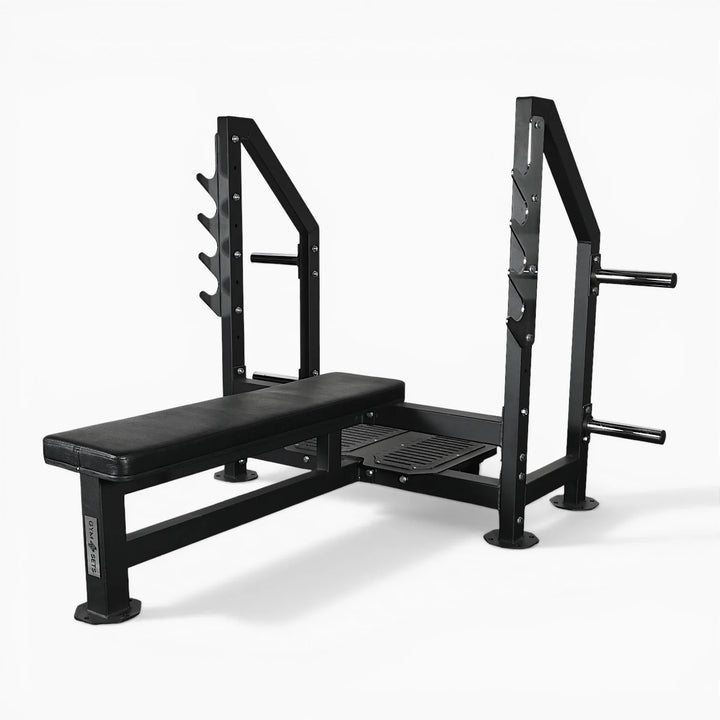
Exercise One: Flat Barbell Bench Press — Perform three sets of six to eight repetitions, resting for three minutes between sets to maximise your strength recovery.
-
Exercise Two: Incline Dumbbell Press — Perform three sets of ten to twelve repetitions, focusing on a deep stretch at the bottom of each repetition.
-
Exercise Three: High-to-Low Cable Flyes — Perform two sets of twelve to fifteen repetitions, focusing on squeezing your chest tightly at the end of the movement.
This workout totals exactly eight hard sets, giving your chest an incredible growth stimulus without crossing into the junk volume zone.
Workout B: Clavicular and Upper-Chest Focus
For your second workout of the week, you will shift the primary focus to the upper portion of your chest. This ensures balanced development and prevents the common "sagging" look that comes from over-prioritising flat presses.
-
Exercise One: Incline Barbell Bench Press — Perform three sets of six to eight repetitions, keeping your shoulder blades pinned back to isolate the upper fibres.
-
Exercise Two: Flat Dumbbell Chest Press — Perform three sets of ten to twelve repetitions, maintaining a controlled tempo on the descent.
-
Exercise Three: Low-to-High Cable Flyes — Perform two sets of twelve to fifteen repetitions, sweeping your hands upward to mimic the angle of the upper chest fibres.
Once again, you have accumulated eight high-quality sets, bringing your weekly total to sixteen perfectly executed sets.
How to Scale Your Sets Based on Experience
Your ideal training volume is not set in stone; it must evolve as you become a more experienced lifter. A beginner who has only been lifting for six months has a very different recovery capacity than a veteran of five years.
Novice lifters have highly sensitive muscles that respond incredibly well to very low amounts of training volume. If you are in your first year of lifting, you only need about four to six sets per workout, or eight to ten sets per week, to grow.
As you transition into an intermediate lifter, your muscles become more stubborn and require a greater stimulus to adapt. At this stage, moving up to six to eight sets per workout, or twelve to sixteen sets per week, is highly recommended.
Advanced lifters who have been training consistently for several years may eventually need to push up to eighteen or twenty weekly sets. However, this should only be done if you are failing to progress on lower volumes and your recovery is absolutely flawless.
Signs Your Chest Volume is Spot On
It is crucial to listen to your body to determine if your current set volume is producing the best possible results. When your training volume is perfectly optimised, you will notice several distinct physical signs.
First, you should feel a profound, tight pump in your chest muscles toward the end of your workouts. This indicates that you have successfully directed blood flow and created metabolic stress in the target muscle tissue.
Second, you should experience mild muscle soreness that begins a few hours after training and completely resolves within forty-eight hours. If you are still incredibly sore on day four, your volume is likely too high for your current recovery capacity.
Finally, the most important sign is progressive overload. If you are successfully adding weight to the barbell or performing more repetitions with the same weight week after week, your volume is perfect.
How to Adjust When Progress Stalls
If you find that your chest is simply not growing, you must resist the immediate urge to simply add more sets. Instead, you should carefully evaluate your recovery, sleep, and nutritional habits first.
Muscle growth cannot occur if you are not eating enough protein to rebuild the tissues, or if you are consistently sleeping less than seven hours a night. If your lifestyle factors are solid, you can try adjusting your volume by using two distinct approaches.
-
The Volume Increase: If you feel completely fresh, have no joint pain, and are not getting sore at all, try adding two weekly sets to your chest routine. Monitor your progress for three weeks to see if this spark of extra work restarts your muscle growth.
-
The Deload Strategy: If you feel constantly exhausted, suffer from minor shoulder pain, and your strength is actually decreasing, you are likely overtrained. Reduce your chest volume by fifty per cent for one week to allow your joints and nervous system to fully recover.
Putting It All Together
Building a powerful, defined chest is not about surviving the longest, most brutal workout possible. It is about delivering a precise, high-quality stimulus to your muscles and then getting out of the gym so your body can grow.
By sticking to six to eight hard sets per workout and training your chest twice a week, you perfectly balance muscle stimulation with recovery. This science-backed approach will save you hours of wasted energy and deliver the fastest path to a massive chest.
Take this layout to your next workout, focus on perfect form, push your working sets close to failure, and watch your chest transform.