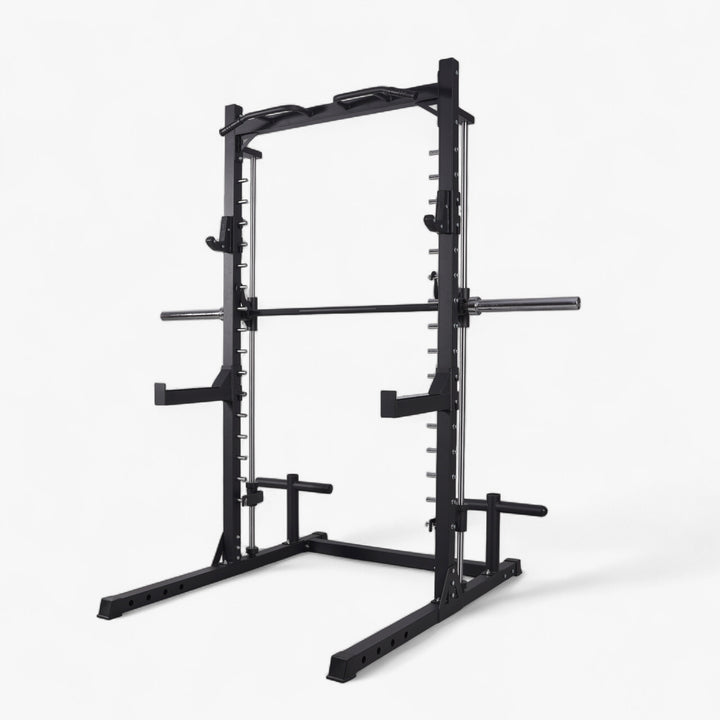
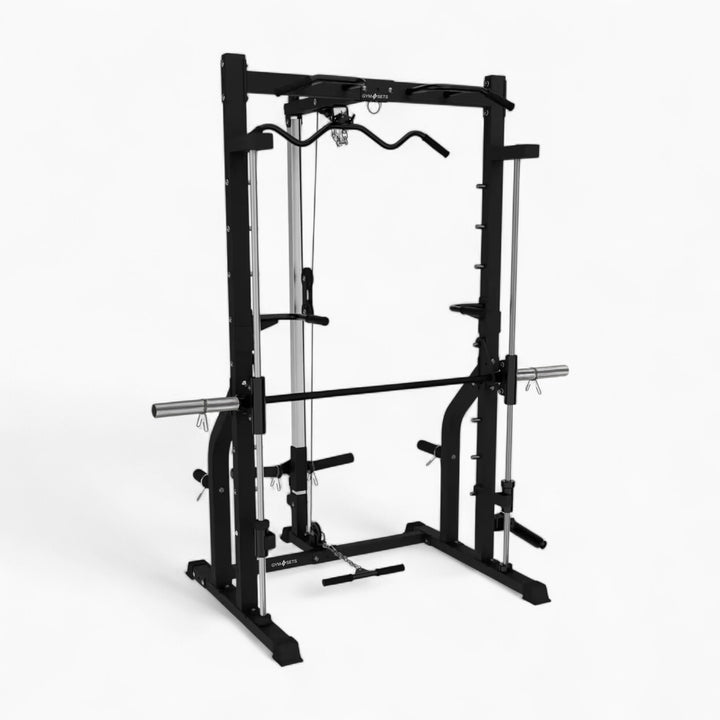





Setting up a home gym is one of the most rewarding investments you can make for your health. However, before you start browsing for the latest equipment, the most critical question you need to answer is: how much floor space do I need for a multi-gym? It is a common mistake to simply look at the base dimensions provided by the manufacturer and assume the machine will fit. In reality, you need to account for the "working area," which includes the extension of cables, the travel of weight stacks, and the room you need to actually perform the exercises safely without hitting a wall.
Planning your space effectively ensures that your workouts are fluid rather than frustrating. If you cram a high-end machine into a tiny corner, you might find yourself unable to perform chest flies or leg extensions properly. This guide will walk you through the essential measurements, safety clearances, and layout tips to help you transform your spare room or garage into a functional fitness sanctuary that feels professional and spacious.
Understanding Basic Multi-Gym Dimensions
When you look at a product specification sheet, you will usually see a "footprint" measurement. This refers to the static space the frame occupies on the floor. For a standard all-in-one multi-gym, this footprint typically ranges from 1.5 metres to 2.5 metres in length and about 1 metre to 1.5 metres in width. However, these figures are deceptive because they do not account for the moving parts or the human being using the machine.
To get a realistic idea of the space required, you must consider the "active footprint." This includes the furthest point the leg developer reaches when extended and the width of the lat pull-down bar, which often exceeds the width of the frame itself. Most experts recommend adding at least 0.5 metres to every side of the static footprint just to accommodate the machine’s own range of motion. Without this extra buffer, you risk damaging your walls or, worse, restricting your own form during heavy lifts.
Calculating Your Working Clearance
The "working clearance" is the space you need to move around the machine and perform exercises comfortably. For a multi-gym, this is generally more significant than the machine's actual size. A good rule of thumb is to allow for a 60cm to 90cm "safety zone" around the entire perimeter of the equipment. This ensures you can access the weight stack to change pins, adjust the seat height, or step off the machine safely without tripping over nearby items.
If your multi-gym includes a cable crossover or functional trainer component, your space requirements will increase dramatically. Cables require a wide arc of movement. If you are performing a cable chest fly, your arm span becomes the defining measurement for the room's width. In these instances, you should aim for a total clear width of at least 3 metres. This prevents the handles from snapping back against a wall or window, which is a vital safety consideration for any home setup.
Height Requirements and Ceiling Clearance
While we often focus on floor space, ceiling height is the silent deal-breaker for many home gyms. Most standard multi-gyms stand between 2 metres and 2.2 metres tall. However, the top pulley or the pull-up bar often sits at the very highest point. If your ceiling is exactly 2.1 metres and your gym is 2.1 metres, you won't be able to assemble it, let alone use it. You need a minimum of 10-15cm of "headroom" above the tallest point of the machine.
-
Measure from the floor to the lowest hanging point of your ceiling (check for beams or light fixtures).
-
Account for the thickness of your gym flooring (usually 10mm to 20mm).
-
Ensure there is enough space for your head to clear the top of the machine during pull-ups or chin-ups.
-
Check that the weight stack has enough room to reach its maximum height without hitting the ceiling.
Categorising Space Needs by Gym Type
Not all multi-gyms are created equal. Some are designed specifically for compact "corner" placement, while others are sprawling machines intended for the centre of a large room. Understanding which category your chosen equipment falls into will help you determine if your room is actually viable. Compact models often use clever vertical engineering to save space, whereas "total-body" stations might include a built-in leg press which adds a significant "L-shape" to the footprint.
| Gym Category | Average Static Footprint (m) | Recommended Working Area (m) | Best Room Suitability |
| Compact / Single Stack | 1.5m x 1.0m | 2.5m x 2.0m | Spare Bedroom / Home Office |
| Standard Multi-Gym | 2.1m x 1.5m | 3.0m x 2.5m | Single Garage / Large Bedroom |
| Functional Trainer | 1.5m x 1.2m | 3.5m x 3.0m | Open Plan Basement / Garage |
| Multi-Station (L-Shape) | 2.5m x 2.5m | 4.0m x 4.0m | Double Garage / Dedicated Outbuilding |
Assessing Your Specific Room Layout
Before purchasing, you should create a floor plan of your intended room. It isn't just about the square footage; it is about the "shape" of the available space. Obstacles like radiators, doors that swing inward, and low-hanging light fixtures can drastically reduce your usable area. A room might be 4 metres wide, but if a large wardrobe takes up 1 metre and the door needs another metre to open, your "real" space is much smaller than the blueprints suggest.
When positioning the gym, try to place it against a solid wall to maximise the open floor space in the rest of the room. However, ensure you leave enough gap to clean behind the machine and to reach the rear cables if maintenance is required. If you are using a garage, consider the slope of the floor, as most garage floors are slightly slanted for drainage. You may need to use shims or specialized flooring to ensure the multi-gym sits perfectly level for safety.
The Importance of Flooring and Sub-Floor Integrity
The "space" you need isn't just horizontal and vertical; it’s also about the structural capacity of the floor. A multi-gym is incredibly heavy, often weighing between 150kg and 300kg once the weight stacks are included. This weight is concentrated on small "feet" or contact points. To protect your home, you must factor in the space for high-density rubber matting. This matting usually comes in 1m x 1m tiles, so you should calculate how many tiles you need to cover the entire working area.
-
Select high-density rubber tiles with a minimum thickness of 10mm.
-
Ensure the matting extends at least 30cm beyond the machine's footprint to protect from dropped attachments.
-
Check if your floor is reinforced concrete (ideal) or wooden joists (may require structural advice).
-
Avoid placing heavy multi-gyms on plush carpets, as they will cause permanent indentation and instability.
Space-Saving Tips for Small Rooms
If you are working with a very tight space, such as a box room or a converted cupboard, you don't necessarily have to give up on your fitness goals. There are several ways to optimise a small area to fit a multi-gym effectively. Choosing a model that features a "corner-fit" design can save up to 30% of floor space by tucking the weight stack into a 90-degree angle. This opens up the centre of the room for other activities or movement.
-
Opt for a machine with a fold-up seat or bench to reclaim floor space when not in use.
-
Use wall-mounted storage for attachments like handles, bars, and ropes to keep the floor clear.
-
Consider a "functional trainer" style gym which uses two slim pillars rather than one deep central frame.
-
Utilise mirrors on the walls to make the space feel larger and to help you monitor your form in tight quarters.
Planning for Future Add-Ons
Many people start with a basic multi-gym and later decide to add a leg press attachment, a dip station, or a punch bag arm. If there is any chance you will want to expand your setup, you must account for this in your initial space planning. Adding a leg press usually doubles the width of the machine on one side. If you haven't left a couple of metres of "empty" space next to your gym, you will find yourself having to dismantle and move the entire unit later.
Think about your fitness journey over the next five years. Will you want to add a dumbbell rack or a bench next to the multi-gym? If so, you need to ensure there is a clear path between the two pieces of equipment. A cluttered gym is a dangerous gym. Always aim to leave a "transit path" of at least 70cm wide through the room so you can move around without having to shimmy past heavy steel frames and cables.
Ventilation and Environmental Space
"Space" also refers to the air around you. A multi-gym in a cramped, unventilated room will quickly become an unpleasant place to train. When you exercise, you produce heat and moisture. Without adequate airflow, your equipment can succumb to rust, and your walls might develop damp issues. You should ensure there is enough space to allow for a pedestal fan or to keep a window partially open during your sessions.
If you are building your gym in a shed or an uninsulated garage, you need to account for the space required for a dehumidifier or a small heater. These items shouldn't be placed directly against the gym for safety reasons, so they require their own designated "footprint" in the room. Planning for these environmental factors from the beginning will ensure that your gym remains a comfortable and durable environment for years to come, regardless of the British weather outside.
Summary Checklist for Your Multi-Gym Space
Before you hit the "buy" button, go through this final checklist to ensure you have covered every possible measurement. It is always better to measure three times and buy once. If your measurements are within 5cm of the limit, it is usually safer to look for a slightly more compact model to avoid a cramped and hazardous workout environment.
-
Have you measured the ceiling height including the gym's highest pulley point?
-
Is there at least 60cm of walking space around the entire machine?
-
Does the floor plan account for the full extension of the leg developer?
-
Have you included the width of the longest accessory (like the lat bar)?
-
Is there enough room to fully open the door to the room?
-
Have you accounted for the thickness of the protective floor matting?
-
Is there a clear path to the electrical sockets if the gym has a digital console?
Final Thoughts on Room Dimensions
Choosing the right space for your multi-gym is just as important as choosing the machine itself. By prioritising the "working area" over the "static footprint," you create a safe, efficient, and professional-grade environment. Remember that a multi-gym is a permanent fixture; once it is built, it is very difficult to move. Spending an extra hour with a tape measure and some masking tape to mark out the floor today will save you years of frustration.
Whether you are converting a garage or carving out a corner of your lounge, the key is honesty. Don't try to "squeeze" a massive machine into a tiny room. If you are limited on space, look for high-quality compact machines that offer the same resistance without the massive footprint. With the right planning, even the smallest UK home can accommodate a fantastic multi-gym that helps you reach your fitness goals without compromising your living space.