




When you step into a modern fitness facility or scroll through the social media feeds of top strength athletes, you will almost certainly spot a specific style of free weight dominating the floor. They feature distinct, six-sided heads made of dark iron or thick black rubber, attached to a sleek, contoured steel handle. These are not your traditional circular weights; they are a staple of modern resistance training.
If you are currently planning a home workout space, upgrading a commercial studio, or simply looking to expand your knowledge of free weight options, you have likely found yourself asking: what are hex dumbbells?
In this comprehensive guide, we will explore everything you need to know about these incredibly popular training tools. We will cover their unique geometric design, the material differences that impact performance, the structural benefits that make them a favorite for functional fitness, and how to select the perfect set for your training space.
What Are Hex Dumbbells?
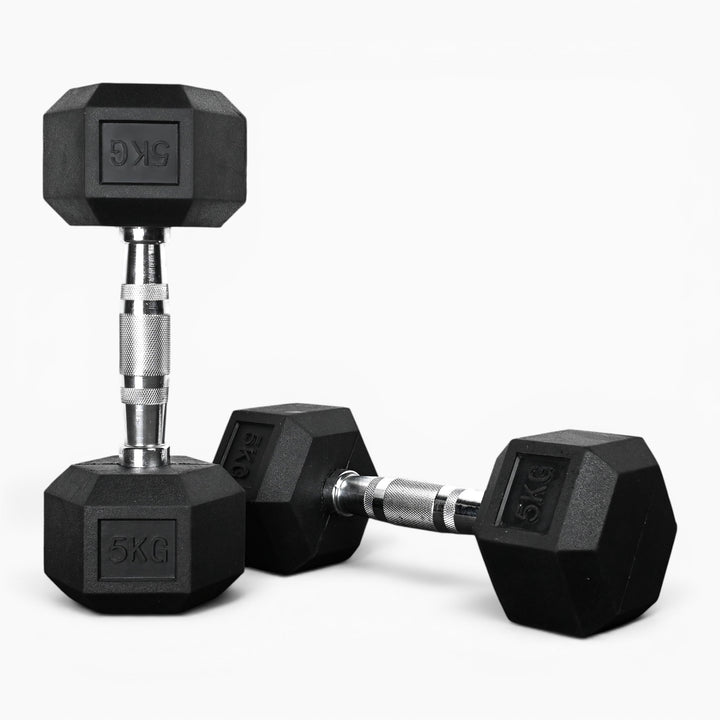
To answer the core question—what are hex dumbbells?—you only need to look at their geometric structure. The term "hex" is short for hexagonal, referring directly to the six-sided shape of the weight heads on either end of the handle.
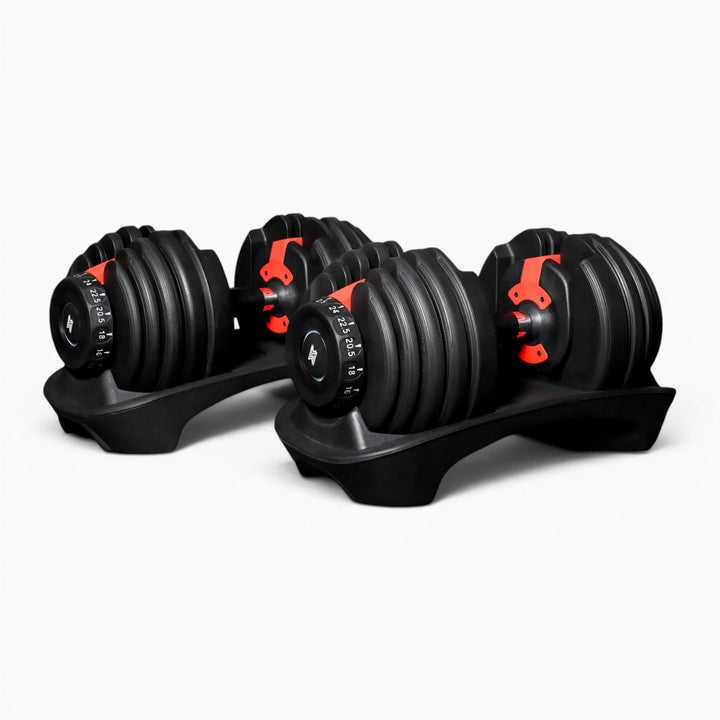
Unlike traditional round dumbbells that are prone to moving freely across a floor, hex dumbbells are specifically engineered with flat edges to ensure stability when placed on any surface. They are typically manufactured as fixed weights, meaning the heads are permanently welded or mechanically pressed onto a solid steel shaft. This creates a single, incredibly robust piece of equipment that is ready to lift straight out of the box, with no assembly, collars, or adjustment dials required.
They are widely considered the workhorse of the fitness industry. From commercial health clubs to garage gym setups across the UK, their blend of safety, durability, and anti-roll design has made them the default choice for functional fitness, bodybuilding, and general strength training.
The Anatomy of a Quality Hex Dumbbell
To fully appreciate why these weights are so highly regarded, it helps to understand how they are put together. A premium hex dumbbell is more than just a lump of iron; it is a carefully balanced piece of structural engineering.
1. The Hexagonal Heads
The defining feature of the tool is its six-sided ends. These heads are typically made from solid cast iron. In premium modern versions, this iron core is encased in a thick, vulcanised layer of heavy-duty rubber or polyurethane. The flat surfaces are precisely angled to ensure that when you set the weight down, it immediately finds a stable base and remains completely stationary.
2. The Friction-Welded Join
One of the most critical safety aspects of a fixed dumbbell is how the head attaches to the handle. Cheaper alternatives simply glue or screw the components together, which can cause the heads to loosen over time under heavy impact. High-quality manufacturers use a process called friction welding or heavy-duty press-fitting. This fuses the steel handle directly into the iron core of the head, creating an incredibly secure bond that will not wobble or break under structural stress.
3. The Contoured Chromed Handle
The central steel shaft is typically shaped with an ergonomic contour, meaning it is slightly thicker in the middle than at the edges to mirror the natural shape of a closed human fist. The steel is coated in polished chrome to prevent rust and corrosion from sweat.
4. Precision Surface Knurling
Cut directly into the steel handle is a cross-hatched pattern known as knurling. This texturing cuts into the skin of your palm just enough to provide a secure, non-slip grip without being overly sharp or abrasive. Proper knurling is vital because it allows you to maintain total control of the weight during explosive movements, even when your hands are slick with sweat midway through an intense conditioning circuit.
Core Advantages: Why Choose the Hexagonal Shape?
If you are choosing between classic round weights and hexagonal options, the geometric design offers several major real-world advantages that directly impact your workout safety and versatility.
Absolute Stability and Safety
The most significant benefit of the hexagonal design is its anti-roll property. Traditional round weights can easily roll away if set down on an uneven floor, a slightly tilted garage surface, or a stray exercise mat. This creates a severe tripping hazard and can cause painful injuries if a heavy weight rolls over an ankle or a foot. Hex dumbbells stay exactly where you place them, giving you complete peace of mind between intense sets.
Enhanced Floor Protection
Most modern hex weights are coated in a thick layer of durable rubber or polyurethane. This coating acts as a protective bumper for your floors. When you are lifting at home, accidental impacts can easily crack tiles, splinter hardwood, or dent concrete. The rubber encasement absorbs a substantial amount of the impact energy, dampening the noise of your workout and safeguarding your property from structural damage.
Unmatched Versatility for Floor-Based Exercises
Functional fitness routines frequently involve combining weight lifting with bodyweight movements. Because the flat edges of a hex dumbbell create a perfectly rigid, stable platform on the floor, you can use the handles as elevated floor grips. This allows you to perform advanced exercises like dumbbell push-ups, renegade rows, deficit mountain climbers, and floor L-sits with zero risk of the handles twisting or slipping out from underneath you.
Exceptional Structural Durability
Because there are no moving parts, selector dials, plastic gears, or screw-on collars, there is virtually nothing on a fixed hex dumbbell that can wear out or break over time. They are built to withstand years of heavy, repetitive punishment. You can press them, row them, and place them firmly on the floor day after day without worrying about internal mechanisms failing. This makes them a phenomenal long-term investment for any training space.
Material Choices: Rubber Cased vs. Cast Iron
When shopping for hex weights in the UK, you will generally have to choose between two main material finishes. Understanding the differences between them will help you match the equipment to your specific environment.
Classic Cast Iron Hex Dumbbells
These are old-school, traditional weights made entirely from solid poured iron, usually finished with a coat of black enamel paint.
-
They are generally the most budget-friendly option per kilogram on the market.
-
They have a slightly more compact physical profile than rubber-coated models, making them easier to handle in tight spaces.
-
They produce that classic, nostalgic clanging sound that many traditional lifters love.
-
Over time, the paint can chip away, exposing raw iron that can develop surface rust if kept in a damp environment like a garden shed or an uninsulated garage. They are also much louder and harsher on bare flooring.
Rubber Encased Hex Dumbbells
These feature the same solid iron interior but have their hexagonal heads entirely wrapped in thick, vulcanised rubber.
-
They offer maximum noise reduction, making them ideal for flat dwellers or late-night home trainers who need to keep noise to a minimum.
-
The outer coating protects the inner metal from ambient moisture, heavily resisting rust and corrosion.
-
The soft exterior is far more forgiving on your home flooring and adjacent skirting boards.
-
Brand new rubber weights can sometimes emit a distinct "new tyre" chemical smell when first unboxed, though this completely dissipates within a week or two if left in a well-ventilated room.
How to Integrate Hex Weights into Your Workouts
The stable nature of these implements opens up a wide range of unique training methodologies that are difficult or unsafe to perform with round or adjustable weights.
1. Ground-to-Overhead Complexes
In functional training, moving a weight from the floor to full overhead extension smoothly is a primary goal. Because a hex dumbbell sits flat on the floor, you can grip the handle cleanly while it rests on the ground, drop your hips into a perfect deadlift posture, and execute an explosive dumbbell snatch or clean-and-press with perfect alignment from the absolute bottom of the movement.
2. High-Stability Renegade Rows
The renegade row is an exceptional exercise that targets your core, back, biceps, and shoulders simultaneously. You assume a full plank position with each hand gripping a dumbbell handle on the floor. Keeping your body perfectly rigid, you alternate rowing one weight up to your ribcage while balancing your entire upper body weight on the single resting dumbbell. Attempting this with a round dumbbell is incredibly dangerous, as the balancing weight can easily roll outward and sprain your wrist. The flat base of the hex model makes this movement safe and highly effective.
+------------------------------------+------------------------------------+
| Traditional Round Dumbbells        | Modern Hexagonal Dumbbells         |
+------------------------------------+------------------------------------+
| Propensity to roll on uneven floors| Stays completely stationary        |
| Requires dedicated curved racks    | Can be stacked neatly on flat shelves|
| Limited utility for floor balances | Ideal for push-ups and rows        |
| Often features metal-on-metal noise| Rubber casing dampens vibrations    |
+------------------------------------+------------------------------------+
Selecting the Right Weight Setup for Your Space
Building your collection requires finding a balance between your current fitness levels, your available storage space, and your long-term athletic goals.
Individual Pairs vs. Full Sets
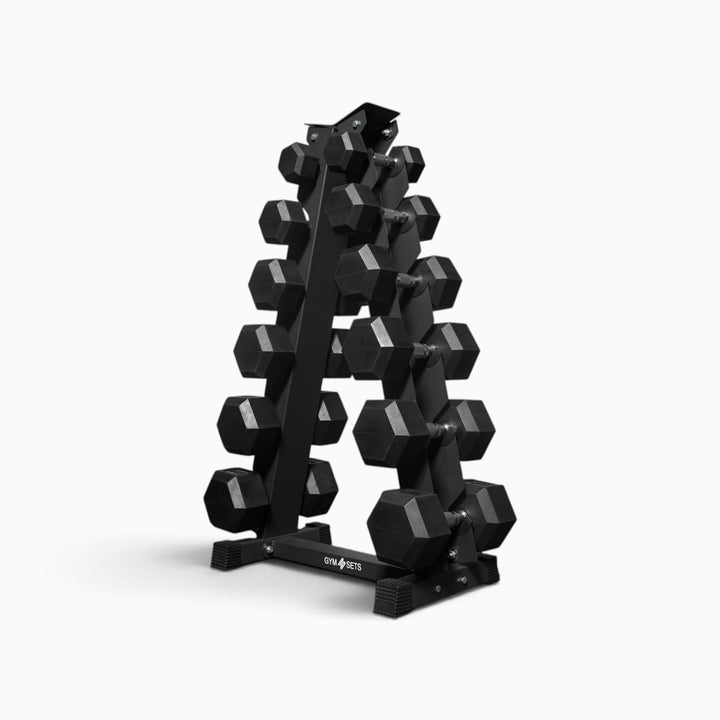
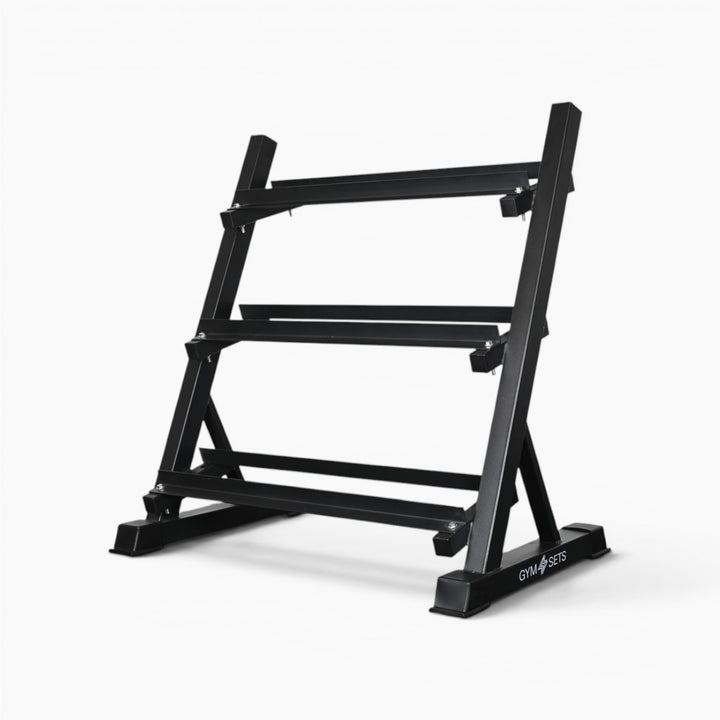
If you are working with a limited budget, buying individual pairs as you need them is a sensible approach. A great starting point for general fitness is a light pair for lateral movements, a medium pair for pressing, and a heavy pair for lower-body movements like lunges and squats. However, if you want a complete training experience, investing in a pre-bundled set (such as a 5kg to 25kg progression in 2.5kg increments) alongside a vertical or horizontal steel storage rack often provides much better value per kilogram and gives you the exact tools needed for seamless progressive overload.
Considering Storage Options
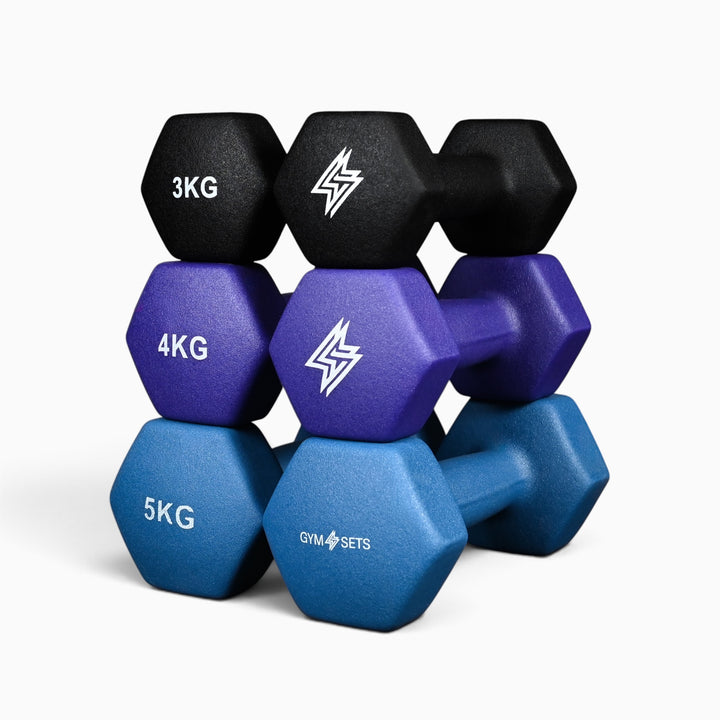
Because fixed weights cannot be disassembled, a collection of them will require dedicated storage space as your strength grows. Fortunately, the flat sides of hex dumbbells make them highly organized. They can be stored neatly on standard flat-shelf racks, or even stacked carefully on top of one another in a corner of your room if you are tight on space, something that is physically impossible with round alternatives.
Care and Maintenance for Maximum Longevity
While hex weights are incredibly low-maintenance, a small amount of regular care will ensure they look pristine and perform flawlessly for decades.
-
Keep Clean and Dry: After an intense training session, take thirty seconds to wipe down the steel knurled handles with a clean microfiber cloth. This removes skin oils, sweat, and moisture that can cause the chrome finish to pit or tarnish over time.
-
Handle Rubber with Care: If your weights are rubber-coated, avoid leaving them sitting in direct, intense sunlight for months at a time, as UV rays can eventually dry out the rubber and cause it to fade or crack.
-
Clean the Knurling Periodically: Over months of heavy lifting, chalk residue, skin flakes, and dust can settle into the fine grooves of the handle grip. Use a stiff nylon brush with a tiny amount of mild soapy water to scrub the knurling clean, then dry thoroughly with a towel.
Final Thoughts: The Ultimate Home Gym Staple
When building a training space, you want to invest in tools that remove friction from your routine. You need equipment that is safe, versatile, highly durable, and always ready to perform without any complicated setup.
Hex dumbbells tick every single one of these boxes. By combining a clever anti-roll geometric shape with a rugged, drop-resistant fixed construction, they deliver a professional-grade lifting experience that functions flawlessly in commercial facilities and compact home environments alike. Whether you are performing heavy bench presses or balancing through intense renegade rows, they provide the rock-solid foundation you need to train hard and progress safely.


