




When you step inside any commercial gym, crossfit box, or dedicated garage gym, one piece of equipment consistently takes pride of place in the centre of the room. It is simple, unyielding, and has remained virtually unchanged for over a century. Yet, despite the massive influx of high-tech fitness machines and digital training applications, this single tool remains the undisputed king of muscle building and strength development.
If you are beginning your journey into physical fitness, setting up a home gym layout, or looking to optimise your lifting routine, you have likely encountered the foundational question: what are barbells?
Understanding this fundamental piece of weightlifting kit is about far more than just recognizing a long metal rod. To truly harness its power for your health and fitness goals, you must understand its anatomy, the diverse variations available, how it differs from other free weights, and how to safely integrate it into your training schedule. This comprehensive, deep-dive guide will unpack everything you need to know about barbells, formatted perfectly for your Shopify store to educate your customers and drive informed purchasing decisions.
What Are Barbells? A Clear Definition
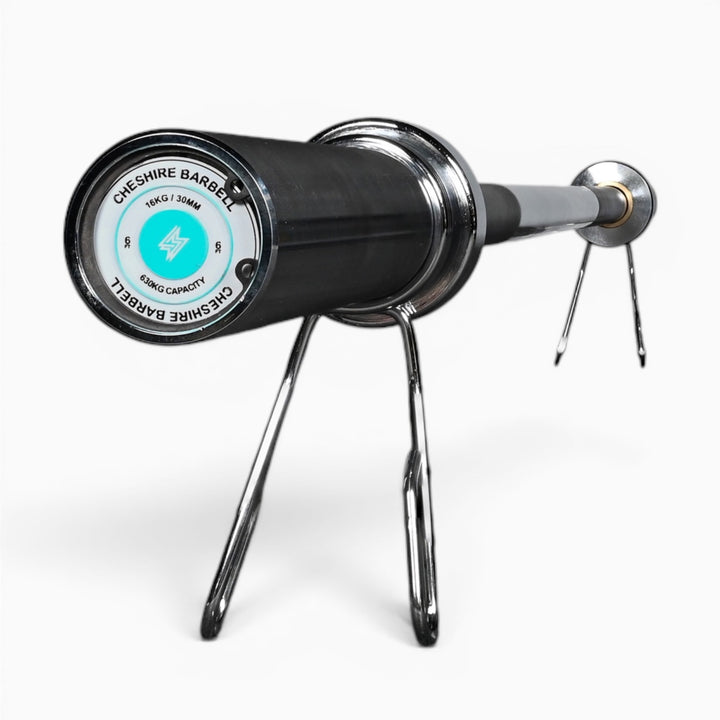
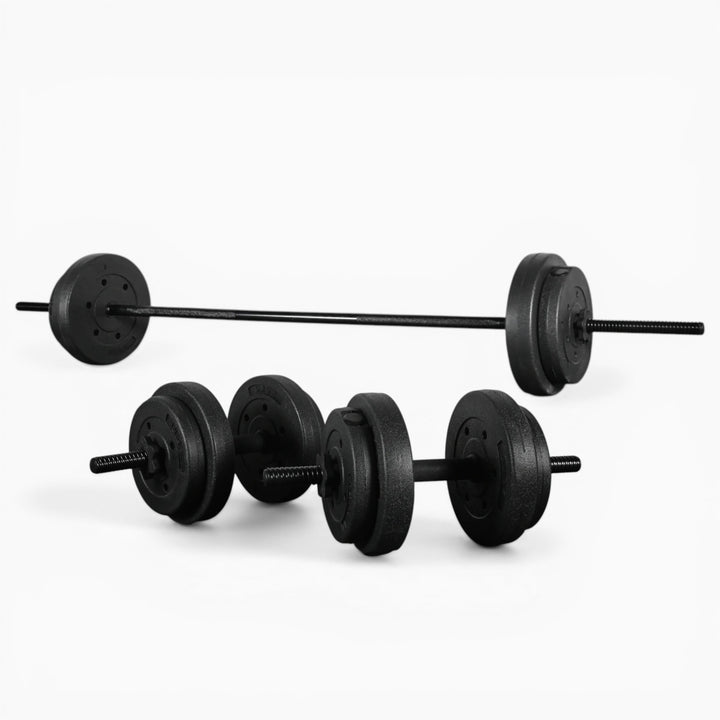
To answer the core question—what are barbells?—in the simplest terms: a barbell is a long, straight metal bar designed to hold weight plates on either end, allowing an athlete to perform resistance exercises using both hands simultaneously.
Unlike dumbbells or kettlebells, which are generally designed for unilateral training (working one side of the body at a time or holding one weight in each hand), a barbell is a bilateral training tool. This dual-handed requirement stabilizes the load, allowing you to lift significantly heavier masses than you could ever manage with independent handheld weights. This unique structural advantage makes the barbell the ultimate instrument for progressive overload, which is the foundational training principle of gradually increasing physical resistance to stimulate muscle growth and strength adaptation.
A standard adult barbell typically measures between five and seven feet in physical length and weighs anywhere from 10kg to 20kg when completely unloaded. By sliding circular weight plates onto the outer ends, you can scale the total weight from a modest baseline all the way up to hundreds of kilograms, accommodating everyone from absolute rehabilitation beginners to elite international powerlifters.
The Anatomy of a Barbell Broken Down
At first glance, a barbell looks like a continuous piece of steel. However, a high-quality barbell is a highly engineered assembly of distinct components, each serving a specific mechanical purpose to maximise lifting performance and protect your joints from injury.
1. The Shaft
The shaft is the central portion of the barbell that you grip with your hands. The physical thickness of the shaft, known as its diameter, usually ranges between 25mm and 32mm. A thinner shaft is easier to grip tightly, which is ideal for explosive pulling movements, whereas a thicker shaft provides greater structural stiffness, which is highly preferred for heavy squatting and pressing.
2. The Knurling
If you look closely at the shaft, you will notice a cross-hatched, diamond-shaped pattern etched directly into the steel. This texture is called the knurling. The sole purpose of knurling is to increase friction between the steel and your skin, preventing the bar from slipping out of your hands when your palms begin to sweat.
-
Aggressive Knurling: Features sharp, deep ridges that dig firmly into the hands, which is highly favoured by competitive powerlifters for heavy deadlifts.
-
Passive Knurling: Offers a smoother, gentler texture that is comfortable for high-repetition workouts or general fitness enthusiasts.
-
Centre Knurling: Many bars include a small patch of knurling right in the dead centre of the shaft. This texture grips the fabric of your shirt, preventing the bar from sliding down your back during heavy back squats.
3. Knurl Marks or Ring Markings
Smooth gaps or rings are intentionally cut into the knurling at specific distances from the centre. These function as visual guidelines, ensuring you place your hands completely symmetrically on both sides of the bar.
-
Powerlifting Rings: Spaced 81cm apart, indicating the maximum legal grip width allowed in competitive bench press events.
-
Olympic Rings: Spaced 91cm apart, marking the ideal hand placement for explosive Olympic movements like the snatch.
4. The Sleeves
The sleeves are the wider outer portions of the barbell where you slide the weight plates on. On standard barbells, these sleeves are fixed and stationary. On premium Olympic barbells, the sleeves are completely separate mechanical units that rotate independently from the central shaft.
5. Bearings and Bushings
Inside the rotating sleeves of an Olympic bar sits either a bushing or a bearing system.
-
Bushings: Solid rings of bronze or composite material that offer smooth, low-friction rotation. They are highly durable and perfectly suited for slow, heavy powerlifts.
-
Needle Bearings: Small steel rollers that allow the sleeve to spin incredibly fast with minimal resistance. This high-speed spin is vital for Olympic weightlifting, as it allows the weight plates to rotate smoothly while the athlete drops under the bar, preventing the rotational force of the heavy plates from wrenching or straining the lifter's wrists and elbows.
Barbell Classifications: Olympic vs. Standard
When sourcing a barbell for your fitness routine or online store, you will immediately notice a massive divide between two major structural classifications: Standard and Olympic. Choosing the wrong type can lead to frustrating compatibility issues with your weight plates.
Standard Barbells
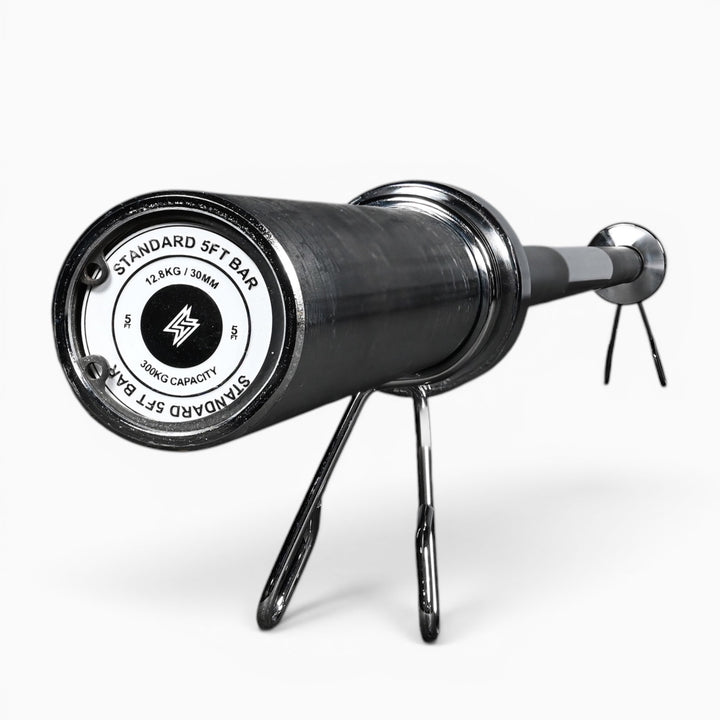
Standard bars are built primarily for casual home fitness use and are generally budget-friendly options.
-
The sleeves and the central shaft have the exact same diameter of one inch (approximately 25mm) along the entire length of the bar.
-
The outer sleeves do not rotate; they are welded directly to the central shaft.
-
They typically have a lower total weight capacity, often capping out around 100kg to 150kg before the steel begins to permanently bend.
-
They require specific "standard" weight plates that feature a matching one-inch central hole.
Olympic Barbells
Olympic bars are the premium commercial standard found in professional gyms around the globe.
-
While the central shaft is around 28mm thick, the outer sleeves flare out to a heavy two-inch diameter (50mm).
-
The sleeves rotate smoothly on internal bearings or bushings to protect the user's joints.
-
They are manufactured using high-tensile spring steel, allowing them to support massive loads (often up to 450kg or even 680kg) and safely flex under heavy weight before springing back completely straight.
-
They require "Olympic" weight plates, which feature a standard two-inch central opening.
Exploring Specialty Barbells and Their Uses
While the standard straight bar is the most common variation, fitness engineers have designed several alternative barbell shapes. These specialty bars alter the distribution of the weight or change your hand positioning to target specific muscle groups or alleviate stress on injured joints.
1. The EZ Curl Bar
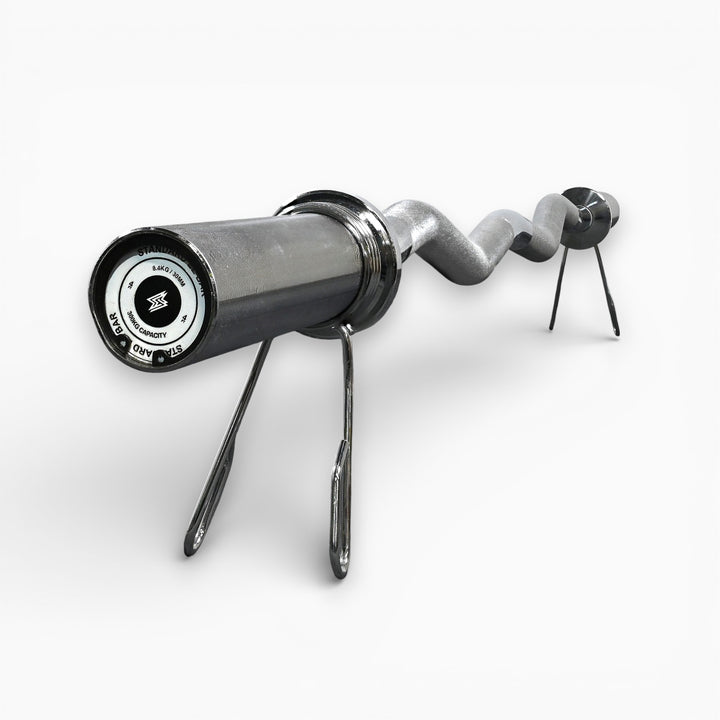
The EZ curl bar is significantly shorter than a traditional straight bar and features a distinct W-shaped wavy shaft.
-
This angled profile allows you to grip the bar with a semi-supinated hand position, meaning your wrists are angled slightly inward rather than sitting completely flat.
-
This configuration greatly reduces the repetitive strain placed on the wrists and forearms during isolated bicep curls and tricep extensions.
-
It is a fantastic accessory tool for isolating the arms without experiencing joint discomfort.
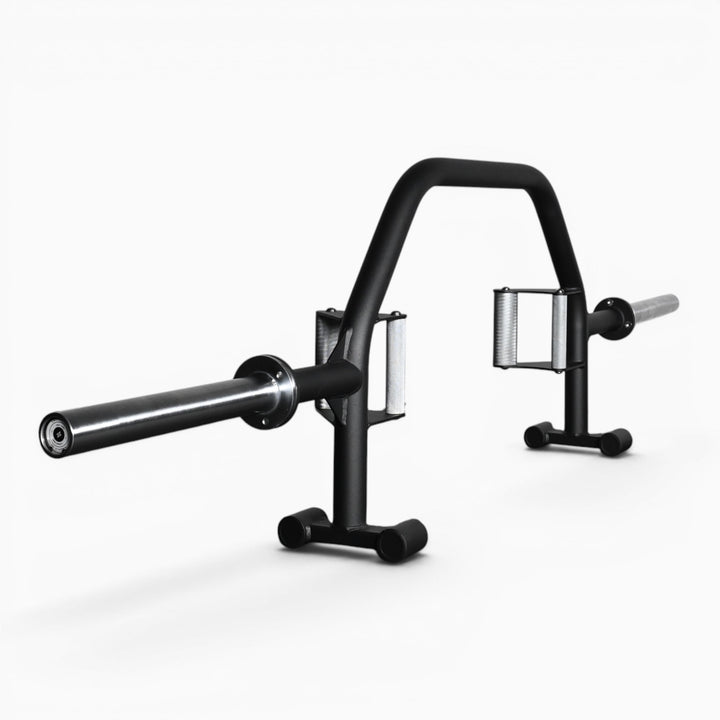
2. The Trap Bar or Hex Bar
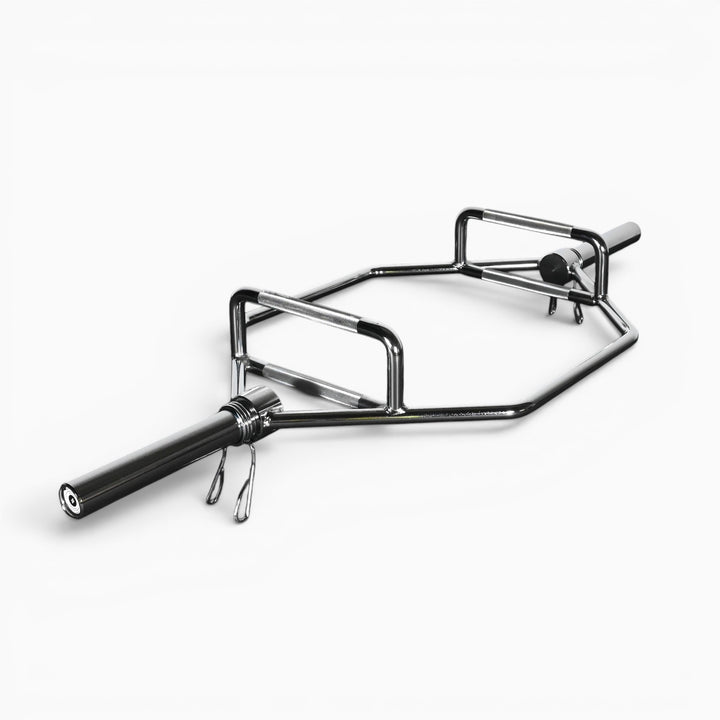
The trap bar features a hollow, diamond or hexagonal steel frame that you step completely inside to lift.
-
Rather than holding a bar out in front of your shins, you grip parallel handles situated directly at your sides.
-
This unique orientation shifts the centre of gravity completely inline with your ankles during a deadlift.
-
By moving the load closer to your body's axial centre, it dramatically reduces the shearing forces placed on your lower back, making it an incredibly safe and effective tool for rehabilitation, athletes, and beginners learning the mechanics of a hinge movement.
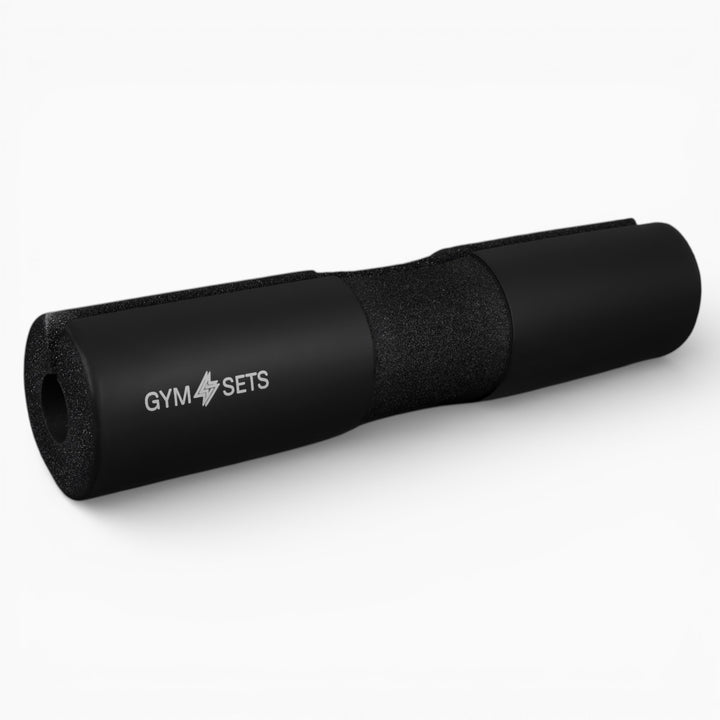
3. The Safety Squat Bar
This specialty barbell features a heavily padded yoke that sits comfortably over your neck and shoulders, alongside two forward-facing handles that extend over your chest.
-
It allows you to perform heavy squats without needing to reach your hands back to grip a traditional bar.
-
This makes it an invaluable asset for lifters suffering from poor shoulder mobility, torn rotator cuffs, or wrist injuries.
-
The unique weight distribution shifts the load slightly forward, forcing your upper back and quadriceps to work significantly harder to maintain an upright posture.
4. Swiss Bars or Multi-Grip Bars
A Swiss bar features a rectangular ladder-style frame containing multiple interior rungs running crossways.
-
This design allows you to perform bench presses, overhead presses, and rowing movements using a neutral grip, where your palms face each other directly.
-
A neutral grip keeps your elbows tucked tightly to your sides, which opens up the shoulder joint and drastically reduces impingement, making it a favorite tool for lifters recovering from chronic shoulder pain.
The Core Benefits of Training with a Barbell
With so many exercise options available, from resistance bands to multi-million-pound selectorised cable stacks, why does the simple barbell remain the core foundation of athletic training? The answers lie deep within biomechanics and human physiology.
Unmatched Capacity for Progressive Overload
To force human muscle tissue to grow larger and stronger, you must continually subject it to greater levels of physical stress over time. Machines have built-in weight stacks that inevitably top out, and dumbbells become incredibly unwieldy to hold and safely position once you surpass a certain mass. A high-quality Olympic barbell eliminates these artificial ceilings entirely. You can start by lifting the bare bar and over months and years, gradually add fractional plates of just 0.5kg all the way up to heavy bumper plates, ensuring your body never stops adapting.
Massive Recruitment of Stabiliser Muscles
When you use a commercial chest press machine, the machine's steel tracks guide the weight along a rigid, predetermined path. You do not have to worry about the weight tilting to the left, falling forward, or shaking. While this isolates the target muscle, it completely switches off your stabilizer muscles.
A barbell forces your nervous system to do all the stabilization work yourself. If your left arm is weaker than your right, the bar will tilt instantly, giving you immediate visual feedback. Training with a barbell recruits hundreds of tiny secondary muscles across your core, hips, and shoulders simply to keep the heavy bar traveling along a perfect vertical plane.
Superior Multi-Joint Compound Efficiency
Barbell training focuses heavily on compound movements, which are exercises that require multiple major joints and muscle groups to work together simultaneously. Think of a back squat, which recruits the quadriceps, hamstrings, glutes, calves, lower back, and core all in a single movement. By focusing your limited training time on these massive compound lifts, you trigger a significantly larger systemic hormonal response, burning more calories and building functional, full-body strength far faster than you ever could doing isolated machine exercises.
Barbell Training vs. Dumbbells: A Strategic Comparison
Many fitness beginners assume they must choose between using dumbbells or barbells. In reality, both serve as highly complementary tools, but they excel in entirely different areas of performance.
| Attribute | Barbell Training | Dumbbell Training |
| Maximum Weight Potential | Exceptionally High (No upper ceiling) | Moderate (Limited by grip capability) |
| Grip Style Required | Bilateral (Both hands fixed together) | Unilateral (Independent movement) |
| Muscle Balancing | Can allow stronger side to dominate slightly | Eliminates strength imbalances completely |
| Joint Freedom | Fixed hand path | Natural, rotating path of movement |
| Core & Stabilisation | High structural full-body demand | High localized stabilization demand |
As the comparative table illustrates, the barbell is your primary weapon for moving the maximum amount of absolute mass to build pure raw power and dense muscle size. Dumbbells are your ideal secondary choice for fixing unilateral strength imbalances between your limbs and moving your joints through a completely free, customizable path of motion.
Essential Barbell Movements You Need to Master
If you are looking to build an effective training program around a barbell, you should focus your initial efforts entirely on the "Big Four" foundational movements. These exercises offer the greatest return on investment for your time and energy.
1. The Back Squat
Often referred to as the undisputed king of all lower-body exercises. You rest the barbell across your upper back muscles, hinge at your hips, bend your knees, and lower your hips down until they drop parallel to the floor before driving back up to a standing position. This movement targets the entire lower chain, building massive leg power and exceptional core density.
2. The Conventional Deadlift
The ultimate test of absolute raw human strength. The barbell starts completely stationary on the floor. You bend down, grip the bar tightly, and use your hamstrings, glutes, and entire back structure to pull the weight straight up until you are standing fully upright with your shoulders locked back. It builds an incredibly resilient posture and trains your body to lift heavy objects off the ground safely using your hips rather than your lower spine.
3. The Bench Press
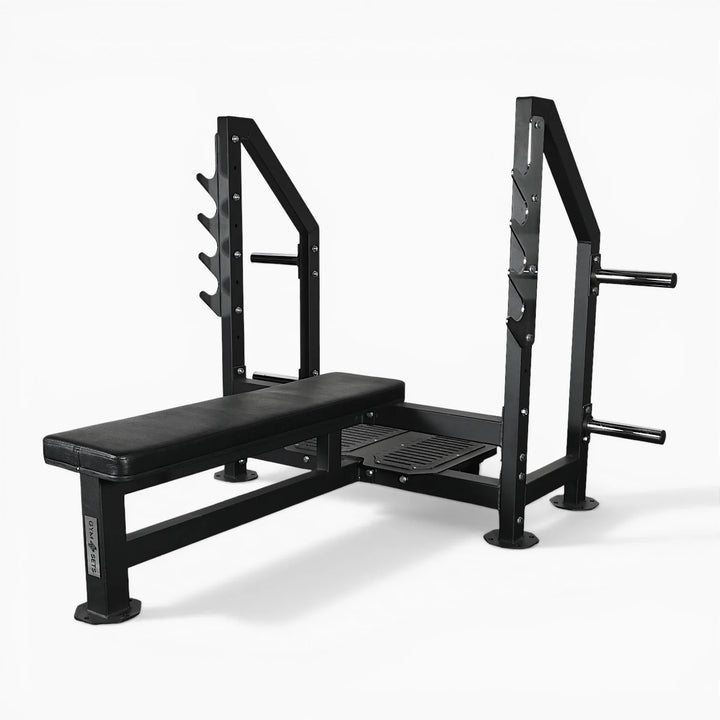
The most famous upper-body exercise in existence. You lie completely flat on a bench, unrack the barbell from a steel support structure, lower it under strict control until it gently touches your sternum, and then push it vertically upward until your elbows lock out. This lift targets the pectorals (chest), anterior deltoids (front shoulders), and triceps simultaneously.
4. The Overhead Press or Military Press
A strict test of upper-body power and core stability. Standing fully upright with your feet rooted to the floor, you hold the barbell at shoulder height across your upper chest. Without using your legs for momentum, you drive the bar straight up over your head until your arms are fully extended. This exercise builds broad, powerful shoulders and forces your abdominal muscles to work overtime to keep your body balanced.
How to Safely Maintain Your Barbell
A high-quality steel barbell is a significant investment. Left completely neglected in a damp garage gym or high-humidity commercial space, the steel will eventually develop surface rust, and the internal sleeves will begin to seize. Follow this simple care routine to ensure your bar spins smoothly for decades.
1. Brush Away Skin and Chalk
After every workout session, take a stiff nylon-bristle brush and scrub down the knurled areas of the shaft. This removes the accumulation of dead skin cells, sweat, and lifting chalk that gets trapped deep inside the diamond grooves. If left sitting there, this organic moisture will quickly oxidize and corrode the steel underneath. Never use a steel wire brush, as this can scratch off protective zinc or chrome coatings.
2. Wipe Down with Protective Oil
Once a month, apply a few drops of a light, specialized maintenance oil (such as 3-in-One oil or a dedicated barbell lubricant) onto the shaft. Take a dry microfiber cloth and buff the oil across the entire metal surface, leaving a ultra-thin protective barrier that repels ambient moisture and prevents rust formation.
3. Lubricate the Internal Sleeves
If your bar features rotating sleeves, they need internal lubrication to maintain a smooth spin. Squirt a small amount of low-viscosity machine oil directly into the tiny gap where the rotating sleeve meets the inner shaft collar. Spin the sleeve manually for a minute to allow the oil to distribute evenly across the internal bushings or needle bearings.
Summary: The Ultimate Tool for Lifelong Strength
When you cut through all the changing trends and fads of the modern fitness industry, the barbell remains an unrivaled masterpiece of utility. By asking what are barbells and understanding their design, you gain access to a time-tested training philosophy centered around simplicity, consistency, and measurable physical progress.
Whether your personal goal is to lose weight, build dense muscle tissue, or develop functional strength that protects your joints as you age, investing in a high-quality barbell setup is the single most impactful choice you can make for your long-term health journey.


