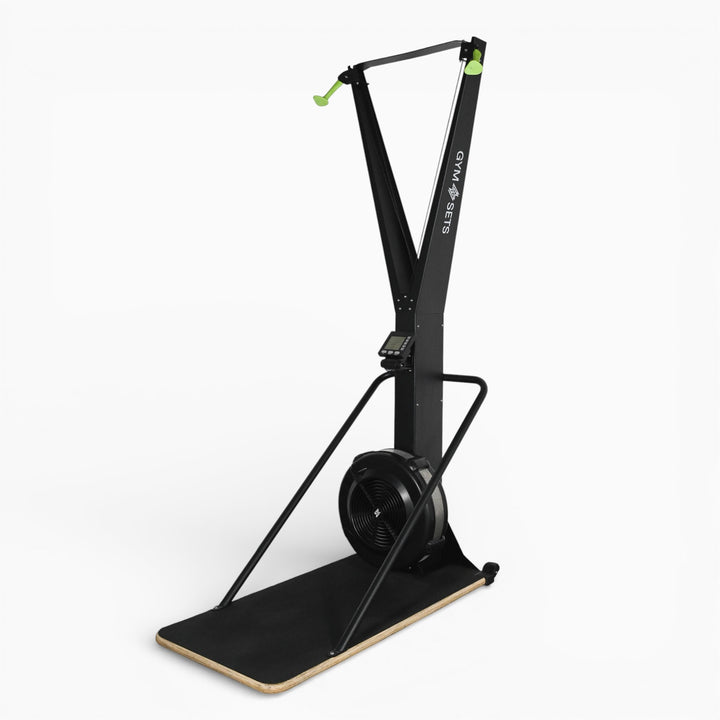





Walk into any modern commercial gym, CrossFit box, or high-performance training facility today, and you are highly likely to spot a tall, slender machine with two dangling handles and a flywheel at the base. It looks a bit like a rowing machine stood on its end, and it often sits in the corner, waiting for someone brave enough to tackle it.
If you have stared at this piece of kit and wondered what it actually does, you are far from alone. What is a SkiErg?
Simply put, it is one of the most effective, low-impact, full-body cardiovascular machines on the market. Originally designed to help elite cross-country skiers train when the snow melted, it has rapidly transitioned into the mainstream fitness world. It has earned a reputation for delivering punishingly effective workouts that build explosive power, core stability, and incredible aerobic endurance all at the same time.
Whether you are looking to buy one for your home gym setup, trying to mix up your cardiovascular routine, or simply looking to understand how to use it next time you train, this comprehensive guide will break down everything you need to know.
What is a SkiErg? Understanding the Machine
To truly understand what a SkiErg is, it helps to break down the name itself. The term "erg" is short for ergometer, which is a device that measures work and energy expenditure. Therefore, a SkiErg is quite literally a machine designed to measure the physical work you perform while mimicking the upper body and core mechanics of cross-country skiing.
The machine was pioneered by Concept2, the same brand responsible for the iconic indoor rowing machine found in virtually every gym worldwide. Just like its rowing counterpart, the SkiErg utilizes air resistance generated by a spinning flywheel. The harder you pull the handles downward, the faster the flywheel spins, creating more resistance. This means you are in total control of the intensity at all times. If you pull softly, the resistance is light. If you drive down with maximum effort, the machine responds with intense opposition.
Unlike a treadmill or a stationary exercise bike, which focus primarily on the lower body, the SkiErg relies heavily on your upper body, core, and posterior chain to drive the movement. It turns traditional cardio on its head by forcing your upper torso to do the heavy cardiovascular lifting.
How Does a SkiErg Actually Work?
The mechanics of the machine are beautifully straightforward but highly engineered.
When you stand in front of the machine, you grip two independent drive cords equipped with ergonomic, strapless handles. As you pull these handles down, you rotate the internal flywheel.
Air enters the flywheel housing, and a damper setting on the side allows you to regulate how much air flows into the cage.
-
A higher damper setting (closer to 10) allows more air into the flywheel, making it feel heavier and requiring more muscular force to accelerate.
-
A lower damper setting (closer to 1) lets less air in, making the wheel spin more freely and focusing the training on speed and fast-twitch endurance.
A common misconception is that the damper is a resistance knob. In reality, it works more like bicycle gearing. Your effort determines the actual resistance, while the damper changes the overall feel of the stroke.
The Major Fitness Benefits of SkiErg Training
Adding this machine to your training regime brings a host of unique physical advantages that are difficult to replicate with other gym equipment.
1. High-Calorie Burn with Zero Impact
Because your feet stay firmly planted on the floor or the machine's optional floor stand throughout the entire movement, there is absolutely zero impact on your ankles, knees, or hips. This makes it an exceptional tool for individuals recovering from lower-body injuries, runners looking to maintain fitness without pounding the pavement, or anyone carrying extra body weight who wants to avoid joint stress. Despite the lack of impact, the full-body muscular recruitment means your heart rate skyrockets within seconds, leading to massive caloric expenditure.
2. True Full-Body Conditioning
While it looks like an upper-body exercise, a correct skiing stroke involves a profound amount of lower-body power. Every single repetition requires a miniature squat or hinge, a powerful contraction of the abdominals, and a massive drive from the lats, triceps, shoulders, and upper back. It connects the upper and lower halves of your body through the core, forcing your muscles to work in perfect synchronicity.
3. Developed Core Power and Stability
Many traditional cardio machines allow you to switch off your mind and your midsection. On a SkiErg, that is impossible. The driving force of the movement relies on a crunch-like motion of the abdominal wall. You are effectively performing a standing abdominal crunch against resistance with every single stroke. Over time, this builds incredible functional strength through the rectus abdominis and obliques.
4. Balanced Muscle Recruitment
Modern life places many of us in a seated, forward-slouched position at desks, leading to weak back muscles and tight chests. The downward, expansive pulling motion of skiing targets the posterior chain and the large pulling muscles of the back. This helps counteract poor posture by strengthening the upper back, rear deltoids, and lats, creating a more balanced, resilient physique.
Master the Technique: How to Use a SkiErg Correctly
To get the most out of the machine and prevent unnecessary strain on your lower back, mastering the proper form is essential. Many beginners treat the machine like a tricep extension or a straight-arm lat pulldown, which severely limits power output and misses the point of the exercise.
The Perfect Setup
-
Stand facing the machine with your feet roughly shoulder-width apart. Your toes should be situated a few inches back from the base of the machine.
-
Reach up and grasp the handles. Your arms should be extended upward, but maintain a slight, comfortable bend at the elbows.
-
Keep your chest up, your eyes looking forward at the performance monitor, and your spine neutrally aligned.
The Drive Phase
-
Begin the movement by engaging your core and aggressively driving your hips backward, rather than just pulling with your arms.
-
Think of this as an explosive crunch. Use your body weight to accelerate the handles downward.
-
As your hips hinge backward, bend your knees slightly to absorb the force and assist the downward drive.
-
Your hands should follow a fluid arc path, passing close to your face and finishing down past your thighs.
-
Complete the stroke with a full extension of the arms past your hips, mimicking the final push of a ski pole through the snow.
The Recovery Phase
-
To return to the top, reverse the movement smoothly.
-
Extend your hips and knees back to a standing position while allowing your arms to rise naturally back up toward the top of the flywheel.
-
Relax your upper body slightly during this phase to catch your breath, preparing for the next explosive downward drive.
-
Avoid leaning too far backward at the top of the movement, as this places unnecessary stress on the lumbar spine.
Common Mistakes to Avoid
Even seasoned athletes make errors when first encountering the SkiErg. Keeping an eye out for these frequent mistakes will keep you safe and your splits fast.
Pulling Only with the Arms
The most common error is keeping the torso perfectly upright and using solely the arms to yank the cords down. This tires out the triceps and lats within a minute and eliminates the full-body benefit. Remember that the power originates in the core and hips; your arms simply transfer that power into the machine.
Squatting Too Deeply
While you do bend your knees during the drive phase, the SkiErg is primarily a hip-hinge movement, not a deep squat. Squatting too low drops your center of gravity unnecessarily and makes it incredibly difficult to generate rapid, repetitive power. Your knees should bend to support the hip hinge, not dominate it.
Standing Too Far Back
If you stand too far away from the machine, the angle of pull becomes diagonal rather than vertical. This puts immense strain on your lower back and stops you from using your body weight to pull the handles down efficiently. Keep your feet close to the frame or within the designated markers on the floor stand.
Releasing Tension at the Bottom
Some users let go of the tension completely at the bottom of the stroke, allowing the cords to snap back up wildly. This creates a jerky, inefficient movement pattern. Maintain control over the handles throughout the entire recovery phase to keep the internal cords tracking smoothly along their pulleys.
How to Program the SkiErg in Your Workouts
Because the machine is incredibly versatile, you can program it in several different ways depending on your specific training goals.
For High-Intensity Interval Training (HIIT)
The air resistance format makes this machine absolute gold for interval work. Because the resistance adjusts to your output instantly, you can transition from an all-out sprint to total rest without waiting for a treadmill belt to slow down.
-
Sprint with maximum effort for 30 seconds.
-
Rest completely for 90 seconds.
-
Repeat for a total of 8 to 10 rounds.
For Aerobic Endurance and Recovery
If you want to build a deep aerobic engine or flush out your muscles the day after a heavy weightlifting session, the machine can be used for steady-state cardio.
-
Set the monitor to track your 500-meter split pace.
-
Find a comfortable, sustainable tempo where you can maintain a conversation.
-
Work continuously for 20 to 30 minutes, focusing heavily on rhythmic breathing and smooth technique.
For Hybrid Power Workouts
The SkiErg pairs beautifully with lower-body dominant movements like kettlebell swings, thrusters, or lunges because it shifts the primary fatigue to your upper body and core.
-
Complete a 500-meter ski pull.
-
Immediately perform 15 kettlebell swings.
-
Rest for 60 seconds.
-
Repeat for 4 complete rounds.
Buying Guide: What to Look for in a SkiErg
If you are looking to purchase a machine for your own facility or home gym garage setup, there are a few practical configurations you need to consider before making an investment.
Wall-Mounted vs. Floor Stand
The standard machine is inherently designed to be mounted directly to a sturdy wall. This is a brilliant option if you have limited floor space, as the machine has an incredibly small footprint and sits flush against the wall. However, it means the unit is fixed in one spot permanently.
If you require versatility or cannot drill into your walls, you will need to purchase the optional floor stand. This heavy-duty steel base features transport wheels, allowing you to wheel the machine around your gym space, move it outdoors for training sessions, or store it away when it is not in use.
The Performance Monitor
A premium machine should come equipped with an advanced performance monitor (such as the industry-standard PM5 monitor from Concept2). This monitor is the brain of the machine, providing accurate, comparable data for every single pull. It should track:
-
Your 500-meter split pace (how long it would take to ski 500 meters at your current speed).
-
Total watts generated.
-
Calories burned.
-
Stroke rate (strokes per minute).
-
Wireless connectivity for heart rate monitors and fitness tracking apps.
Having access to this calibrated data allows you to track your fitness progress accurately over weeks, months, and years, removing any guesswork from your training.
Summary: Is the SkiErg Right for You?
Ultimately, this machine is an exceptionally valuable asset to anyone's fitness journey. Whether you are an elite athlete looking for a competitive edge, a functional fitness competitor preparing for a competition, or an ordinary gym-goer searching for a safe, low-impact way to improve your cardiovascular health, it delivers results.
It challenges your upper body, tests your core strength, builds a powerful posterior chain, and demands incredible cardiovascular stamina, all while treating your joints with absolute respect. Next time you see one sitting quietly in the corner of your local training facility, don't walk past it. Grip the handles, step back into your stance, engage your core, and experience one of the finest conditioning tools modern fitness has to offer.


