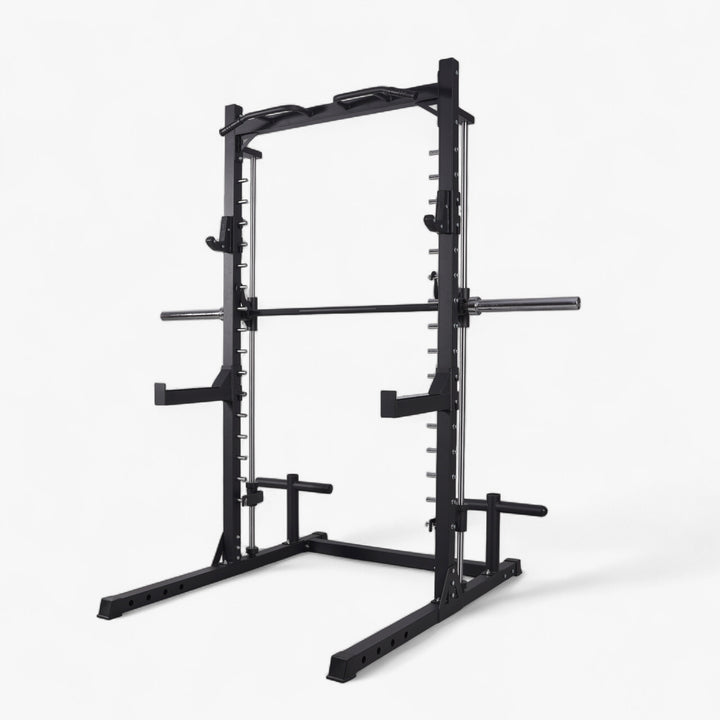
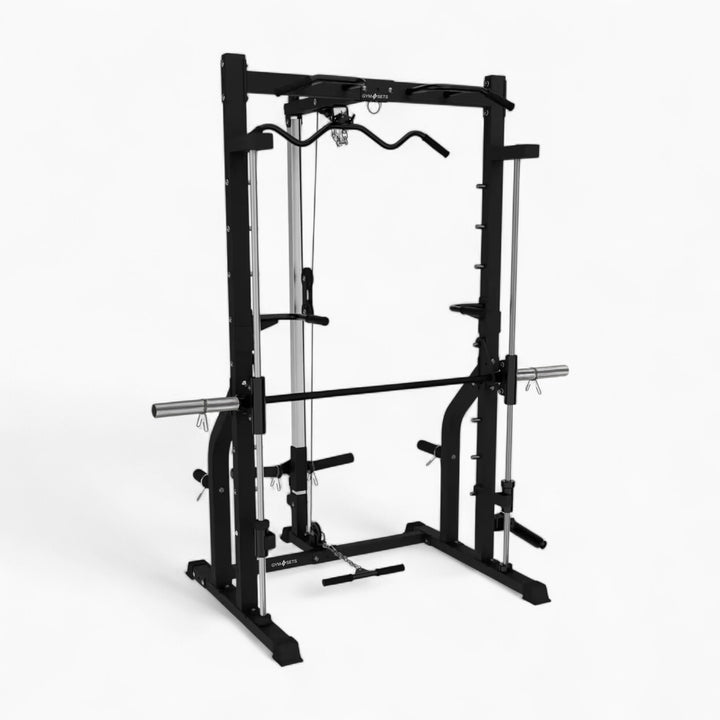




When designing a home gym or evaluating the equipment in a commercial fitness facility, versatility is the ultimate metric of value. While single-station resistance machines lock you into a fixed, rigid movement path, and free weights rely completely on gravity, there is one piece of equipment that stands entirely in a league of its own. The functional cable crossover or single cable column machine is widely considered the Swiss Army knife of the fitness world. But exactly how many different exercises can you perform on a single cable machine? The short answer is that the number is practically limitless. Because you can alter the pulley height, switch between a massive array of handles, and pull from any angle, a cable machine allows you to target every single muscle group in your body with hundreds of distinct movements.
The Engineering Behind the Unlimited Versatility of Cables

To understand why a cable machine offers an almost infinite library of exercises, you have to look at the unique physics of cable resistance. When you lift a traditional dumbbell or barbell, the resistance is strictly vertical because gravity only pulls weights directly down toward the earth. This severely limits the angles at which you can overload a muscle. A cable machine, however, completely rewrites the rules of biomechanics by utilizing a system of high-tensile steel cables, low-friction pulleys, and a selectorised weight stack. Because the resistance follows the exact line of the physical cable, you can direct the tension horizontally, vertically, diagonally, or through complex rotation. This allows you to precisely match the natural anatomical alignment and muscle fiber direction of any target muscle group.
The Power of the Adjustable Pulley Track

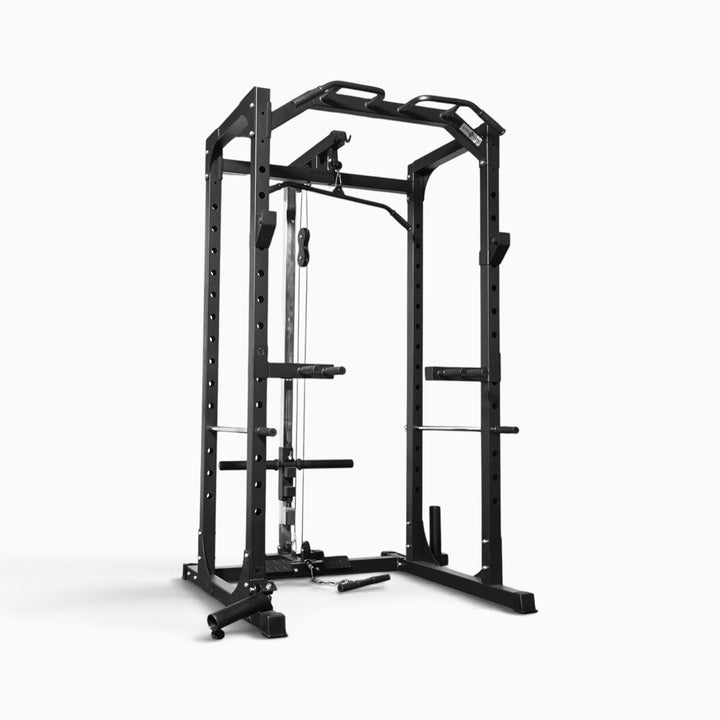
The secret weapon of the modern cable machine is the vertical adjustable pulley track. Most premium cable columns feature a smooth slider system that allows you to lock the pulley housing into dozens of different vertical micro-increments, spanning from right down at floor level to way above your head. By simply altering this starting point, a single attachment completely changes its function. For example, with the pulley positioned at the very bottom track, you can perform bicep curls or front raises. Slide that exact same pulley to the top of the track, and you can instantly transition into tricep pushdowns or face pulls. This rapid, effortless adjustability is what allows one compact machine to easily replicate the functions of an entire commercial gym floor.
Universal Attachment Points: The Ultimate Game Changer

Another massive factor behind the endless exercise variations is the universal carabiner attachment system. The end of a cable machine is an open canvas. By unclipping one handle and snapping on a different accessory, you completely alter how your muscles recruit fibers and how your joints rotate. This mechanical adaptability means you never hit a training plateau, as you can continuously introduce novel angles and grips to stimulate fresh muscle growth. To give you an idea of how much variety this introduces, let us look at the most common cable attachments found in home and commercial gyms, alongside the primary body parts they are designed to target during a workout routine.
The Heavy-Duty Rope: Perfect for allowing natural wrist rotation during tricep pushdowns, face pulls, bicep hammer curls, and overhead extensions.
The Wide Lat Pulldown Bar: Ideal for targeting the upper back, latissimus dorsi, and rear deltoids through wide or medium-grip pulling movements.
D-Handles (Nylon or Metal): Exceptional for isolated, single-arm unilateral movements like chest flies, lateral raises, and single-arm rows.
Ankle Straps: Opens up an entire library of lower body movements, including cable glute kickbacks, hip abductions, and standing hamstring curls.
The Straight or EZ-Bar: Excellent for traditional bilateral movements, including close-grip upright rows, underhand bicep curls, and seated rows.
Breaking Down Cable Exercises by Major Muscle Group
To truly appreciate the incredible scope of a cable machine, it is highly beneficial to look at how it can thoroughly train every major anatomical zone of the human body. Rather than relying on a dozen different bulky machines, a single dual-cable setup allows you to seamlessly transition from upper-body hypertrophy work to athletic, lower-body functional movements. Because cables provide constant, uninterrupted tension throughout both the lifting and lowering phases of a repetition, they are phenomenally effective for building lean muscle mass, enhancing joint stability, and burning calories. Let us dive into the specific movements you can execute for each individual muscle group to see just how comprehensive a cable workout can truly be.
Transforming Your Chest Workouts with Constant Tension

Traditional free-weight chest exercises like the dumbbell fly are notorious for losing resistance at the top of the movement, where your arms are extended directly over your shoulders. Cable chest exercises completely solve this biomechanical flaw. Because the tension pulls outward rather than downward, your pectoral muscles must work incredibly hard throughout the entire range of motion. By varying the height of the pulleys, you can precisely isolate different areas of the chest. High-to-low cable flies focus heavily on the lower pectoral fibers, low-to-high flies crush the stubborn upper chest, and mid-level standing flies build overall thickness, providing a complete chest routine without ever needing a bench.
Sculpting a Powerful Back and Broad Shoulders
The back and shoulders are complex, multi-directional muscle groups that thrive on varied angles, making them a perfect match for cable training. For the back, you can execute standard lat pulldowns, seated cable rows with a variety of grips, single-arm lat pulldowns to fix strength imbalances, and straight-arm pull-overs for pure lat isolation. When it comes to building broad shoulders, cables are universally beloved by elite trainers. Traditional dumbbell lateral raises offer zero resistance at the bottom of the movement, but cable lateral raises apply intense tension from the absolute micro-second you begin lifting your arm, maximizing deltoid stimulation and promoting rapid shoulder cap development.
Complete Arm Isolation: Biceps and Triceps
If your primary fitness goal is arm development, the cable machine is an absolute essential asset. For the triceps, the constant tension of a cable pushdown prevents you from using momentum, forcing the muscle to lock out under load. You can easily pivot between rope pushdowns, single-arm reverse-grip extensions, and overhead cable extensions to smash all three heads of the tricep. For the biceps, cables keep the muscle completely loaded even at full extension. You can perform high-cable double bicep curls (the classic "front double bicep" pose), behind-the-body cable curls to target the long head, or heavy rope hammer curls to build thick, powerful forearms and brachialis muscles.
Unlocking Lower Body and Core Functionality
While many lifters view cables as a strictly upper-body luxury, they are spectacular for training the lower body and core. By clipping an ankle strap to the low pulley, you unlock elite glute and hip movements like cable kickbacks, standing hip abductions, and standing hamstring curls that keep constant tension on the lower body. For the core, cables allow you to train the abdominals standing up, which is highly functional for real-world sports. Standing cable woodchops and Pallof presses train the obliques to resist and generate rotational force, while high-cable kneeling crunches allow you to safely progressively overload your abdominal muscles far beyond the limits of basic bodyweight floor sit-ups.
Cable Machine Performance across Key Exercises
| Target Muscle Group | Premier Cable Exercise | Main Attachment Used | Key Benefit Over Free Weights |
| Chest | Cable Crossover Fly | D-Handles | Continuous peak tension at the top contraction |
| Back | Seated Cable Row | V-Bar / Close-Grip Handle | Ability to pull along precise anatomical lines |
| Shoulders | Cable Lateral Raise | Single D-Handle | Intense resistance at the initial start of the lift |
| Triceps | Tricep Rope Pushdown | Heavy-Duty Rope | Allows wrists to flare naturally for deeper lockouts |
| Core | Standing Woodchop | D-Handle or Rope | Trains explosive rotational power under load |
As illustrated in the data table above, the true superpower of the cable machine is its ability to provide continuous, unyielding tension where free weights naturally fail. By maintaining a constant load on the target muscle during both the eccentric (lowering) and concentric (lifting) portions of the exercise, you induce higher amounts of metabolic stress and muscular fatigue. This makes cable movements exceptionally safe on your joints while remaining highly efficient for driving athletic performance and muscle definition.
Why a Cable Machine Belongs in Your Fitness Routine
When looking at the sheer volume of exercises available, it becomes obvious why this equipment is a cornerstone of modern fitness.
The Main Advantages:
Continuous Mechanical Tension: Muscles remain fully loaded through 100% of the movement path, maximizing muscle growth.
Unmatched Freedom of Movement: No rigid tracks or fixed hinges mean your joints can move through their natural paths.
Rapid Weight Transitions: Changing the resistance takes a simple flick of a selector pin, making drop sets incredibly easy.
Unilateral Training Capabilities: You can easily train one side of the body at a time to correct strength and visual imbalances.
Safety and Joint Longevity: The Hidden Benefit of Cables
Beyond the sheer variety of movements, cable machines offer massive benefits regarding workout safety and joint longevity. When lifting heavy free weights, a loss of control or a failure mid-repetition can result in a dangerous situation where a heavy barbell or dumbbell drops onto your body. With a cable machine, if your muscles hit absolute failure, you simply guide the handle back toward the pulley housing. The weight stack returns safely to its cradle without any risk of crushing you. This makes cables an exceptional choice for solo trainers working out at home without a spotter, individuals recovering from previous sports injuries, and senior lifters who want to push their limits safely.
Conclusion: The Ultimate Investment in Exercise Variety
So, how many different exercises can be performed on a cable machine? While a strict count of basic movements easily clears the one-hundred mark, when you factor in minor adjustments to pulley height, grip angles, and single-arm variations, the true number is virtually infinite. A high-quality cable system successfully condenses a chest press, lat pulldown, shoulder press, arm station, and core machine into a single, highly efficient footprint. Whether you are aiming to build maximum muscle, recover safely from an injury, or develop explosive athletic power, incorporating cable exercises into your fitness routine delivers the ultimate blend of exercise variety, constant structural tension, and long-term joint safety.