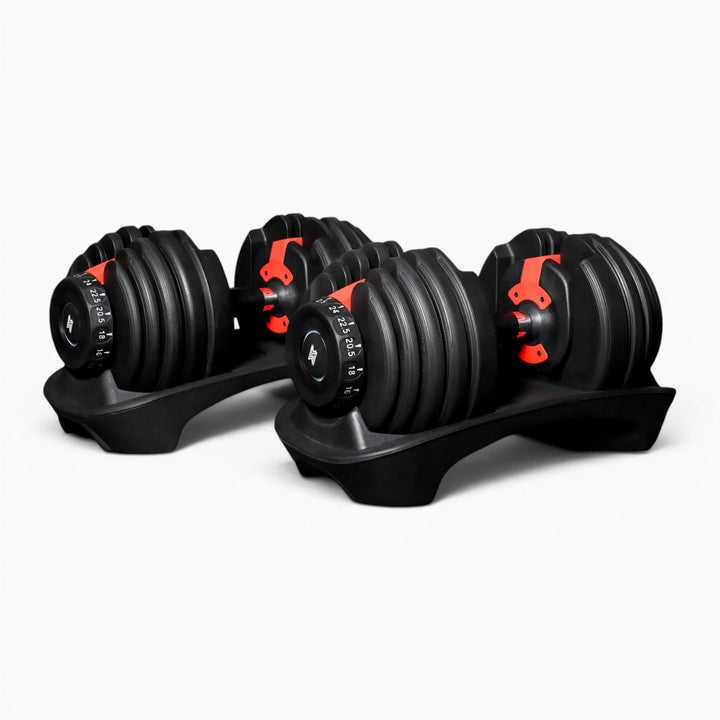


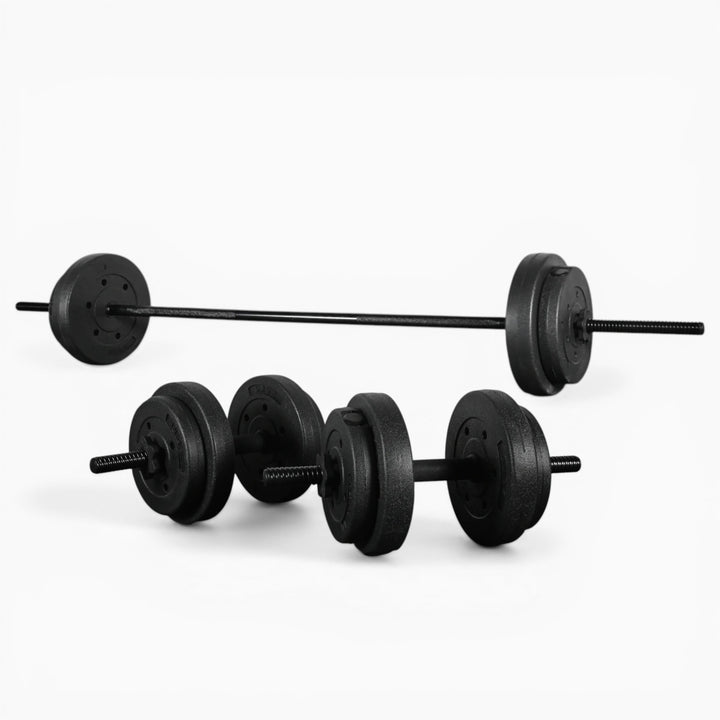


The most popular exercises with 40kg adjustable dumbbells include dumbbell squats, Romanian deadlifts, bench presses, shoulder presses, bent-over rows, lunges and bicep curls. Because the weight can be adjusted, one pair of dumbbells can be used for everything from lighter isolation exercises to demanding full-body movements.
If you are building a home gym, 40kg adjustable dumbbells can give you plenty of flexibility without needing a room full of different weights. In this guide, we’ll look at the most useful exercises you can perform with them, which muscles they work and how to build them into a simple home strength routine.
Why use 40kg adjustable dumbbells?
Adjustable dumbbells are particularly useful because you can change the resistance depending on the exercise. A weight that feels appropriate for a bicep curl, for example, may be far too light for a squat or deadlift.
A 40kg adjustable dumbbell set therefore gives you room to adapt your training as you become stronger. You can start with a manageable weight, focus on your technique and gradually increase the resistance when the exercise becomes easier.
Strength training can also be performed at home with relatively little equipment. The NHS recommends muscle-strengthening activities that work the major muscle groups on at least two days a week, with weightlifting being one example.
1. Dumbbell goblet squat
The goblet squat is one of the simplest ways to introduce dumbbells into a lower-body workout. Hold one dumbbell vertically against your chest with both hands and squat down under control.
The movement primarily trains your legs and glutes, while your core works to help keep your torso stable. It is also easy to adjust the weight, making it suitable for different experience levels.
Keep your feet in a comfortable position and lower yourself as far as you can while maintaining good control. Drive through your feet to return to the starting position rather than rushing through the movement.
As your strength improves, you can gradually increase the dumbbell weight. There is no need to use the full 40kg simply because the dumbbell allows you to.
2. Dumbbell Romanian deadlift
The dumbbell Romanian deadlift is a popular exercise for training the posterior chain, particularly the hamstrings and glutes. It is also a useful movement for learning how to hinge at the hips while keeping control of the weight.
Hold a dumbbell in each hand and stand with your feet roughly hip-width apart. Keeping your back in a comfortable neutral position, push your hips backwards and lower the dumbbells towards your legs.
You should feel your hamstrings working as you lower the weights. Once you have reached a comfortable range of motion, drive your hips forwards to return to standing.
This is an exercise where technique matters considerably. Start with a weight you can control rather than immediately reaching for the heaviest setting available.
3. Dumbbell bench press
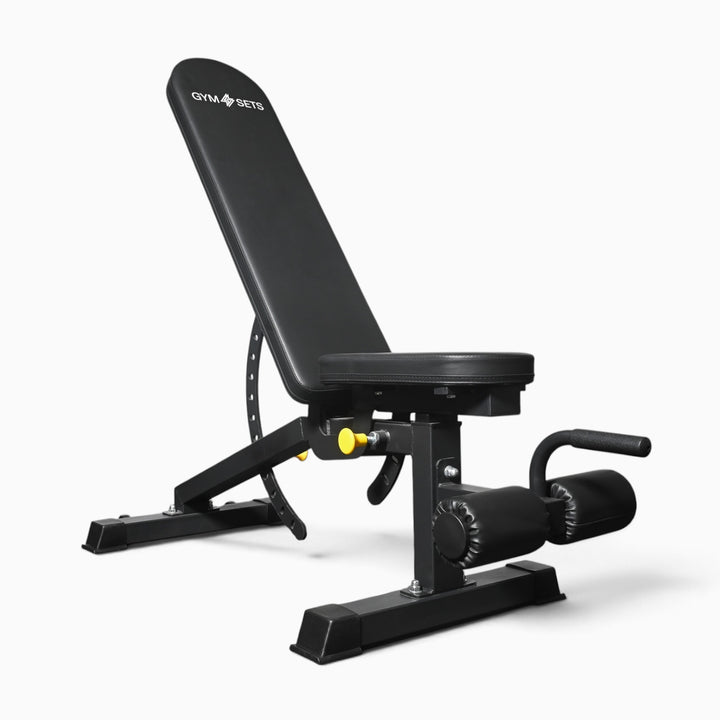
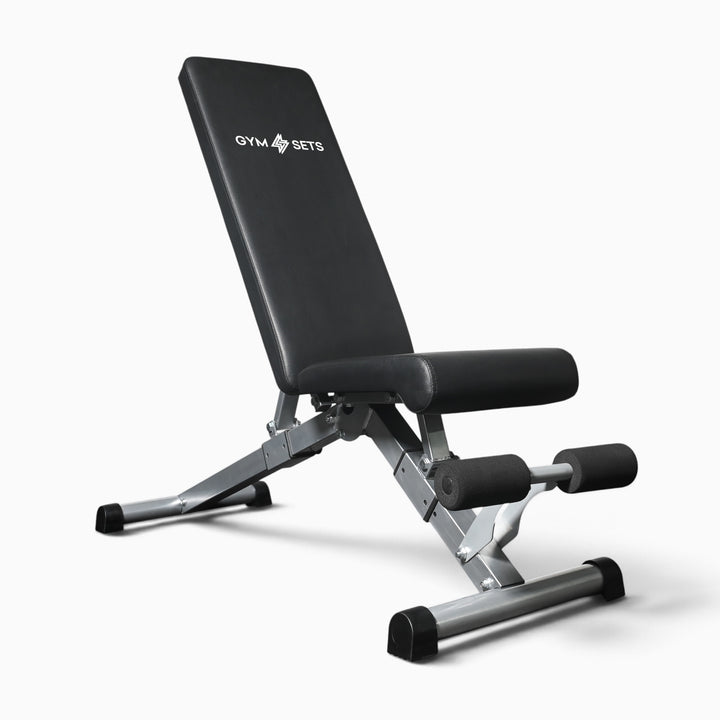
If you have a suitable weight bench at home, the dumbbell bench press is an excellent upper-body exercise. It primarily works the chest while also involving the shoulders and triceps.
Lie on the bench with a dumbbell in each hand and your feet firmly positioned on the floor. Lower the weights towards your chest with control before pressing them upwards.
Using two separate dumbbells means each arm has to control its own weight. This can make the movement feel different from using a barbell, particularly if one side is stronger than the other.
Choose a weight that allows you to complete your repetitions without losing control. A heavier dumbbell is not automatically better if it causes your technique to deteriorate.
4. One-arm dumbbell row
The one-arm dumbbell row is a straightforward way to train your back at home. It also gives you the opportunity to work each side independently.
Place one hand and knee on a bench or another stable surface, with your other foot firmly on the floor. Hold the dumbbell in your free hand and pull it towards your hip before lowering it slowly.
Try to avoid twisting your entire body to move the weight. Think about pulling your elbow backwards while keeping the movement controlled.
You can also perform rows without a bench by using a supported or unsupported bent-over position, provided you can maintain good posture and control throughout the movement.
5. Dumbbell shoulder press
The dumbbell shoulder press is another popular choice for home strength training. It works the shoulders while also involving the triceps and core.
Start with a dumbbell in each hand at approximately shoulder height. Press the weights upwards until your arms are extended comfortably, then lower them under control.
You can perform the exercise seated or standing. A seated version can provide additional support, while a standing version requires you to stabilise your body throughout the movement.
There is no advantage to forcing a heavy weight overhead if you cannot control it. Begin with a manageable resistance and increase it gradually as your strength and confidence develop.
6. Dumbbell lunges
Lunges are a great way to add unilateral lower-body training to your home workout. Instead of both legs doing exactly the same thing at the same time, each side has to contribute to the movement.
Hold a dumbbell in each hand and step forwards into a lunge. Lower your body under control before pushing through your front foot to return to the starting position.
You can also perform reverse lunges if you find stepping backwards more comfortable. The important thing is to maintain control rather than concentrating solely on how much weight you can hold.
Because balance can become more challenging as the weight increases, start relatively light. Once your movement feels stable, you can gradually increase the resistance.
7. Dumbbell Bulgarian split squat
If you want to make your lower-body workout more challenging, Bulgarian split squats are worth considering. They use a single-leg stance and can provide a demanding workout with relatively modest amounts of weight.
Stand in front of a bench and place the top of one foot behind you. Lower your body by bending the front leg, then push through the front foot to return to the starting position.
Holding dumbbells in your hands increases the resistance. However, balance and positioning are important, so it is sensible to master the bodyweight version before adding substantial weight.
This is another example of why adjustable dumbbells are useful. You can select a lighter setting while learning the movement and increase the weight as your technique improves.
8. Dumbbell chest fly
The dumbbell chest fly can be performed on a bench and provides a different movement pattern from the dumbbell bench press. Rather than pressing the weights directly upwards, you bring the arms together in a controlled arc.
Lie on the bench with a dumbbell in each hand and your palms facing inwards. With a slight bend in your elbows, lower your arms out to the sides before bringing the dumbbells back together.
This movement is generally performed with lighter weights than a bench press. Focus on control throughout the exercise rather than trying to use the heaviest dumbbells possible.
If you are unfamiliar with the exercise, it can be helpful to have a qualified fitness professional demonstrate the correct technique before adding significant resistance.
9. Dumbbell bicep curls
Bicep curls are probably one of the first dumbbell exercises most people think of. They are simple to understand and can be performed standing, seated or as part of a larger upper-body workout.
Hold a dumbbell in each hand with your arms hanging naturally by your sides. Keeping your elbows close to your body, curl the weights upwards before lowering them slowly.
The lowering phase is just as important as the lifting phase. Avoid swinging your body to create momentum, as this can make the movement less controlled.
With adjustable dumbbells, you can use a lighter setting for higher-repetition curl work and increase the resistance as your strength improves.
10. Dumbbell hammer curls
Hammer curls are similar to traditional bicep curls, but your palms remain facing towards each other throughout the movement. This small change creates a slightly different exercise.
Stand with a dumbbell in each hand and your palms facing inwards. Curl the weights towards your shoulders while keeping your elbows relatively close to your sides.
As with standard curls, controlled movement is more important than simply choosing a heavy weight. If you have to swing the dumbbells to complete each repetition, the resistance is probably too high for the movement.
11. Dumbbell lateral raises
Lateral raises are a popular shoulder exercise that uses relatively light weights. They are therefore a good example of why having adjustable dumbbells is useful.
Stand upright with a dumbbell in each hand and your arms by your sides. Raise your arms out towards the sides until they are around shoulder height, then lower them slowly.
You do not need a particularly heavy dumbbell for this exercise. In fact, using too much weight can make it difficult to maintain a controlled movement.
Think about lifting smoothly rather than trying to get the dumbbells as high as possible. Keep the movement comfortable and avoid using momentum to swing the weights upwards.
12. Dumbbell bent-over row
The bent-over dumbbell row allows you to train both sides of your back at the same time. It is particularly useful when you want a compound upper-body movement that requires relatively little equipment.
Hold a dumbbell in each hand and hinge forwards at the hips while maintaining a controlled position. Pull both dumbbells towards your body before lowering them steadily.
Your torso should remain stable throughout the movement. If you find yourself using your entire body to move the dumbbells, reduce the weight and concentrate on controlling each repetition.
The exercise can form the main pulling movement in a home workout alongside pressing exercises such as the dumbbell bench press and shoulder press.
13. Dumbbell farmer's walk
The farmer's walk is a simple but demanding exercise. Rather than repeatedly lifting the dumbbells, you hold them while walking for a set distance or amount of time.
Pick up a dumbbell in each hand and stand tall with your shoulders controlled and your core engaged. Walk steadily while keeping the weights by your sides.
This exercise can challenge your grip and requires you to maintain a stable posture while moving. Because the movement is relatively simple, it can be an effective addition to a full-body workout.
Start with a distance you can manage comfortably. You can then gradually increase the duration, distance or weight as your fitness improves.
14. Dumbbell sumo squat
The sumo squat uses a wider stance than a conventional squat and gives you another way to train your lower body with dumbbells. It can be performed while holding a single dumbbell with both hands.
Stand with your feet wider than shoulder-width apart and point your toes slightly outwards. Hold the dumbbell in front of you and lower your body while keeping your movement controlled.
Push through your feet to return to the starting position. As with any squat variation, your stance should feel natural rather than being forced into an uncomfortable position.
A single heavy dumbbell can provide plenty of resistance for this movement, meaning you do not necessarily need two fully loaded dumbbells.
15. Dumbbell deadlift
The dumbbell deadlift is another useful full-body movement for a home gym. It allows you to train the muscles involved in lifting and lowering a weight from the floor while using a pair of adjustable dumbbells.
Stand with a dumbbell in each hand and position your feet comfortably. Hinge at the hips and bend your knees as needed to lower the weights, then drive through your feet and extend your hips to stand tall.
Keep the dumbbells close to your body during the movement. Avoid rounding your back or rushing the lowering phase.
Because deadlifts can involve substantial resistance, spend time learning the movement with lighter weights before progressing. Good technique should remain the priority as the load increases.
How heavy should your 40kg adjustable dumbbells be?
There is no single weight that is right for every exercise or every person. Your ideal resistance depends on your current strength, experience, the movement you are performing and your training goals.
For smaller isolation exercises such as lateral raises and curls, you will generally use much less weight than you would for movements such as squats, rows or deadlifts. Adjustable dumbbells make this particularly convenient because you can change the resistance between exercises.
The NHS advises starting gradually and building up over a period of weeks. Its guidance also gives 8 to 12 repetitions as a general example for strength exercises, although the appropriate number can vary depending on the individual and exercise.
How to structure a dumbbell workout
You do not need to perform every exercise in this guide during one session. A more practical approach is to select movements that collectively train the major muscle groups.
For example, you could combine a squat, Romanian deadlift, dumbbell bench press, one-arm row and shoulder press for a straightforward full-body workout. Another session could use lunges, dumbbell deadlifts, rows, curls and lateral raises.
The NHS recommends working all the major muscle groups, including the legs, hips, back, abdomen, chest, shoulders and arms, through strengthening activities at least twice a week.
How to progress with adjustable dumbbells
Progressive training does not always mean adding more weight every single session. You can also improve by performing more controlled repetitions, increasing the number of sets or improving your technique.
When an exercise starts to feel comfortable, you can consider increasing the dumbbell setting slightly. The aim is to challenge yourself while still being able to perform the movement safely and with good control.
This is one of the main advantages of having 40kg adjustable dumbbells at home. Instead of buying another set every time you become stronger, you can adjust the resistance to match your changing ability.
A simple full-body dumbbell workout
If you want to put the most popular exercises with 40kg adjustable dumbbells into practice, you can start with a straightforward full-body session. Choose a squat variation, a hip-hinge movement, a pushing exercise, a pulling exercise and one additional movement for your shoulders or arms.
For example, you could perform goblet squats, Romanian deadlifts, dumbbell bench presses, one-arm rows and shoulder presses. Start with a manageable weight and concentrate on performing each movement with control.
Rather than chasing exhaustion, focus on consistent training and gradual progress. Strength training is most useful when it becomes something you can perform regularly and sustainably.
Final thoughts
The most popular exercises with 40kg adjustable dumbbells cover almost every major movement pattern you need for an effective home strength workout. Squats, deadlifts, lunges, presses, rows, curls and carries can all be adapted by changing the amount of weight you use.
The real advantage of adjustable dumbbells is their versatility. One set can support beginner workouts with lighter resistance and provide heavier options as your strength develops.
Whether you are creating your first home gym or adding to an existing setup, 40kg adjustable dumbbells can give you plenty of options without taking up the space required for a large collection of fixed weights.
The key is to start at a resistance you can control, learn the movement properly and increase the challenge gradually. With consistency, your dumbbells can become the foundation of a surprisingly varied home strength-training routine.