







In the modern wellness landscape, few exercise systems have maintained such enduring popularity and critical acclaim as Pilates. From boutique high-street studios across the United Kingdom to home workouts streaming on Shopify-powered fitness platforms, it has become a cornerstone of functional fitness. Yet, despite its widespread presence, a basic question often remains for newcomers exploring this movement style: what is pilates?
Far from being a fleeting fitness trend, it is a deeply systematic approach to body conditioning that balances strength, flexibility, and alignment. Whether you are searching for a way to relieve persistent lower back pain caused by long office hours, aiming to enhance your athletic performance, or looking for an intentional mindful movement practice, understanding the fundamentals of this methodology will transform the way you move your body.
This comprehensive guide explores the historical origins, core physiological principles, diverse equipment variations, and scientifically backed health benefits of this transformative movement system.
What Is Pilates? Defining the Method
To accurately answer the question—what is pilates?—it is best defined as a low-impact exercise method designed to elongate, strengthen, and balance the human body. The system focuses heavily on developing core strength, correcting posture, and enhancing structural alignment through controlled, precise physical movements.
Unlike traditional weightlifting, which often aims to isolate individual large muscle groups to induce hypertrophy (muscle growth), this methodology targets the deeper, stabilizing muscles of the body. It treats the musculoskeletal system as a single, integrated unit. Every exercise is performed with an intense focus on breath control, fluid movement transitions, and a strong mind-body connection.
The overarching goal is not physical exhaustion, but physical efficiency. A well-designed session leaves practitioners feeling taller, more physically grounded, and energized, rather than depleted.
The Fascinating History and Origins
The roots of this globally recognized movement system trace back to the early twentieth century. It was developed by a German physical trainer named Joseph Pilates. Born near Düsseldorf in 1883, he suffered from several chronic childhood illnesses, including asthma, rickets, and rheumatic fever. Driven by a desire to overcome his ailments, he dedicated his youth to studying a wide array of physical disciplines, including gymnastics, martial arts, yoga, and classical anatomy.
During the First World War, he was interned in a camp on the Isle of Man. It was during this period of confinement that his definitive movement system began to take structural shape. Working as a nurse and orderly, he began rehabilitating bedridden veterans who were suffering from debilitating injuries and illnesses.
To help these patients build physical strength while lying down, he innovatively attached mechanical springs to hospital bedframes. This allowed patients to exercise against a gentle, adjustable resistance. This rudimentary hospital setup laid the foundational blueprints for the complex, spring-based studio equipment used across the fitness world today.
In 1926, Joseph emigrated to New York City alongside his wife, Clara, a dedicated nurse. Together, they established the very first official studio. The studio shared a building with several prominent dance companies, and the local dance community quickly recognized the immense value of his training. Dancers utilized the method to rehabilitate acute injuries, correct postural imbalances caused by rigorous choreography, and build deep abdominal strength without adding unnecessary physical bulk. Joseph originally named his holistic training methodology "Contrology", emphasizing the mind's absolute control over every moving muscle filament in the body.
The Six Core Principles of Pilates
The true magic of the system lies not just in the physical movements themselves, but in how those movements are executed. The entire methodology is anchored by six fundamental guiding principles established by Joseph and carried forward by generations of instructors.
1. Centring
Centring refers to the physical act of bringing the mind's absolute focus to the energetic powerhouse of the body. Joseph referred to this central physical zone as the "Powerhouse". In modern anatomical terms, this encompasses the deep abdominal wall, the lower back muscles, the pelvic floor, and the muscles surrounding the hips. Every single movement originates from this stable, supportive centre before radiating outward to the limbs.
2. Concentration
This discipline requires absolute mental presence. It is impossible to go through the motions passively while thinking about your grocery list. By focusing intensely on the precise positioning of your skeleton and the activation of individual muscle fibers, you forge stronger neuromuscular pathways. This heightened mental focus ensures that your larger, dominant muscles do not take over and perpetuate bad movement habits.
3. Control
In this system, slow and steady wins the race. Every exercise must be performed with complete, deliberate physical control. There is absolutely no momentum, swinging, or jerky movement permitted. Lifting a limb slowly against spring tension or gravity forces the muscle tissue to work efficiently through both the concentric (shortening) and eccentric (lengthening) phases of the movement.
4. Precision
Quality is always prioritized over sheer quantity. Doing four repetitions of an exercise with flawless alignment and tracking is infinitely more valuable than doing twenty repetitions poorly. Every detail matters, from the exact angle of your pelvis to the specific direction your fingers are pointing. This relentless focus on precision is exactly what corrects deep-seated postural imbalances over time.
5. Breath
Proper respiration is the vital engine that drives the movement. The system utilizes lateral thoracic breathing. Practitioners are taught to inhale deeply into the back and sides of the ribcage, keeping the deep abdominal wall drawing inward. This specific style of breathing protects the spine during exertion while effectively oxygenating the bloodstream and calming the nervous system.
6. Flow
Movement should be fluid, graceful, and continuous. Each exercise is designed to seamlessly blend into the next, creating a beautifully orchestrated kinetic chain. This emphasis on flow builds functional endurance and teaches the body to move efficiently through daily activities outside the studio doors.
Mat vs. Reformer: Understanding the Differences
If you are looking to start your fitness journey, you will generally have to choose between two primary formats: Mat-based sessions or Reformer-based sessions. Both offer incredible benefits, but they utilize different types of physical resistance.
Mat Pilates: The Foundation
Mat sessions are performed on a slightly padded floor mat that is thicker than a standard yoga mat to properly cushion the spine.
-
The primary resistance mechanism is your own body weight fighting against the constant pull of gravity.
-
It requires an immense amount of internal control, as there is no external machine supporting your alignment or guiding your limbs.
-
It is highly accessible, affordable, and can be practiced anywhere in the world without specialist kit.
-
Instructors often integrate small props like resistance bands, foam rollers, overballs, and magic circles (weighted rings) to add challenge or provide support.
Reformer Pilates: The Machine
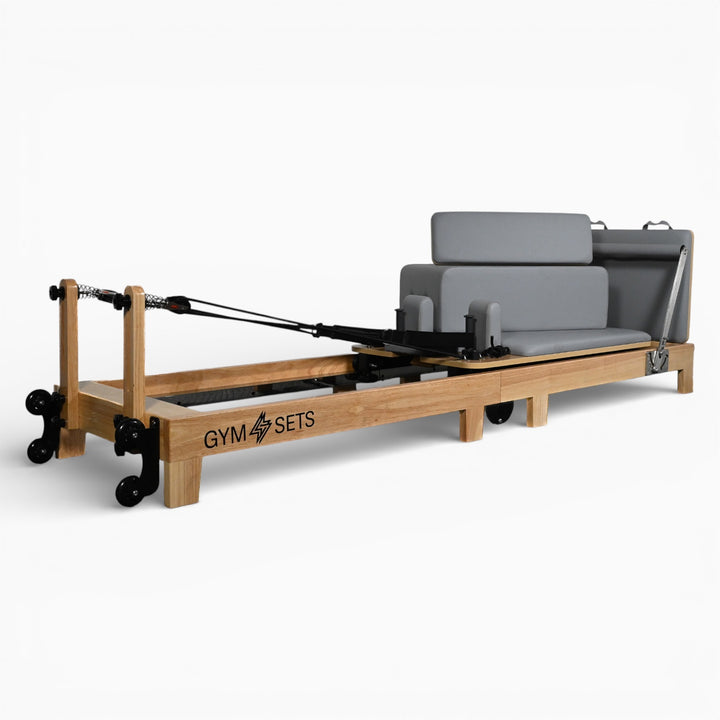
The Reformer is a specialized piece of apparatus that resembles a bedframe. It features a flat carriage that slides back and forth along tracks on a system of wheels. The carriage is attached to one end of the frame by a series of springs with varying degrees of tension.
-
The adjustable springs can be set to provide heavy resistance to build muscular strength, or light resistance to challenge core stability.
-
It utilizes a system of ropes, pulleys, and straps where you place your hands or feet to pull or push the carriage along the tracks.
-
The physical structure of the machine acts as an external guide, helping you track your alignment perfectly through space.
-
It allows for an incredibly diverse library of exercises performed lying down, sitting, kneeling, or standing up.
Other Essential Studio Apparatus
While the Mat and the Reformer are the most famous components, a fully equipped classical studio features several other brilliant pieces of mechanical engineering designed by Joseph.
The Cadillac (Trapeze Table)
This impressive apparatus looks like a large raised massage table surrounded by a heavy metal four-poster canopy frame. It features an array of attached bars, fuzzy hanging loops, spring attachments, and a trapeze swing. It is used for specialized spinal decompression, advanced acrobatic maneuvers, and highly specific physical therapy rehabilitation.
The Wunda Chair
The Wunda Chair is a compact wooden box featuring a seat and a spring-loaded foot pedal that can be pushed downward against resistance. It offers a surprisingly challenging workout that focuses heavily on balance, leg strength, and deep pelvic stability, making it popular among high-performance athletes.
The Ladder Barrel
This apparatus consists of a rounded, upholstered barrel connected by a sliding base frame to a small wooden ladder. It is uniquely designed to support deep spinal extension and flexion, helping to restore optimal mobility to a stiff, rigid spine.
The Proven Health Benefits of Consistent Practice
Engaging in a regular practice yields a vast array of physical and mental health rewards that are backed by modern sports science and biomechanics research.
Dramatic Reductions in Chronic Back Pain
One of the most common reasons individuals are referred to studios by medical doctors and physiotherapists is to manage lower back discomfort. By strengthening the deep intrinsic stabilizers of the core—specifically the transversus abdominis and the pelvic floor—you create a natural internal corset that supports the lumbar spine and unloads pressure from the intervertebral discs.
Heightened Postural Awareness
In our modern digital world, many of us suffer from "tech neck" and rounded shoulders caused by slouching over computers and phones. The exercises systematically open up the chest, strengthen the weak muscles between the shoulder blades, and realign the head over the pelvis. This creates an effortlessly tall, aligned posture that carries over into your everyday life.
Increased Muscle Length and Flexibility
Traditional strength training can sometimes leave muscles feeling tight, short, and restricted. This system focuses on eccentric muscle contractions, which occur when a muscle elongates while under resistance. This creates lean, functional muscle tissue that is exceptionally strong throughout its entire range of movement, reducing the overall risk of athletic injury.
Enhanced Balance and Coordination
As we age, our natural balance and proprioception (the brain's awareness of where the body is in space) naturally begin to decline. By challenging stability on unstable surfaces like the Reformer carriage or balance foam blocks, you strengthen the stabilizing muscles around the ankles, knees, and hips, creating a much more resilient physical foundation.
Mindful Stress Reduction
Because the movement demands your absolute mental focus and rhythmic coordination with the breath, a session acts as a form of moving meditation. It actively down-regulates the sympathetic nervous system (your fight-or-flight response) and activates the parasympathetic nervous system, leaving you with a profound sense of mental clarity and calm.
Common Misconceptions Addressed
Despite its century-long history, several persistent myths continue to float around the fitness community regarding what the practice actually entails.
Myth 1: It is Exactly the Same as Yoga
While both are fantastic low-impact, mind-body disciplines performed on mats, they have fundamentally different goals and origins. Yoga is an ancient spiritual practice rooted in Eastern philosophy that incorporates static poses (asanas), meditation, and spiritual energy work. Pilates is a twentieth-century physical conditioning system rooted in Western anatomy and rehabilitation. It focuses on continuous, dynamic movement patterns designed to build functional core strength and structural alignment.
Myth 2: It is Only for Women
This is a particularly ironic myth considering the method was invented by a man to train soldiers, boxers, and police officers. Men possess significant muscle mass that can easily become tight and structurally imbalanced. Incorporating this training helps men improve their flexibility, unlock tight hips, protect their lower backs, and tap into deep core strength that traditional weightlifting misses entirely.
Myth 3: You Need to Be Naturally Flexible to Start
Many people avoid entering a studio because they believe they cannot bend themselves into a pretzel. This is entirely backward; you do not do the training because you are flexible, you do it to become flexible. Every single exercise can be modified with blocks, lighter springs, or altered angles to meet your body exactly where it is today.
How to Prepare for Your Very First Session
Taking the plunge and booking your first class is incredibly exciting. Here are a few practical tips to ensure your first experience is smooth, comfortable, and highly enjoyable.
What to Wear to the Studio
Opt for form-fitting athletic wear like leggings, sports tops, or structured shorts. Avoid clothing with bulky pockets, external zippers, or buttons, as these can scratch the delicate leather vinyl upholstery of the Reformer machines. Loose, baggy clothing can easily get caught in the moving springs and wheels, and form-fitting clothing allows your instructor to clearly see your skeletal alignment to make helpful postural corrections.
The Importance of Grip Socks
Most professional commercial studios across the UK require participants to wear specialized grip socks for hygiene and safety. These socks feature non-slip silicone pads on the sole, ensuring your feet do not slip off the wooden footbars or slick Reformer carriages during planks and lunges.
Commmunicating with Your Instructor
Arrive at the studio ten minutes early so you can introduce yourself to the teacher. Be completely transparent about any past injuries, chronic health conditions, joint pain, or if you are currently pregnant. A qualified instructor will easily be able to provide tailored modifications throughout the class to keep your body completely safe.
Final Thoughts: A Lifelong Movement Practice
When answering the question—what is pilates?—it is ultimately much more than a simple workout routine to tick off your weekly checklist. It is a lifelong education in body mechanics. It teaches you how to sit smarter at your desk, lift heavier weights in the gym without injuring your spine, and move through the world with grace, confidence, and ease.
By investing time into mastering these precise, mindful movements, you are building a physical body that is balanced, resilient, and fully prepared to handle the physical demands of daily life for decades to come.


