




A home reformer pilates machine is designed to make Pilates strength, mobility and stability exercises possible from the comfort of your own home. It uses a moving carriage, springs, straps and a footbar to provide adjustable resistance, helping you build controlled strength while improving flexibility, balance and body awareness.
What is this guide about?
If you have seen reformer Pilates becoming increasingly popular and are wondering what the machine actually does, you are not alone. At first glance, a reformer can look quite complicated, but its purpose is surprisingly straightforward: it helps you perform controlled Pilates movements with adjustable resistance and support.
In this guide, we will look at what a home reformer pilates machine is used for, how it works, the main benefits, who it is suitable for and whether having one at home could be a worthwhile addition to your fitness routine.
What is a home reformer pilates machine?
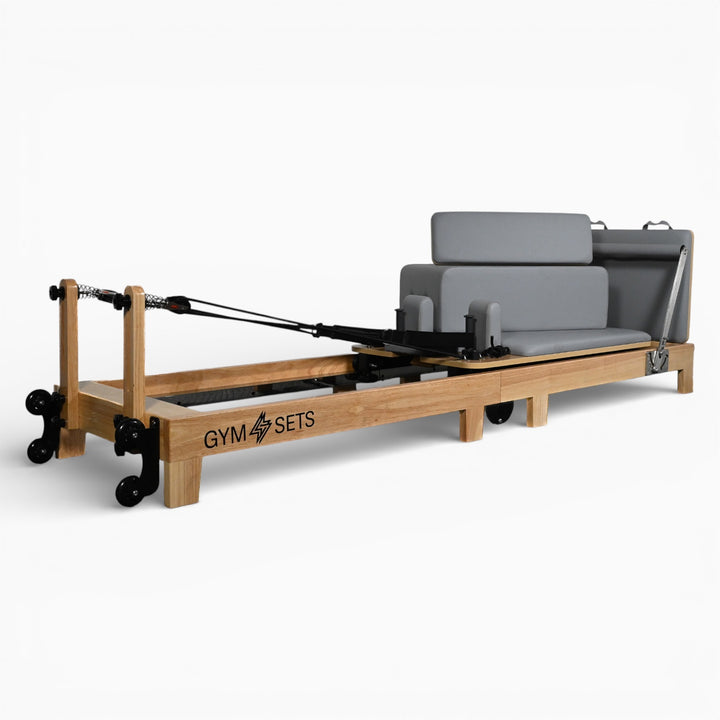
A home reformer pilates machine is a piece of Pilates equipment based on the traditional reformer used in Pilates studios. It normally consists of a padded carriage that moves backwards and forwards along a frame, with springs providing resistance as you exercise.
The machine can also include a footbar, shoulder rests, straps and handles. Together, these features allow you to perform a wide variety of movements while changing your body position, resistance level and range of motion.
The key difference between reformer Pilates and traditional mat Pilates is the equipment. While mat Pilates relies largely on your body weight, a reformer gives you another way to challenge your muscles by introducing adjustable resistance.
This does not necessarily mean the workout has to be harder. One of the advantages of the reformer is that resistance can be adjusted to suit different exercises and ability levels.
What is the main purpose of a reformer?
The main purpose of a reformer is to help you perform controlled movements against resistance while maintaining good alignment and stability. Rather than simply moving through an exercise as quickly as possible, Pilates encourages concentration, control and deliberate movement.
A reformer can therefore be used to train several aspects of physical fitness at the same time. These include core strength, muscular endurance, flexibility, balance, coordination and body awareness.
Research into Pilates has associated the method with improvements in areas such as core muscle endurance, flexibility and balance, although results vary depending on the type of programme, participants and length of training.
For someone exercising at home, this makes the reformer particularly useful because the same piece of equipment can be adapted for a wide range of exercises.
How does a home reformer pilates machine work?
The moving carriage is one of the most recognisable features of a reformer. When you push or pull against the resistance, the carriage moves along the frame.
The springs determine how much resistance you are working against. Depending on the exercise, you may push the carriage away with your legs, pull against straps with your arms or use your body position to control the movement.
This creates a different training experience from simply lifting a dumbbell. You are often required to control the movement in both directions, rather than focusing only on the part of an exercise where you produce force.
The straps are particularly useful for exercises involving the arms and legs. They can provide resistance while also helping you explore a greater range of controlled movement.
The footbar, meanwhile, gives you a stable point to push against during exercises such as footwork. This makes it possible to work the lower body while maintaining a controlled position on the carriage.
What muscles does a home reformer pilates machine work?
One of the reasons reformer Pilates has become popular is that it can provide a full-body workout rather than focusing on one particular muscle group.
Your core plays an important role in many reformer exercises because you need to stabilise your body while the carriage, straps or your limbs move. Depending on the exercise, you can also work your glutes, thighs, hamstrings, calves, shoulders, arms and back.
The exact muscles involved depend on the exercise and how it is performed. A leg-based movement, for example, may place more emphasis on the lower body, while exercises using the straps can bring the upper body and core into play.
This combination can make a home reformer pilates machine useful for people who want to improve overall strength without relying exclusively on conventional gym exercises.
Can a reformer help improve core strength?
Yes. Core control is one of the central principles of Pilates, and the reformer provides plenty of opportunities to challenge the muscles around your abdomen, pelvis and spine.
The moving carriage can make even relatively simple exercises more demanding because your body has to remain stable while another part of you is moving.
This is less about performing hundreds of repetitions and more about performing each repetition with control. Over time, consistent training can help you become more aware of how you position and stabilise your body.
Research examining reformer Pilates has specifically investigated outcomes including core stability, balance and flexibility, with studies reporting improvements following structured training programmes.
It is worth remembering, however, that no exercise machine automatically creates results. Your progress will depend on factors such as exercise selection, technique, resistance, frequency and consistency.
Can a reformer improve flexibility?
Flexibility is another important purpose of reformer Pilates. The machine allows you to perform controlled movements through different ranges of motion while using the carriage and straps to assist or challenge the movement.
Rather than treating flexibility as simply holding a stretch for as long as possible, Pilates combines mobility with strength and control. This can make the exercises feel very different from traditional stretching.
For example, an exercise may require you to move a leg through a controlled range while keeping your pelvis stable. You are therefore working on mobility while simultaneously asking your supporting muscles to remain engaged.
Studies investigating Pilates have found improvements in flexibility alongside changes in balance and muscular endurance, although individual results will naturally vary.
Does reformer Pilates help with balance and posture?
It can. Many reformer exercises require you to maintain alignment while moving your arms or legs, which can challenge your balance and coordination.
The equipment also provides useful physical feedback. You can become more aware of where your body is positioned and whether you are keeping your movements controlled.
Good posture is not simply about sitting or standing up straight. It also involves having enough strength, mobility and awareness to control your body through different positions.
Pilates research has linked the method with improvements in postural control and balance, which helps explain why these areas are such a common focus of reformer training.
Is a home reformer pilates machine suitable for beginners?
A reformer can be suitable for beginners, but the machine should not be mistaken for a completely effortless form of exercise.
There is a learning curve because you need to understand how the carriage, springs, footbar and straps work together. Starting with basic movements and learning correct technique is generally more useful than immediately attempting advanced exercises.
If you are completely new to reformer Pilates, guided instruction can be particularly helpful. It gives you the opportunity to learn how to set up the equipment correctly and understand how your body should move.
Once you become familiar with the basic principles, having a reformer at home can make regular practice considerably more convenient.
Why use a reformer at home?
The biggest advantage of a home reformer pilates machine is convenience. Instead of travelling to a studio or fitting a class around somebody else's timetable, you can exercise in your own space when it suits you.
That can make consistency easier. If your equipment is already set up and ready to use, completing a 20, 30 or 45-minute session may feel much more achievable than travelling to a gym.
A home reformer can also give you more freedom to structure your sessions around your own goals. You might use it for a gentle mobility session one day and a more challenging strength-focused workout another.
For people who genuinely enjoy Pilates, having equipment at home can turn occasional classes into a more regular fitness habit.
What exercises can you do on a home reformer?
There is a surprisingly large range of exercises that can be performed on a reformer. The exact exercises available will depend on the design of your machine and the accessories included.
A beginner session might include controlled footwork, bridges, arm exercises using the straps and simple core movements. As your experience develops, you can progress towards more challenging variations that require greater strength, balance and coordination.
The versatility is one of the reformer's biggest strengths. You are not buying a machine that has one single function; you are investing in a piece of equipment that can support numerous movement patterns.
This also means your workouts do not necessarily have to feel repetitive. By changing the spring resistance, body position, tempo and exercise selection, you can create considerably different sessions using the same equipment.
Is reformer Pilates good for strength training?
Reformer Pilates can contribute to strength and muscular endurance, particularly when exercises are performed consistently with appropriate resistance.
The springs create resistance that your muscles have to control. Depending on the exercise, you may be pushing against the resistance, pulling against it or controlling the carriage as it returns to its starting position.
However, reformer Pilates should not necessarily be viewed as a direct replacement for every form of resistance training. If your primary goal is to maximise muscle size or develop very high levels of strength, traditional weight training may still have an important role in your programme.
For general fitness, muscular control and building a stronger foundation of movement, however, reformer Pilates can be a useful option.
Can you use a reformer for low-impact exercise?
One of the appealing features of reformer Pilates is that many exercises are low impact. Your movements are generally controlled rather than involving repeated jumping or high-impact landings.
This can make reformer sessions attractive to people who prefer a gentler style of exercise while still wanting to challenge their muscles.
That does not mean every reformer exercise is suitable for every person. Technique, resistance and exercise selection all matter, particularly if you have an existing injury or a condition that affects your movement.
If you are returning to exercise after an injury or have specific health concerns, it is sensible to speak with an appropriate healthcare professional before starting a new exercise programme.
How often should you use a home reformer?
There is no single frequency that works for everyone. Your ideal routine will depend on your current fitness level, goals, recovery and how reformer Pilates fits alongside other forms of exercise.
For someone starting out, two or three manageable sessions each week may be easier to maintain than trying to exercise every day and quickly losing motivation.
Consistency is more important than attempting to do as much as possible in a short period. A regular routine gives you the opportunity to gradually become more comfortable with the equipment and progress your exercises over time.
It can also be useful to combine reformer Pilates with other activities, particularly if you want a more rounded fitness programme.
What should you look for in a home reformer?
If you are considering buying a home reformer pilates machine, think about how you intend to use it before choosing a model.
The size of the machine is important because reformers can take up a significant amount of floor space. You should consider both the length of the equipment and the additional space required to move safely around it.
The resistance system is another important consideration. Look at how the springs are adjusted and whether the available resistance levels are appropriate for your current ability and potential progression.
Comfort and adjustability matter too. Features such as the carriage, footbar, shoulder rests and straps should feel secure and suitable for your body.
Finally, consider how often you are realistically going to use it. The best home fitness equipment is not necessarily the one with the most features; it is the one that fits your space, budget and exercise routine and encourages you to keep training.
Is a home reformer worth it?
For someone who enjoys Pilates and wants the convenience of training at home, a reformer is a worthwhile investment.
Its purpose goes beyond simply making Pilates exercises more difficult. The combination of adjustable resistance, controlled movement and different exercise positions allows you to work on strength, flexibility, balance, coordination and body awareness in one session.
The real value comes from regular use. A reformer sitting unused in a spare room will not improve your fitness, but equipment that makes you more likely to exercise consistently can become a valuable part of your routine.
Final thoughts
So, what is the purpose of a home reformer pilates machine? Put simply, it is designed to make controlled, resistance-based Pilates training possible at home, helping you develop strength, mobility, stability, balance and body awareness.
The moving carriage, springs, footbar and straps give you more options than traditional mat Pilates, while the adjustable resistance allows exercises to be adapted as your ability develops.
Research supports several potential benefits of Pilates, including improvements in flexibility, balance, muscular endurance and core-related outcomes, although results depend on the individual and the programme followed.
For anyone who enjoys Pilates, prefers low-impact exercise or simply wants a convenient way to work on full-body strength and mobility at home, a home reformer pilates machine can be a versatile addition to a regular fitness routine.
The important thing is to start at an appropriate level, focus on controlled technique and build your training gradually. Used consistently, the reformer can become much more than a piece of equipment in your home: it can be a practical tool for making Pilates part of your everyday lifestyle.


